

82
S. Dhiman et al.
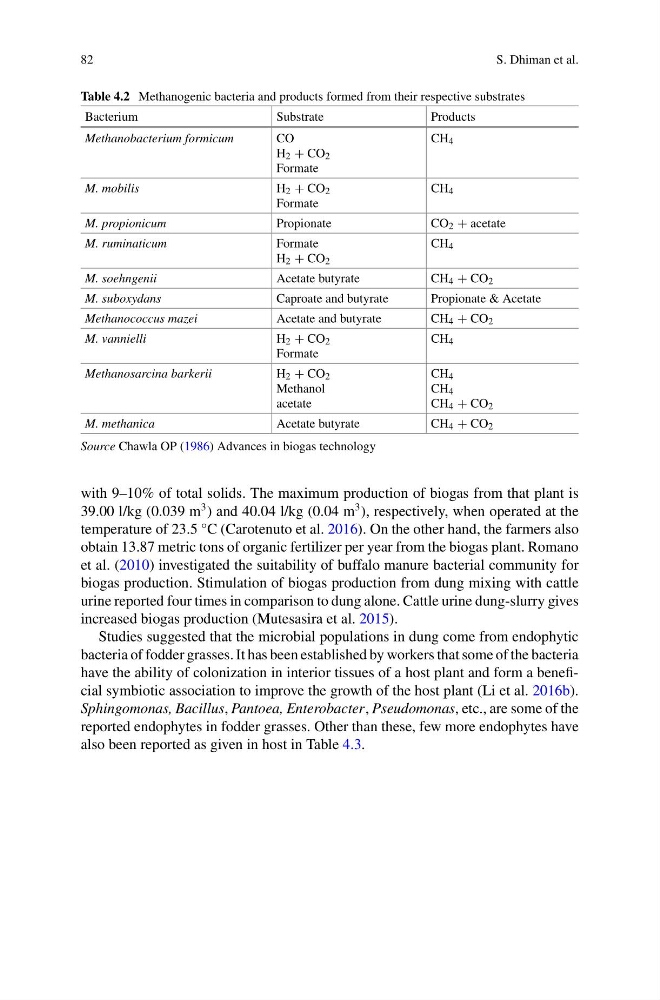
Table 4.2 Methanogenic bacteria and products formed from their respective substrates
Bacterium
Substrate
Products
Methanobacterium formicum
CO
H 2 + CO 2
Formate
CH 4
M. mobilis
H 2 + CO 2
Formate
CH 4
M. propionicum
Propionate
CO 2 + acetate
M. ruminaticum
Formate
H 2 + CO 2
CH 4
M. soehngenii
Acetate butyrate
CH 4 + CO 2
M. suboxydans
Caproate and butyrate
Propionate & Acetate
Methanococcus mazei
Acetate and butyrate
CH 4 + CO 2
M. vannielli
H 2 + CO 2
Formate
CH 4
Methanosarcina barkerii
H 2 + CO 2
Methanol
acetate
CH 4
CH 4
CH 4 + CO 2
M. methanica
Acetate butyrate
CH 4 + CO 2
Source Chawla OP (1986) Advances in biogas technology
with 9–10% of total solids. The maximum production of biogas from that plant is
39.00 l/kg (0.039 m
3 ) and 40.04 l/kg (0.04 m
3 ), respectively, when operated at the
temperature of 23.5 °C (Carotenuto et al. 2016). On the other hand, the farmers also
obtain 13.87 metric tons of organic fertilizer per year from the biogas plant. Romano
et al. (2010) investigated the suitability of buffalo manure bacterial community for
biogas production. Stimulation of biogas production from dung mixing with cattle
urine reported four times in comparison to dung alone. Cattle urine dung-slurry gives
increased biogas production (Mutesasira et al. 2015).
Studies suggested that the microbial populations in dung come from endophytic
bacteria of fodder grasses. It has been established by workers that some of the bacteria
have the ability of colonization in interior tissues of a host plant and form a beneficial symbiotic association to improve the growth of the host plant (Li et al. 2016b).
Sphingomonas, Bacillus, Pantoea, Enterobacter, Pseudomonas, etc., are some of the
reported endophytes in fodder grasses. Other than these, few more endophytes have
also been reported as given in host in Table 4.3.
S. Dhiman et al.
Table 4.2 Methanogenic bacteria and products formed from their respective substrates
Bacterium
Substrate
Products
Methanobacterium formicum
CO
H 2 + CO 2
Formate
CH 4
M. mobilis
H 2 + CO 2
Formate
CH 4
M. propionicum
Propionate
CO 2 + acetate
M. ruminaticum
Formate
H 2 + CO 2
CH 4
M. soehngenii
Acetate butyrate
CH 4 + CO 2
M. suboxydans
Caproate and butyrate
Propionate & Acetate
Methanococcus mazei
Acetate and butyrate
CH 4 + CO 2
M. vannielli
H 2 + CO 2
Formate
CH 4
Methanosarcina barkerii
H 2 + CO 2
Methanol
acetate
CH 4
CH 4
CH 4 + CO 2
M. methanica
Acetate butyrate
CH 4 + CO 2
Source Chawla OP (1986) Advances in biogas technology
with 9–10% of total solids. The maximum production of biogas from that plant is
39.00 l/kg (0.039 m
3 ) and 40.04 l/kg (0.04 m
3 ), respectively, when operated at the
temperature of 23.5 °C (Carotenuto et al. 2016). On the other hand, the farmers also
obtain 13.87 metric tons of organic fertilizer per year from the biogas plant. Romano
et al. (2010) investigated the suitability of buffalo manure bacterial community for
biogas production. Stimulation of biogas production from dung mixing with cattle
urine reported four times in comparison to dung alone. Cattle urine dung-slurry gives
increased biogas production (Mutesasira et al. 2015).
Studies suggested that the microbial populations in dung come from endophytic
bacteria of fodder grasses. It has been established by workers that some of the bacteria
have the ability of colonization in interior tissues of a host plant and form a beneficial symbiotic association to improve the growth of the host plant (Li et al. 2016b).
Sphingomonas, Bacillus, Pantoea, Enterobacter, Pseudomonas, etc., are some of the
reported endophytes in fodder grasses. Other than these, few more endophytes have
also been reported as given in host in Table 4.3.