

5 Fluorescent Pseudomonads …
113
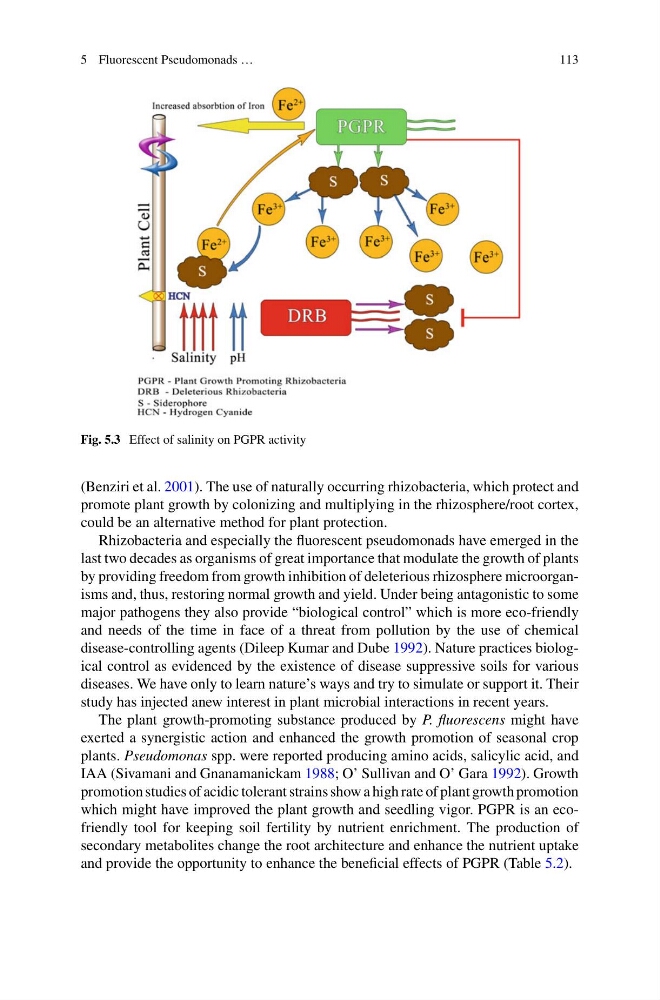
Fig. 5.3 Effect of salinity on PGPR activity
(Benziri et al. 2001). The use of naturally occurring rhizobacteria, which protect and
promote plant growth by colonizing and multiplying in the rhizosphere/root cortex,
could be an alternative method for plant protection.
Rhizobacteria and especially the fluorescent pseudomonads have emerged in the
last two decades as organisms of great importance that modulate the growth of plants
by providing freedom from growth inhibition of deleterious rhizosphere microorganisms and, thus, restoring normal growth and yield. Under being antagonistic to some
major pathogens they also provide “biological control” which is more eco-friendly
and needs of the time in face of a threat from pollution by the use of chemical
disease-controlling agents (Dileep Kumar and Dube 1992). Nature practices biological control as evidenced by the existence of disease suppressive soils for various
diseases. We have only to learn nature’s ways and try to simulate or support it. Their
study has injected anew interest in plant microbial interactions in recent years.
The plant growth-promoting substance produced by P. fluorescens might have
exerted a synergistic action and enhanced the growth promotion of seasonal crop
plants. Pseudomonas spp. were reported producing amino acids, salicylic acid, and
IAA (Sivamani and Gnanamanickam 1988; O’ Sullivan and O’ Gara 1992). Growth
promotion studies of acidic tolerant strains show a high rate of plant growth promotion
which might have improved the plant growth and seedling vigor. PGPR is an ecofriendly tool for keeping soil fertility by nutrient enrichment. The production of
secondary metabolites change the root architecture and enhance the nutrient uptake
and provide the opportunity to enhance the beneficial effects of PGPR (Table 5.2).
113
Fig. 5.3 Effect of salinity on PGPR activity
(Benziri et al. 2001). The use of naturally occurring rhizobacteria, which protect and
promote plant growth by colonizing and multiplying in the rhizosphere/root cortex,
could be an alternative method for plant protection.
Rhizobacteria and especially the fluorescent pseudomonads have emerged in the
last two decades as organisms of great importance that modulate the growth of plants
by providing freedom from growth inhibition of deleterious rhizosphere microorganisms and, thus, restoring normal growth and yield. Under being antagonistic to some
major pathogens they also provide “biological control” which is more eco-friendly
and needs of the time in face of a threat from pollution by the use of chemical
disease-controlling agents (Dileep Kumar and Dube 1992). Nature practices biological control as evidenced by the existence of disease suppressive soils for various
diseases. We have only to learn nature’s ways and try to simulate or support it. Their
study has injected anew interest in plant microbial interactions in recent years.
The plant growth-promoting substance produced by P. fluorescens might have
exerted a synergistic action and enhanced the growth promotion of seasonal crop
plants. Pseudomonas spp. were reported producing amino acids, salicylic acid, and
IAA (Sivamani and Gnanamanickam 1988; O’ Sullivan and O’ Gara 1992). Growth
promotion studies of acidic tolerant strains show a high rate of plant growth promotion
which might have improved the plant growth and seedling vigor. PGPR is an ecofriendly tool for keeping soil fertility by nutrient enrichment. The production of
secondary metabolites change the root architecture and enhance the nutrient uptake
and provide the opportunity to enhance the beneficial effects of PGPR (Table 5.2).