

Processes 2019, 7,20
bursting and plateauing are only possible provided that the ordinary singularity is unstable, i.e. the
ordinary singularity lies on the repelling manifold S r , cf. [26]. The singular or relaxation orbit consists
of four distinct segments, i.e., two slow orbit Γ S and two fast orbit Γ F segments. Notice that in general,
singular periodic orbits which are filtered into the folded node on L + are singular representations of
MMOs. The aim of GSPT is now to combine information from the reduced and layer problems in order
to understand the dynamics of the cell model (1), particularly the oscillatory behaviour. Thus, we
use the reduced and the layer flows to construct singular periodic orbits, which—according to GSPT
[26,27]—will perturb to nearby periodic orbits of the full system (1) for sufficiently small perturbations.
S −
a
S +
a
S r
Γ F
Γ F
Γ S
Γ S
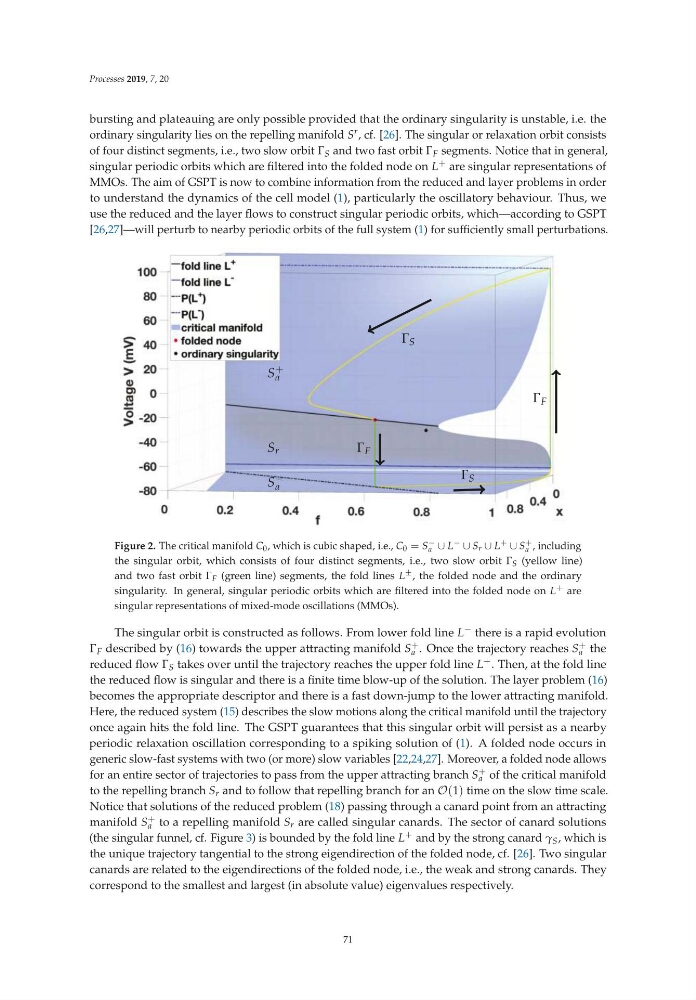
Figure 2. The critical manifold C 0 , which is cubic shaped, i.e., C 0 = S −
a ∪ L − ∪ S r ∪ L + ∪ S +
a , including
the singular orbit, which consists of four distinct segments, i.e., two slow orbit Γ S (yellow line)
and two fast orbit Γ F (green line) segments, the fold lines L ± , the folded node and the ordinary
singularity. In general, singular periodic orbits which are filtered into the folded node on L + are
singular representations of mixed-mode oscillations (MMOs).
The singular orbit is constructed as follows. From lower fold line L − there is a rapid evolution
Γ F described by (16) towards the upper attracting manifold S +
a . Once the trajectory reaches S +
a the
reduced flow Γ S takes over until the trajectory reaches the upper fold line L + . Then, at the fold line
the reduced flow is singular and there is a finite time blow-up of the solution. The layer problem (16)
becomes the appropriate descriptor and there is a fast down-jump to the lower attracting manifold.
Here, the reduced system (15) describes the slow motions along the critical manifold until the trajectory
once again hits the fold line. The GSPT guarantees that this singular orbit will persist as a nearby
periodic relaxation oscillation corresponding to a spiking solution of (1). A folded node occurs in
generic slow-fast systems with two (or more) slow variables [22,24,27]. Moreover, a folded node allows
for an entire sector of trajectories to pass from the upper attracting branch S +
a of the critical manifold
to the repelling branch S r and to follow that repelling branch for an O(1) time on the slow time scale.
Notice that solutions of the reduced problem (18) passing through a canard point from an attracting
manifold S +
a to a repelling manifold S r are called singular canards. The sector of canard solutions
(the singular funnel, cf. Figure 3) is bounded by the fold line L + and by the strong canard γ S , which is
the unique trajectory tangential to the strong eigendirection of the folded node, cf. [26]. Two singular
canards are related to the eigendirections of the folded node, i.e., the weak and strong canards. They
correspond to the smallest and largest (in absolute value) eigenvalues respectively.
71
bursting and plateauing are only possible provided that the ordinary singularity is unstable, i.e. the
ordinary singularity lies on the repelling manifold S r , cf. [26]. The singular or relaxation orbit consists
of four distinct segments, i.e., two slow orbit Γ S and two fast orbit Γ F segments. Notice that in general,
singular periodic orbits which are filtered into the folded node on L + are singular representations of
MMOs. The aim of GSPT is now to combine information from the reduced and layer problems in order
to understand the dynamics of the cell model (1), particularly the oscillatory behaviour. Thus, we
use the reduced and the layer flows to construct singular periodic orbits, which—according to GSPT
[26,27]—will perturb to nearby periodic orbits of the full system (1) for sufficiently small perturbations.
S −
a
S +
a
S r
Γ F
Γ F
Γ S
Γ S
Figure 2. The critical manifold C 0 , which is cubic shaped, i.e., C 0 = S −
a ∪ L − ∪ S r ∪ L + ∪ S +
a , including
the singular orbit, which consists of four distinct segments, i.e., two slow orbit Γ S (yellow line)
and two fast orbit Γ F (green line) segments, the fold lines L ± , the folded node and the ordinary
singularity. In general, singular periodic orbits which are filtered into the folded node on L + are
singular representations of mixed-mode oscillations (MMOs).
The singular orbit is constructed as follows. From lower fold line L − there is a rapid evolution
Γ F described by (16) towards the upper attracting manifold S +
a . Once the trajectory reaches S +
a the
reduced flow Γ S takes over until the trajectory reaches the upper fold line L + . Then, at the fold line
the reduced flow is singular and there is a finite time blow-up of the solution. The layer problem (16)
becomes the appropriate descriptor and there is a fast down-jump to the lower attracting manifold.
Here, the reduced system (15) describes the slow motions along the critical manifold until the trajectory
once again hits the fold line. The GSPT guarantees that this singular orbit will persist as a nearby
periodic relaxation oscillation corresponding to a spiking solution of (1). A folded node occurs in
generic slow-fast systems with two (or more) slow variables [22,24,27]. Moreover, a folded node allows
for an entire sector of trajectories to pass from the upper attracting branch S +
a of the critical manifold
to the repelling branch S r and to follow that repelling branch for an O(1) time on the slow time scale.
Notice that solutions of the reduced problem (18) passing through a canard point from an attracting
manifold S +
a to a repelling manifold S r are called singular canards. The sector of canard solutions
(the singular funnel, cf. Figure 3) is bounded by the fold line L + and by the strong canard γ S , which is
the unique trajectory tangential to the strong eigendirection of the folded node, cf. [26]. Two singular
canards are related to the eigendirections of the folded node, i.e., the weak and strong canards. They
correspond to the smallest and largest (in absolute value) eigenvalues respectively.
71