

Processes 2018, 6,56
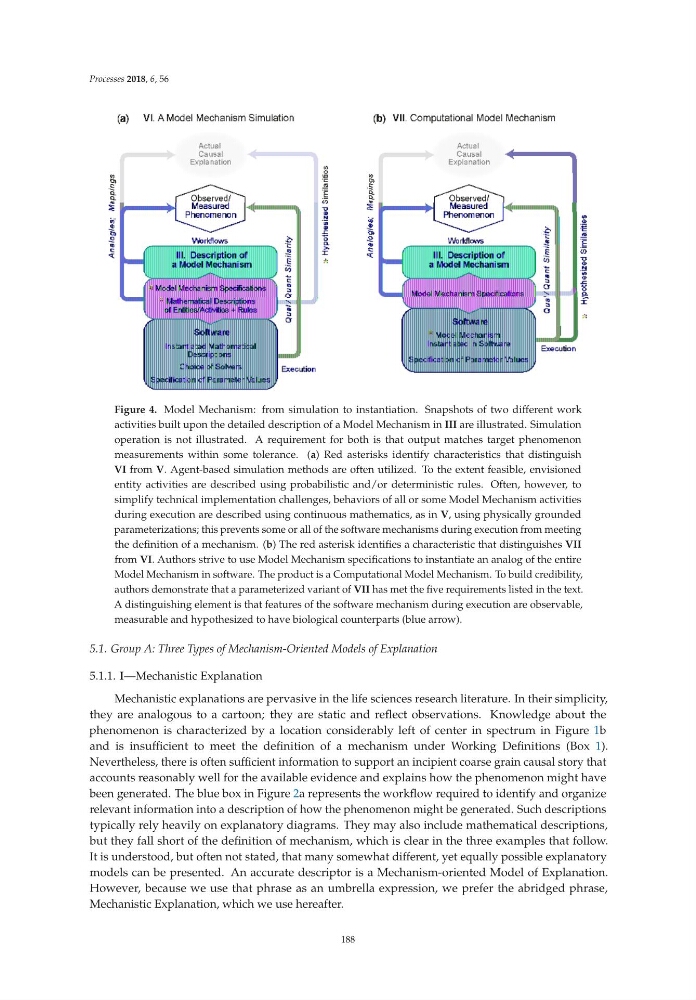
Figure 4. Model Mechanism: from simulation to instantiation. Snapshots of two different work
activities built upon the detailed description of a Model Mechanism in III are illustrated. Simulation
operation is not illustrated. A requirement for both is that output matches target phenomenon
measurements within some tolerance. (a) Red asterisks identify characteristics that distinguish
VI from V. Agent-based simulation methods are often utilized. To the extent feasible, envisioned
entity activities are described using probabilistic and/or deterministic rules. Often, however, to
simplify technical implementation challenges, behaviors of all or some Model Mechanism activities
during execution are described using continuous mathematics, as in V, using physically grounded
parameterizations; this prevents some or all of the software mechanisms during execution from meeting
the definition of a mechanism. (b) The red asterisk identifies a characteristic that distinguishes VII
from VI. Authors strive to use Model Mechanism specifications to instantiate an analog of the entire
Model Mechanism in software. The product is a Computational Model Mechanism. To build credibility,
authors demonstrate that a parameterized variant of VII has met the five requirements listed in the text.
A distinguishing element is that features of the software mechanism during execution are observable,
measurable and hypothesized to have biological counterparts (blue arrow).
5.1. Group A: Three Types of Mechanism-Oriented Models of Explanation
5.1.1. I—Mechanistic Explanation
Mechanistic explanations are pervasive in the life sciences research literature. In their simplicity,
they are analogous to a cartoon; they are static and reflect observations. Knowledge about the
phenomenon is characterized by a location considerably left of center in spectrum in Figure 1b
and is insufficient to meet the definition of a mechanism under Working Definitions (Box 1).
Nevertheless, there is often sufficient information to support an incipient coarse grain causal story that
accounts reasonably well for the available evidence and explains how the phenomenon might have
been generated. The blue box in Figure 2a represents the workflow required to identify and organize
relevant information into a description of how the phenomenon might be generated. Such descriptions
typically rely heavily on explanatory diagrams. They may also include mathematical descriptions,
but they fall short of the definition of mechanism, which is clear in the three examples that follow.
It is understood, but often not stated, that many somewhat different, yet equally possible explanatory
models can be presented. An accurate descriptor is a Mechanism-oriented Model of Explanation.
However, because we use that phrase as an umbrella expression, we prefer the abridged phrase,
Mechanistic Explanation, which we use hereafter.
188
Figure 4. Model Mechanism: from simulation to instantiation. Snapshots of two different work
activities built upon the detailed description of a Model Mechanism in III are illustrated. Simulation
operation is not illustrated. A requirement for both is that output matches target phenomenon
measurements within some tolerance. (a) Red asterisks identify characteristics that distinguish
VI from V. Agent-based simulation methods are often utilized. To the extent feasible, envisioned
entity activities are described using probabilistic and/or deterministic rules. Often, however, to
simplify technical implementation challenges, behaviors of all or some Model Mechanism activities
during execution are described using continuous mathematics, as in V, using physically grounded
parameterizations; this prevents some or all of the software mechanisms during execution from meeting
the definition of a mechanism. (b) The red asterisk identifies a characteristic that distinguishes VII
from VI. Authors strive to use Model Mechanism specifications to instantiate an analog of the entire
Model Mechanism in software. The product is a Computational Model Mechanism. To build credibility,
authors demonstrate that a parameterized variant of VII has met the five requirements listed in the text.
A distinguishing element is that features of the software mechanism during execution are observable,
measurable and hypothesized to have biological counterparts (blue arrow).
5.1. Group A: Three Types of Mechanism-Oriented Models of Explanation
5.1.1. I—Mechanistic Explanation
Mechanistic explanations are pervasive in the life sciences research literature. In their simplicity,
they are analogous to a cartoon; they are static and reflect observations. Knowledge about the
phenomenon is characterized by a location considerably left of center in spectrum in Figure 1b
and is insufficient to meet the definition of a mechanism under Working Definitions (Box 1).
Nevertheless, there is often sufficient information to support an incipient coarse grain causal story that
accounts reasonably well for the available evidence and explains how the phenomenon might have
been generated. The blue box in Figure 2a represents the workflow required to identify and organize
relevant information into a description of how the phenomenon might be generated. Such descriptions
typically rely heavily on explanatory diagrams. They may also include mathematical descriptions,
but they fall short of the definition of mechanism, which is clear in the three examples that follow.
It is understood, but often not stated, that many somewhat different, yet equally possible explanatory
models can be presented. An accurate descriptor is a Mechanism-oriented Model of Explanation.
However, because we use that phrase as an umbrella expression, we prefer the abridged phrase,
Mechanistic Explanation, which we use hereafter.
188