

Processes 2018, 6,42
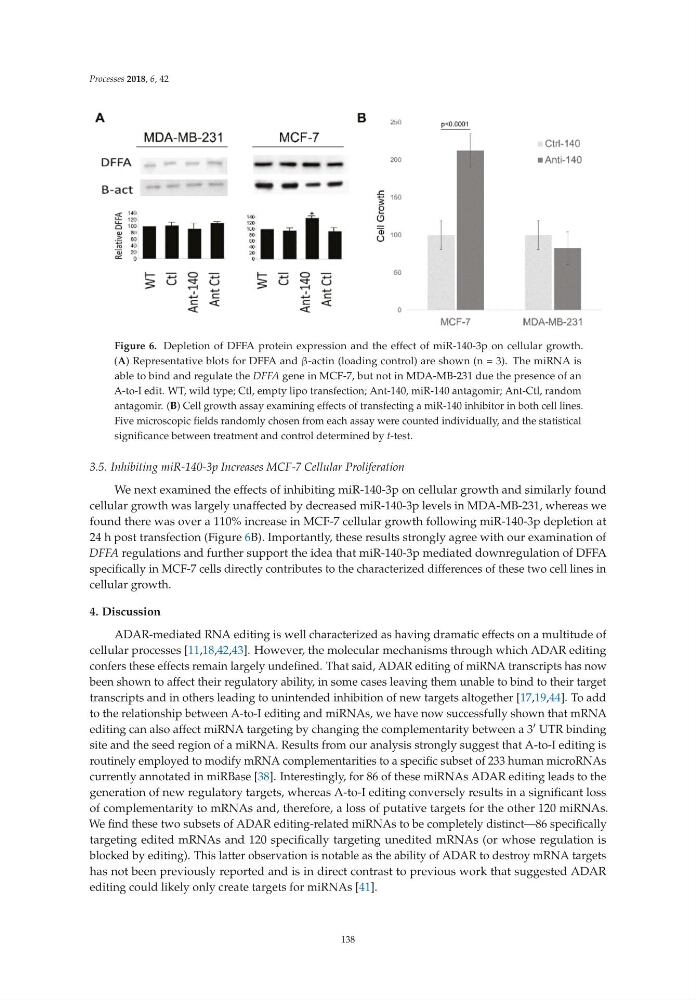
Figure 6. Depletion of DFFA protein expression and the effect of miR-140-3p on cellular growth.
(A) Representative blots for DFFA and β-actin (loading control) are shown (n = 3). The miRNA is
able to bind and regulate the DFFA gene in MCF-7, but not in MDA-MB-231 due the presence of an
A-to-I edit. WT, wild type; Ctl, empty lipo transfection; Ant-140, miR-140 antagomir; Ant-Ctl, random
antagomir. (B) Cell growth assay examining effects of transfecting a miR-140 inhibitor in both cell lines.
Five microscopic fields randomly chosen from each assay were counted individually, and the statistical
significance between treatment and control determined by t-test.
3.5. Inhibiting miR-140-3p Increases MCF-7 Cellular Proliferation
We next examined the effects of inhibiting miR-140-3p on cellular growth and similarly found
cellular growth was largely unaffected by decreased miR-140-3p levels in MDA-MB-231, whereas we
found there was over a 110% increase in MCF-7 cellular growth following miR-140-3p depletion at
24 h post transfection (Figure 6B). Importantly, these results strongly agree with our examination of
DFFA regulations and further support the idea that miR-140-3p mediated downregulation of DFFA
specifically in MCF-7 cells directly contributes to the characterized differences of these two cell lines in
cellular growth.
4. Discussion
ADAR-mediated RNA editing is well characterized as having dramatic effects on a multitude of
cellular processes [11,18,42,43]. However, the molecular mechanisms through which ADAR editing
confers these effects remain largely undefined. That said, ADAR editing of miRNA transcripts has now
been shown to affect their regulatory ability, in some cases leaving them unable to bind to their target
transcripts and in others leading to unintended inhibition of new targets altogether [17,19,44]. To add
to the relationship between A-to-I editing and miRNAs, we have now successfully shown that mRNA
editing can also affect miRNA targeting by changing the complementarity between a 3 ′ UTR binding
site and the seed region of a miRNA. Results from our analysis strongly suggest that A-to-I editing is
routinely employed to modify mRNA complementarities to a specific subset of 233 human microRNAs
currently annotated in miRBase [38]. Interestingly, for 86 of these miRNAs ADAR editing leads to the
generation of new regulatory targets, whereas A-to-I editing conversely results in a significant loss
of complementarity to mRNAs and, therefore, a loss of putative targets for the other 120 miRNAs.
We find these two subsets of ADAR editing-related miRNAs to be completely distinct—86 specifically
targeting edited mRNAs and 120 specifically targeting unedited mRNAs (or whose regulation is
blocked by editing). This latter observation is notable as the ability of ADAR to destroy mRNA targets
has not been previously reported and is in direct contrast to previous work that suggested ADAR
editing could likely only create targets for miRNAs [41].
138
Figure 6. Depletion of DFFA protein expression and the effect of miR-140-3p on cellular growth.
(A) Representative blots for DFFA and β-actin (loading control) are shown (n = 3). The miRNA is
able to bind and regulate the DFFA gene in MCF-7, but not in MDA-MB-231 due the presence of an
A-to-I edit. WT, wild type; Ctl, empty lipo transfection; Ant-140, miR-140 antagomir; Ant-Ctl, random
antagomir. (B) Cell growth assay examining effects of transfecting a miR-140 inhibitor in both cell lines.
Five microscopic fields randomly chosen from each assay were counted individually, and the statistical
significance between treatment and control determined by t-test.
3.5. Inhibiting miR-140-3p Increases MCF-7 Cellular Proliferation
We next examined the effects of inhibiting miR-140-3p on cellular growth and similarly found
cellular growth was largely unaffected by decreased miR-140-3p levels in MDA-MB-231, whereas we
found there was over a 110% increase in MCF-7 cellular growth following miR-140-3p depletion at
24 h post transfection (Figure 6B). Importantly, these results strongly agree with our examination of
DFFA regulations and further support the idea that miR-140-3p mediated downregulation of DFFA
specifically in MCF-7 cells directly contributes to the characterized differences of these two cell lines in
cellular growth.
4. Discussion
ADAR-mediated RNA editing is well characterized as having dramatic effects on a multitude of
cellular processes [11,18,42,43]. However, the molecular mechanisms through which ADAR editing
confers these effects remain largely undefined. That said, ADAR editing of miRNA transcripts has now
been shown to affect their regulatory ability, in some cases leaving them unable to bind to their target
transcripts and in others leading to unintended inhibition of new targets altogether [17,19,44]. To add
to the relationship between A-to-I editing and miRNAs, we have now successfully shown that mRNA
editing can also affect miRNA targeting by changing the complementarity between a 3 ′ UTR binding
site and the seed region of a miRNA. Results from our analysis strongly suggest that A-to-I editing is
routinely employed to modify mRNA complementarities to a specific subset of 233 human microRNAs
currently annotated in miRBase [38]. Interestingly, for 86 of these miRNAs ADAR editing leads to the
generation of new regulatory targets, whereas A-to-I editing conversely results in a significant loss
of complementarity to mRNAs and, therefore, a loss of putative targets for the other 120 miRNAs.
We find these two subsets of ADAR editing-related miRNAs to be completely distinct—86 specifically
targeting edited mRNAs and 120 specifically targeting unedited mRNAs (or whose regulation is
blocked by editing). This latter observation is notable as the ability of ADAR to destroy mRNA targets
has not been previously reported and is in direct contrast to previous work that suggested ADAR
editing could likely only create targets for miRNAs [41].
138