

18
Trace Elements in Abiotic and Biotic Environments
3.6 HUMANS
Total As content in the human body is 7 mg but varies between 0.5 and 15 mg and
tends to increase with age; in the blood, it varies between 2 and 9 μg/L; in tissues and
bones, it ranges from 0.1 to 1.6 mg/kg (Emsley 2011). Mammals tend to accumulate
As in keratin-rich tissues such as hair and nails. Inorganic As can easily pass through
the placenta.
Arsenic has long been associated with criminal activity and still is an emotionally highly charged topic, as large homicidal doses can cause cholera-like symptoms
(acute poisoning) and death. Arsenic-containing medicines have little place in modern medical practice, but at one time were important in the treatment of syphilis
and other diseases (Salvarsan and Fowler’s solution). However, As-containing herbicides (MMAA and DMAA) and veterinary products are still used. It is likely that
they are ultimately degraded to inorganic As or volatile arsines by microbial activity.
As absorption depends on chemical species and its solubility as well as the matrix
in which it is present. Soluble arsenicals in water are highly bioavailable. Long-term
health effects of exposure to As are skin lesions, skin cancer, internal cancers, bladder
kidney, lung, neurological effects, hypertension and cardiovascular disease, pulmonary disease, peripheral vascular disease, and diabetes mellitus (Smith et al. 2000).
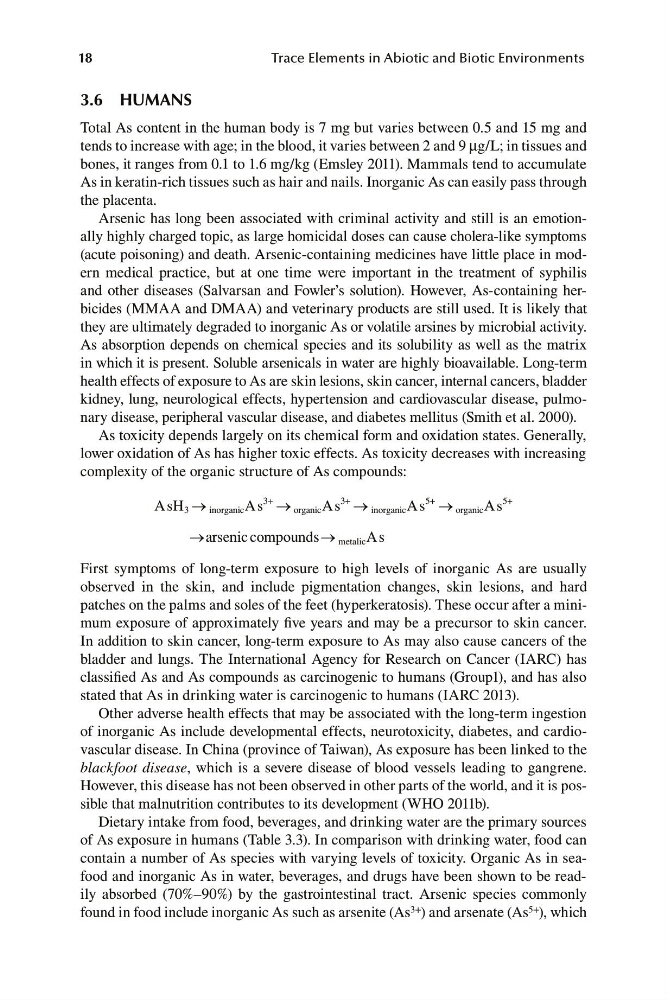
As toxicity depends largely on its chemical form and oxidation states. Generally,
lower oxidation of As has higher toxic effects. As toxicity decreases with increasing
complexity of the organic structure of As compounds:
3+
3+
5+
5+
AsH 3 → inorganic As → organic As → inorganic As → organic As
→ar rsenic compounds→ metalic A s
First symptoms of long-term exposure to high levels of inorganic As are usually
observed in the skin, and include pigmentation changes, skin lesions, and hard
patches on the palms and soles of the feet (hyperkeratosis). These occur after a minimum exposure of approximately five years and may be a precursor to skin cancer.
In addition to skin cancer, long-term exposure to As may also cause cancers of the
bladder and lungs. The International Agency for Research on Cancer (IARC) has
classified As and As compounds as carcinogenic to humans (Group1), and has also
stated that As in drinking water is carcinogenic to humans (IARC 2013).
Other adverse health effects that may be associated with the long-term ingestion
of inorganic As include developmental effects, neurotoxicity, diabetes, and cardiovascular disease. In China (province of Taiwan), As exposure has been linked to the
blackfoot disease, which is a severe disease of blood vessels leading to gangrene.
However, this disease has not been observed in other parts of the world, and it is possible that malnutrition contributes to its development (WHO 2011b).
Dietary intake from food, beverages, and drinking water are the primary sources
of As exposure in humans (Table 3.3). In comparison with drinking water, food can
contain a number of As species with varying levels of toxicity. Organic As in seafood and inorganic As in water, beverages, and drugs have been shown to be readily absorbed (70%–90%) by the gastrointestinal tract. Arsenic species commonly
found in food include inorganic As such as arsenite (As 3+ ) and arsenate (As 5+ ), which