

between 2000 and 2010).Cyprinuscarpiois perceived as stable for some interviewed and
declining for others (Cabras, Santa Giusta and S'EnaArrubia). Eichhornia crassipes
seems to have bloomed in Cabras between 2010 and 2011 and then disappeared, as for
Santa Giusta between 2016 and 2018.
Tab.1: List of NIS in Oristano lagoons collected with LEK protocol.
Kingdom Phylum
Family
Species
Cabras S'Ena
Arrubia
Mistras Santa
Giusta
Marceddì
Is
Benas
Plantae
Tracheophyta Pontederiaceae Eichhornia
crassipes
+
+
Animalia Porifera
Amphoriscidae Paraleucilla magna
+
Ctenophora
Bolinopsidae
Mnemiopsis
leidyi
+
+
+
+
+
Bryozoa
Vesiculariidae Amathia
verticillata
+
+
+
+
+
+
Annelida
Serpulidae
Ficopomatus
enigmaticus
+
+
+
+
+
+
Mollusca
Mytilidae
Arcuatula senhousia
+
+
Ostreidae
Magallana
gigas
+
+
+
+
+
Animalia Arthropoda
Cambaridae
Procambarus
clarkii
+
+
+
Arthropoda
Portunidae
Callinectes
sapidus
+
+
+
+
+
+
Chordata
Cyprinidae
Carassius
auratus
+
Cyprinidae
Cyprinus
carpio
+
+
+
+
Ictaluridae
Ameiurus
melas
+
+
+
+
Myocastoridae Myocastor
coypus
+
+
+
+
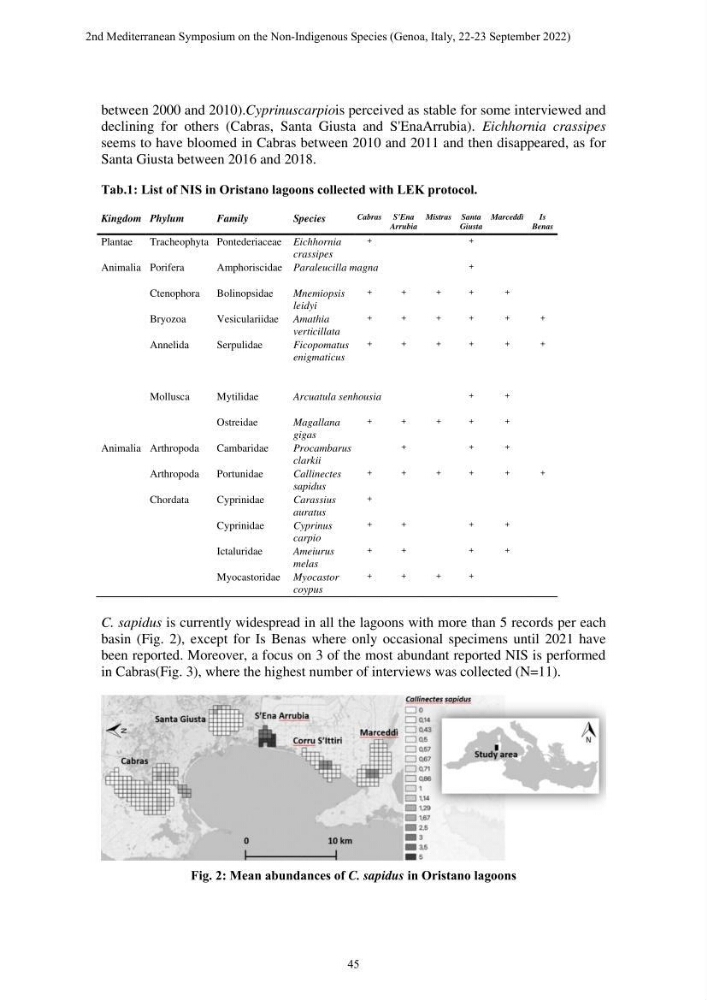
C. sapidus is currently widespread in all the lagoons with more than 5 records per each
basin (Fig. 2), except for Is Benas where only occasional specimens until 2021 have
been reported. Moreover, a focus on 3 of the most abundant reported NIS is performed
in Cabras(Fig. 3), where the highest number of interviews was collected (N=11).
Fig. 2: Mean abundances of C. sapidus in Oristano lagoons
2nd Mediterranean Symposium on the Non-Indigenous Species (Genoa, Italy, 22-23 September 2022)
45
declining for others (Cabras, Santa Giusta and S'EnaArrubia). Eichhornia crassipes
seems to have bloomed in Cabras between 2010 and 2011 and then disappeared, as for
Santa Giusta between 2016 and 2018.
Tab.1: List of NIS in Oristano lagoons collected with LEK protocol.
Kingdom Phylum
Family
Species
Cabras S'Ena
Arrubia
Mistras Santa
Giusta
Marceddì
Is
Benas
Plantae
Tracheophyta Pontederiaceae Eichhornia
crassipes
+
+
Animalia Porifera
Amphoriscidae Paraleucilla magna
+
Ctenophora
Bolinopsidae
Mnemiopsis
leidyi
+
+
+
+
+
Bryozoa
Vesiculariidae Amathia
verticillata
+
+
+
+
+
+
Annelida
Serpulidae
Ficopomatus
enigmaticus
+
+
+
+
+
+
Mollusca
Mytilidae
Arcuatula senhousia
+
+
Ostreidae
Magallana
gigas
+
+
+
+
+
Animalia Arthropoda
Cambaridae
Procambarus
clarkii
+
+
+
Arthropoda
Portunidae
Callinectes
sapidus
+
+
+
+
+
+
Chordata
Cyprinidae
Carassius
auratus
+
Cyprinidae
Cyprinus
carpio
+
+
+
+
Ictaluridae
Ameiurus
melas
+
+
+
+
Myocastoridae Myocastor
coypus
+
+
+
+
C. sapidus is currently widespread in all the lagoons with more than 5 records per each
basin (Fig. 2), except for Is Benas where only occasional specimens until 2021 have
been reported. Moreover, a focus on 3 of the most abundant reported NIS is performed
in Cabras(Fig. 3), where the highest number of interviews was collected (N=11).
Fig. 2: Mean abundances of C. sapidus in Oristano lagoons
2nd Mediterranean Symposium on the Non-Indigenous Species (Genoa, Italy, 22-23 September 2022)
45