

The Large-Scale Thermohaline Structure of the Ross Gyre
93
from the weakly stratified waters of the Antarctic zone. The boundary is also associated with an increased geostrophic shear contributing to the eastward water
transport. In general, this scheme is confirmed by our analysis of température distributions on the sections. As noted by Maslennikov [8] distribution of température within the UCDW température maximum provides a good characteristic of
the upper Ross Gyre and its boundaries. Figure lia gives a quasi-synoptic view of
the température field within the température maximum layer and Figure 11b
shows locations of the APF, SF and BDY during the survey. The location of the
Antarctic Polar Front is marked by a zone of strong méridional gradients within
the water warmer than 2.3-2.5 °C. Farther to the south, two other frontal discontinuities are found within the température range 2.0-1.4 °C. We identify these as
the Southern Front and the ACC subpolar régime boundary (BDY). On ail sections east of 140°W the APF is located just north of the northern slope of the midocean ridge. The SF follows approximately the ridge crest, whereas the BDY lies
south of the ridge crest.
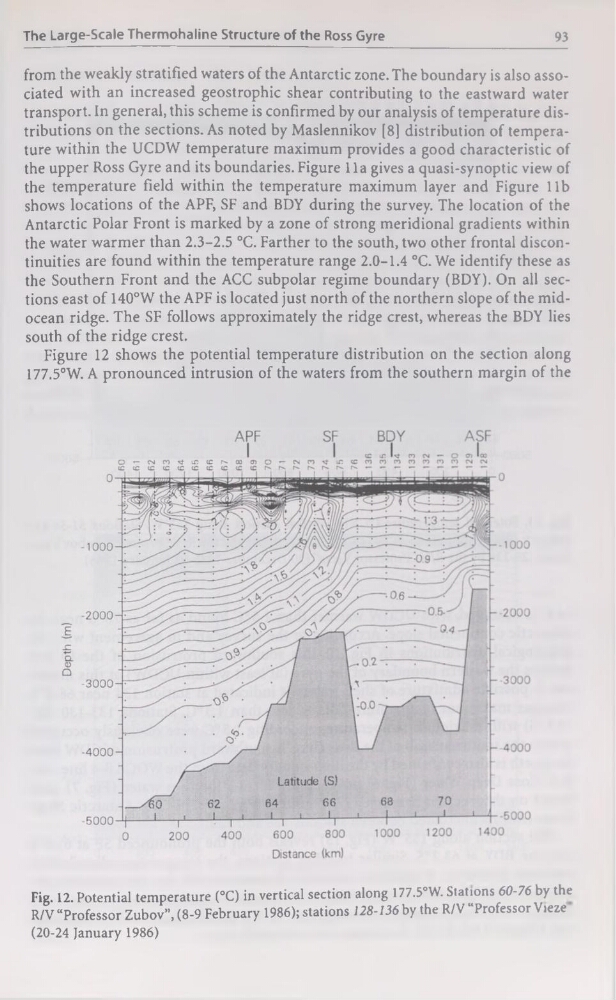
Figure 12 shows the potential température distribution on the section along
177.5°W. A pronounced intrusion of the waters from the Southern margin of the
Fig. 12. Potential température (°C) in vertical section along 177.5°W. Stations 60-76 by the
R/V “Professer Zubov”,(8-9 February 1986); stations 128-136 by the R/V “Professer Vieze
(20-24 January 1986)
93
from the weakly stratified waters of the Antarctic zone. The boundary is also associated with an increased geostrophic shear contributing to the eastward water
transport. In general, this scheme is confirmed by our analysis of température distributions on the sections. As noted by Maslennikov [8] distribution of température within the UCDW température maximum provides a good characteristic of
the upper Ross Gyre and its boundaries. Figure lia gives a quasi-synoptic view of
the température field within the température maximum layer and Figure 11b
shows locations of the APF, SF and BDY during the survey. The location of the
Antarctic Polar Front is marked by a zone of strong méridional gradients within
the water warmer than 2.3-2.5 °C. Farther to the south, two other frontal discontinuities are found within the température range 2.0-1.4 °C. We identify these as
the Southern Front and the ACC subpolar régime boundary (BDY). On ail sections east of 140°W the APF is located just north of the northern slope of the midocean ridge. The SF follows approximately the ridge crest, whereas the BDY lies
south of the ridge crest.
Figure 12 shows the potential température distribution on the section along
177.5°W. A pronounced intrusion of the waters from the Southern margin of the
Fig. 12. Potential température (°C) in vertical section along 177.5°W. Stations 60-76 by the
R/V “Professer Zubov”,(8-9 February 1986); stations 128-136 by the R/V “Professer Vieze
(20-24 January 1986)