

296
BEHAVJOR OF PILES SUPPORTING OFFSHORE STRUCTURES
ment necessary to develop any portion of the load transfer, which is valuable
information in selecting the safe load on the pile.
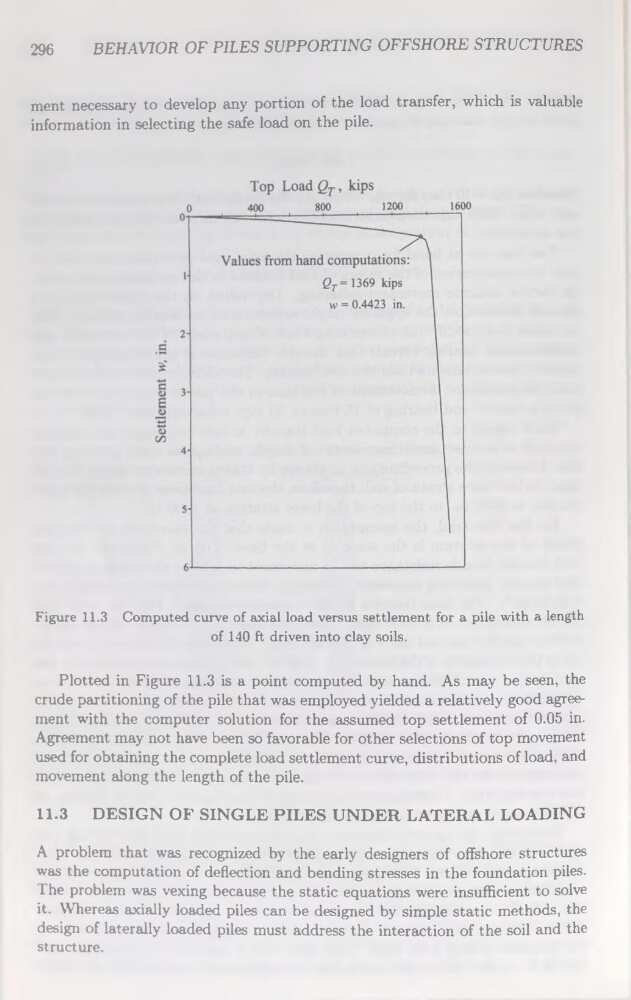
Figure 11.3 Computed curve of axial load versus settlement for a pile with a length
of 140 ft driven into clay soils.
Plotted in Figure 11.3 is a point computed by hand. As may be seen, the
crude partitioning of the pile that was employed yielded a relatively good agreement with the computer solution for the assumed top settlement of 0.05 in.
Agreement may not hâve been so favorable for other sélections of top movement
used for obtaining the complété load settlement curve, distributions of load, and
movement along the length of the pile.
11.3
DESIGN OF SINGLE PILES UNDER LATERAL LOADING
A problem that was recognized by the early designers of offshore structures
was the computation of deflection and bending stresses in the foundation piles.
The problem was vexing because the static équations were insufficient to solve
it. Whereas axially loaded piles can be designed by simple static methods, the
design of laterally loaded piles must address the interaction of the soil and the
structure.
BEHAVJOR OF PILES SUPPORTING OFFSHORE STRUCTURES
ment necessary to develop any portion of the load transfer, which is valuable
information in selecting the safe load on the pile.
Figure 11.3 Computed curve of axial load versus settlement for a pile with a length
of 140 ft driven into clay soils.
Plotted in Figure 11.3 is a point computed by hand. As may be seen, the
crude partitioning of the pile that was employed yielded a relatively good agreement with the computer solution for the assumed top settlement of 0.05 in.
Agreement may not hâve been so favorable for other sélections of top movement
used for obtaining the complété load settlement curve, distributions of load, and
movement along the length of the pile.
11.3
DESIGN OF SINGLE PILES UNDER LATERAL LOADING
A problem that was recognized by the early designers of offshore structures
was the computation of deflection and bending stresses in the foundation piles.
The problem was vexing because the static équations were insufficient to solve
it. Whereas axially loaded piles can be designed by simple static methods, the
design of laterally loaded piles must address the interaction of the soil and the
structure.