

5.1.5 Surface water mass transformation
and formation
The surface densities of Section 5.1.3 and the
air–sea density flux of Section 5.1.4 allow the surface water mass transformation, F() to be calculated from equation (5.1.6). In order to estimate
long-term transformation, we want the time average of F: that is, the time-averaged density flux
that passes through the ocean surface where the
density equals , following the movement of the
outcrop over time. We calculate the three-year
time average from 1991 up to 1993, ͗F()͘ 3-year , as
a simple sum of monthly values.
Note that from equations (5.1.3) and (5.1.7),
where we consider only the surface forcing,
M:9
:9
(5.1.15)
The water mass that accumulates or is destroyed
as a result of surface fluxes between two isopycnals that differ by d is M()d:G()9G(;d).
The surface fluxes of heat and fresh water play
a dual role in surface water mass transformation
and formation. First, through (5.1.9), they determine the surface density flux, D in , equation (5.1.6).
Second, they influence surface temperature and
salinity, and hence , in (5.1.6) and (5.1.15).
However, the two fluxes differ in an important
way. Consider a positive (negative) heat flux trying to create an extreme light (heavy) density class.
To do so, it must warm (cool) the surface water,
but in doing so the heat flux itself becomes less
positive (negative), which tends to shut the process
down. There is no such direct negative feedback
involved when a positive (negative) freshwater flux
tries to create extreme density classes, because
F in does not depend on SSS. This difference is consistent with the observation (Section 5.1.3) that
extreme densities ͗SSD͘ max and ͗SSD͘ min appear to
be more closely associated with extremes in salinity, ͗SSS͘ max and ͗SSS͘ min .
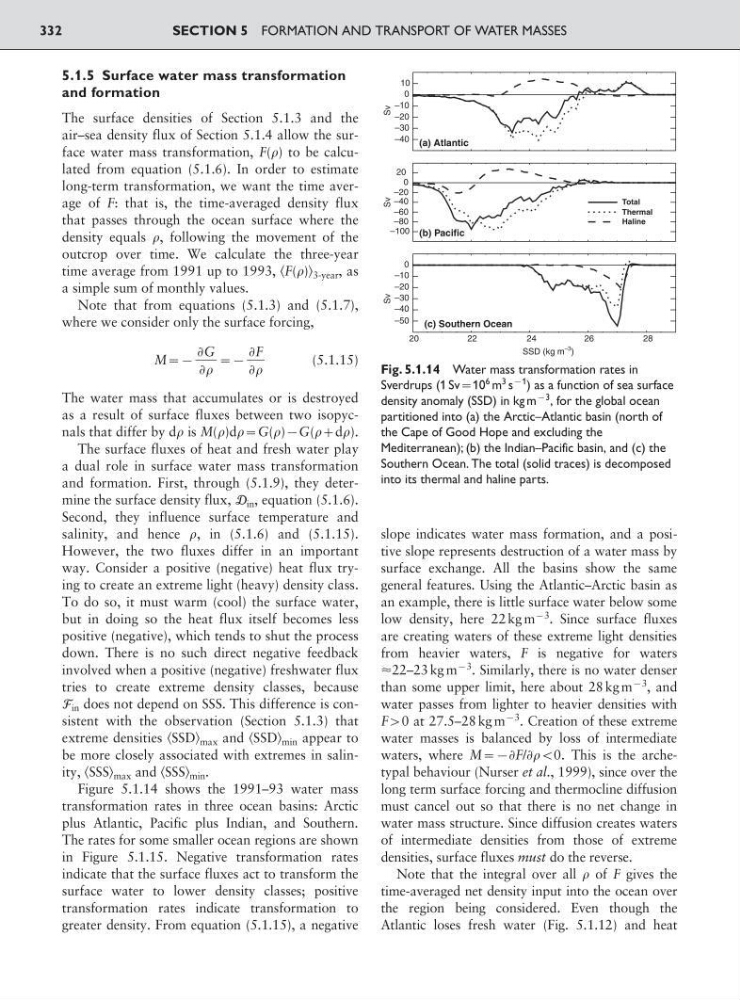
Figure 5.1.14 shows the 1991–93 water mass
transformation rates in three ocean basins: Arctic
plus Atlantic, Pacific plus Indian, and Southern.
The rates for some smaller ocean regions are shown
in Figure 5.1.15. Negative transformation rates
indicate that the surface fluxes act to transform the
surface water to lower density classes; positive
transformation rates indicate transformation to
greater density. From equation (5.1.15), a negative
slope indicates water mass formation, and a positive slope represents destruction of a water mass by
surface exchange. All the basins show the same
general features. Using the Atlantic–Arctic basin as
an example, there is little surface water below some
low density, here 22 kg m
93
. Since surface fluxes
are creating waters of these extreme light densities
from heavier waters, F is negative for waters
Ϸ22–23 kg m
93
. Similarly, there is no water denser
than some upper limit, here about 28 kg m
93
, and
water passes from lighter to heavier densities with
F90 at 27.5–28 kg m
93
. Creation of these extreme
water masses is balanced by loss of intermediate
waters, where M:9ѨF/Ѩ:0. This is the archetypal behaviour (Nurser et al., 1999), since over the
long term surface forcing and thermocline diffusion
must cancel out so that there is no net change in
water mass structure. Since diffusion creates waters
of intermediate densities from those of extreme
densities, surface fluxes must do the reverse.
Note that the integral over all of F gives the
time-averaged net density input into the ocean over
the region being considered. Even though the
Atlantic loses fresh water (Fig. 5.1.12) and heat
ѨF
ᎏ
Ѩ
ѨG
ᎏ
Ѩ
SECTION 5 FORMATION AND TRANSPORT OF WATER MASSES
332
10
0
0
0
–10
–10
–20
–20
–30
–30
–40
–40
–40
Sv
Sv
Sv
20
–20
–60
–80
–100
(a) Atlantic
(b) Pacific
(c) Southern Ocean
–50
20
22
24
26
28
SSD (kg m
–3 )
Total
Thermal
Haline
Fig. 5.1.14 Water mass transformation rates in
Sverdrups (1 Sv:10
6 m
3 s
91 ) as a function of sea surface
density anomaly (SSD) in kg m
93 , for the global ocean
partitioned into (a) the Arctic–Atlantic basin (north of
the Cape of Good Hope and excluding the
Mediterranean); (b) the Indian–Pacific basin, and (c) the
Southern Ocean. The total (solid traces) is decomposed
into its thermal and haline parts.
and formation
The surface densities of Section 5.1.3 and the
air–sea density flux of Section 5.1.4 allow the surface water mass transformation, F() to be calculated from equation (5.1.6). In order to estimate
long-term transformation, we want the time average of F: that is, the time-averaged density flux
that passes through the ocean surface where the
density equals , following the movement of the
outcrop over time. We calculate the three-year
time average from 1991 up to 1993, ͗F()͘ 3-year , as
a simple sum of monthly values.
Note that from equations (5.1.3) and (5.1.7),
where we consider only the surface forcing,
M:9
:9
(5.1.15)
The water mass that accumulates or is destroyed
as a result of surface fluxes between two isopycnals that differ by d is M()d:G()9G(;d).
The surface fluxes of heat and fresh water play
a dual role in surface water mass transformation
and formation. First, through (5.1.9), they determine the surface density flux, D in , equation (5.1.6).
Second, they influence surface temperature and
salinity, and hence , in (5.1.6) and (5.1.15).
However, the two fluxes differ in an important
way. Consider a positive (negative) heat flux trying to create an extreme light (heavy) density class.
To do so, it must warm (cool) the surface water,
but in doing so the heat flux itself becomes less
positive (negative), which tends to shut the process
down. There is no such direct negative feedback
involved when a positive (negative) freshwater flux
tries to create extreme density classes, because
F in does not depend on SSS. This difference is consistent with the observation (Section 5.1.3) that
extreme densities ͗SSD͘ max and ͗SSD͘ min appear to
be more closely associated with extremes in salinity, ͗SSS͘ max and ͗SSS͘ min .
Figure 5.1.14 shows the 1991–93 water mass
transformation rates in three ocean basins: Arctic
plus Atlantic, Pacific plus Indian, and Southern.
The rates for some smaller ocean regions are shown
in Figure 5.1.15. Negative transformation rates
indicate that the surface fluxes act to transform the
surface water to lower density classes; positive
transformation rates indicate transformation to
greater density. From equation (5.1.15), a negative
slope indicates water mass formation, and a positive slope represents destruction of a water mass by
surface exchange. All the basins show the same
general features. Using the Atlantic–Arctic basin as
an example, there is little surface water below some
low density, here 22 kg m
93
. Since surface fluxes
are creating waters of these extreme light densities
from heavier waters, F is negative for waters
Ϸ22–23 kg m
93
. Similarly, there is no water denser
than some upper limit, here about 28 kg m
93
, and
water passes from lighter to heavier densities with
F90 at 27.5–28 kg m
93
. Creation of these extreme
water masses is balanced by loss of intermediate
waters, where M:9ѨF/Ѩ:0. This is the archetypal behaviour (Nurser et al., 1999), since over the
long term surface forcing and thermocline diffusion
must cancel out so that there is no net change in
water mass structure. Since diffusion creates waters
of intermediate densities from those of extreme
densities, surface fluxes must do the reverse.
Note that the integral over all of F gives the
time-averaged net density input into the ocean over
the region being considered. Even though the
Atlantic loses fresh water (Fig. 5.1.12) and heat
ѨF
ᎏ
Ѩ
ѨG
ᎏ
Ѩ
SECTION 5 FORMATION AND TRANSPORT OF WATER MASSES
332
10
0
0
0
–10
–10
–20
–20
–30
–30
–40
–40
–40
Sv
Sv
Sv
20
–20
–60
–80
–100
(a) Atlantic
(b) Pacific
(c) Southern Ocean
–50
20
22
24
26
28
SSD (kg m
–3 )
Total
Thermal
Haline
Fig. 5.1.14 Water mass transformation rates in
Sverdrups (1 Sv:10
6 m
3 s
91 ) as a function of sea surface
density anomaly (SSD) in kg m
93 , for the global ocean
partitioned into (a) the Arctic–Atlantic basin (north of
the Cape of Good Hope and excluding the
Mediterranean); (b) the Indian–Pacific basin, and (c) the
Southern Ocean. The total (solid traces) is decomposed
into its thermal and haline parts.