

baroclinic instability (again requiring zonal flows
comparable to the baroclinic Rossby wave speed), is
necessary to maintain the structure of correlated
pressure gradients and isopycnal heights that produces interfacial form stresses at depth (see Section
4.6.3.3).
In case II, if we identify z:9h with the position
of any isopycnal that does not intersect the bottom
or the Ekman layer at the latitude under consideration, then the northward Ekman flow all returns to
the south beneath this level, giving V
ෆ 2 ෆ:
9V ෆ 1 ෆ: ෆ
x
ෆր 0 f. The Coriolis force in the lower layer
then exactly balances the form stress, and there is
no interfacial form stress on density layers above
topography. The difficulty here is in supplying the
lower layer with the sources and sinks of water
necessary to maintain this flow, without inducing
flows in the intermediate layers. A change in wind
stress, for example, would upset the balance, and
cause some layers to start filling and others emptying. If this change in configuration could then
change the buoyancy forcing by some mechanism
such as that proposed by Gnanadesikan and
Hallberg (2000) (a feedback between buoyancy
forcing and interface height), then an equilibrium
might be attainable. Understanding the feedback
mechanism could then lead to a prediction for the
density structure and therefore the baroclinic flow.
Taken together, these two cases make plain the
intimate relationship between wind forcing and
buoyancy forcing. Models can produce circumpolar
currents when forced by wind alone or by buoyancy
alone. The steady state requires a balance for both,
and cannot be said to be driven by one or the other.
Whether the real Southern Ocean is closer to case I
or case II is discussed in detail in Section 4.6.5.
4.6.3.3 Theoretical predictions of ACC
transport
A complete theory capable of predicting the
absolute transport of the ACC is a formidable
challenge. Such a theory would need to account
for both wind and buoyancy forcing, stratification,
the effect of eddy fluxes in the momentum and
buoyancy budget, and for interactions between the
strong deep currents and bottom topography.
While a complete theory requires elaborate mathematics, some insight can be gained into the factors
controlling the transport of the ACC by appealing
to a variety of simpler models.
Estimates from eddy flux parameterizations
Simple estimates of the baroclinic transport can be
derived from the above considerations of momentum transfer in the ACC. These estimates rest on
the assumption that the transfer is mainly downward and carried by the interfacial form stress of
the transient eddies. In the extreme case when the
stress is transferred undiminished through the water
column down to depth (and taken up there by topographic form stress) its magnitude is set by the surface wind stress
x
. With hЈ:Ј/ z and pЈ x : 0 fvЈ
the interfacial stress h
ෆЈ ෆp ෆЈ ෆ x
ෆ turns into the lateral
buoyancy flux and the momentum balance in the
water column below the Ekman layer becomes
x
:h ෆЈ ෆp ෆЈ ෆ x ෆ Ϸ9
v
ෆЈ ෆ ෆЈ ෆ.
(4.6.6)
fg
ᎏ
N
2
4.6 The Antarctic Circumpolar Current System
285
Rintoul, Hughes and Olbers
z =z 1 (x )
z =z 2 (x )
Geostrophic current ρfv g =–p x
p w
p e
Longitude
Height
δz
δx w
δx e
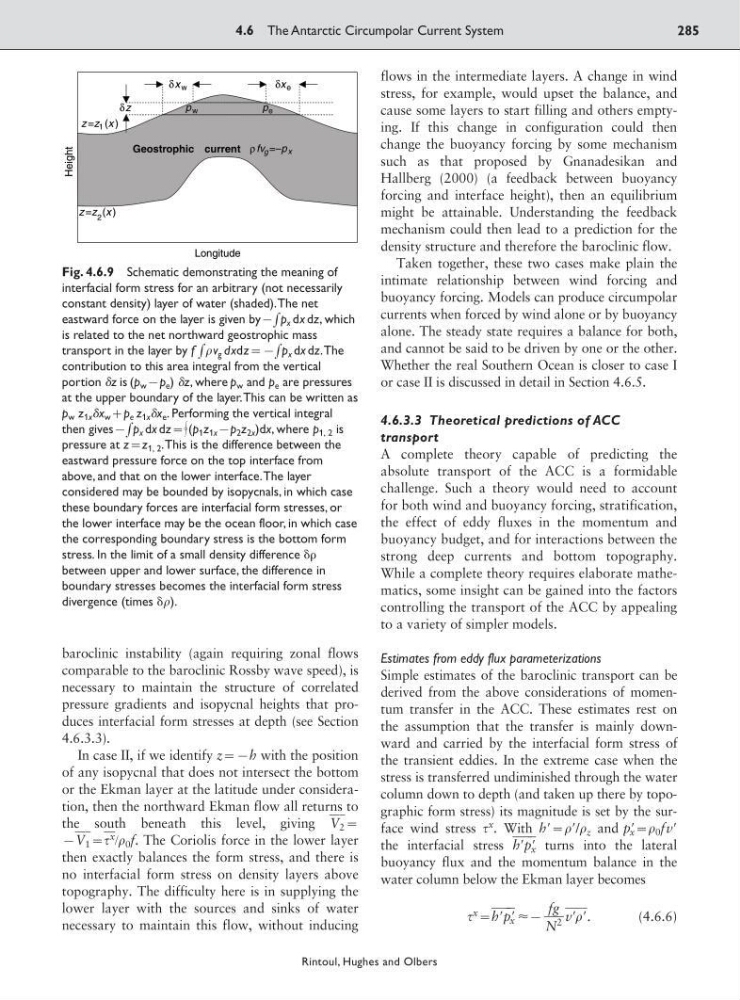
Fig. 4.6.9 Schematic demonstrating the meaning of
interfacial form stress for an arbitrary (not necessarily
constant density) layer of water (shaded).The net
eastward force on the layer is given by9 p x dx dz, which
is related to the net northward geostrophic mass
transport in the layer by f v g dxdz:9 p x dx dz.The
contribution to this area integral from the vertical
portion ␦z is (p w 9p e ) ␦z, where p w and p e are pressures
at the upper boundary of the layer.This can be written as
p w z 1x ␦x w ;p e z 1x ␦x e . Performing the vertical integral
then gives9 p x dx dz:Ώ(p 1 z 1x 9p 2 z 2x )dx, where p 1, 2 is
pressure at z:z 1, 2 .This is the difference between the
eastward pressure force on the top interface from
above, and that on the lower interface.The layer
considered may be bounded by isopycnals, in which case
these boundary forces are interfacial form stresses, or
the lower interface may be the ocean floor, in which case
the corresponding boundary stress is the bottom form
stress. In the limit of a small density difference ␦
between upper and lower surface, the difference in
boundary stresses becomes the interfacial form stress
divergence (times ␦).
comparable to the baroclinic Rossby wave speed), is
necessary to maintain the structure of correlated
pressure gradients and isopycnal heights that produces interfacial form stresses at depth (see Section
4.6.3.3).
In case II, if we identify z:9h with the position
of any isopycnal that does not intersect the bottom
or the Ekman layer at the latitude under consideration, then the northward Ekman flow all returns to
the south beneath this level, giving V
ෆ 2 ෆ:
9V ෆ 1 ෆ: ෆ
x
ෆր 0 f. The Coriolis force in the lower layer
then exactly balances the form stress, and there is
no interfacial form stress on density layers above
topography. The difficulty here is in supplying the
lower layer with the sources and sinks of water
necessary to maintain this flow, without inducing
flows in the intermediate layers. A change in wind
stress, for example, would upset the balance, and
cause some layers to start filling and others emptying. If this change in configuration could then
change the buoyancy forcing by some mechanism
such as that proposed by Gnanadesikan and
Hallberg (2000) (a feedback between buoyancy
forcing and interface height), then an equilibrium
might be attainable. Understanding the feedback
mechanism could then lead to a prediction for the
density structure and therefore the baroclinic flow.
Taken together, these two cases make plain the
intimate relationship between wind forcing and
buoyancy forcing. Models can produce circumpolar
currents when forced by wind alone or by buoyancy
alone. The steady state requires a balance for both,
and cannot be said to be driven by one or the other.
Whether the real Southern Ocean is closer to case I
or case II is discussed in detail in Section 4.6.5.
4.6.3.3 Theoretical predictions of ACC
transport
A complete theory capable of predicting the
absolute transport of the ACC is a formidable
challenge. Such a theory would need to account
for both wind and buoyancy forcing, stratification,
the effect of eddy fluxes in the momentum and
buoyancy budget, and for interactions between the
strong deep currents and bottom topography.
While a complete theory requires elaborate mathematics, some insight can be gained into the factors
controlling the transport of the ACC by appealing
to a variety of simpler models.
Estimates from eddy flux parameterizations
Simple estimates of the baroclinic transport can be
derived from the above considerations of momentum transfer in the ACC. These estimates rest on
the assumption that the transfer is mainly downward and carried by the interfacial form stress of
the transient eddies. In the extreme case when the
stress is transferred undiminished through the water
column down to depth (and taken up there by topographic form stress) its magnitude is set by the surface wind stress
x
. With hЈ:Ј/ z and pЈ x : 0 fvЈ
the interfacial stress h
ෆЈ ෆp ෆЈ ෆ x
ෆ turns into the lateral
buoyancy flux and the momentum balance in the
water column below the Ekman layer becomes
x
:h ෆЈ ෆp ෆЈ ෆ x ෆ Ϸ9
v
ෆЈ ෆ ෆЈ ෆ.
(4.6.6)
fg
ᎏ
N
2
4.6 The Antarctic Circumpolar Current System
285
Rintoul, Hughes and Olbers
z =z 1 (x )
z =z 2 (x )
Geostrophic current ρfv g =–p x
p w
p e
Longitude
Height
δz
δx w
δx e
Fig. 4.6.9 Schematic demonstrating the meaning of
interfacial form stress for an arbitrary (not necessarily
constant density) layer of water (shaded).The net
eastward force on the layer is given by9 p x dx dz, which
is related to the net northward geostrophic mass
transport in the layer by f v g dxdz:9 p x dx dz.The
contribution to this area integral from the vertical
portion ␦z is (p w 9p e ) ␦z, where p w and p e are pressures
at the upper boundary of the layer.This can be written as
p w z 1x ␦x w ;p e z 1x ␦x e . Performing the vertical integral
then gives9 p x dx dz:Ώ(p 1 z 1x 9p 2 z 2x )dx, where p 1, 2 is
pressure at z:z 1, 2 .This is the difference between the
eastward pressure force on the top interface from
above, and that on the lower interface.The layer
considered may be bounded by isopycnals, in which case
these boundary forces are interfacial form stresses, or
the lower interface may be the ocean floor, in which case
the corresponding boundary stress is the bottom form
stress. In the limit of a small density difference ␦
between upper and lower surface, the difference in
boundary stresses becomes the interfacial form stress
divergence (times ␦).