

REEs must depend on their partitioning between
dissolved and particulate phases and a mean sinking
velocity of the particles. Available data on the REEs
associated with suspended particles are summarized
in Table 2.
With the assumptions that a large portion of particulate REEs are exchangeable with dissolved REEs
and that the suspended fine particles are incorporated into the large, fast-sinking particles through
repeated aggregation and disaggregation and eventually removed from the ocean with a certain mean
residence time (t p ), the mean residence time of REEs
(t REE ) is given by the following equation.
t REE ¼ t p =gF p
where F p is the fraction of particulate REEs in seawater (Table 2) and g is the portion that is effectively
exchangeable with the dissolved REEs. Based on the
studies of Th isotopic systematics in the water column, the fine particles, on which most reactive
metals reside, settle with a mean speed of B1 m
day
À1 corresponding to the mean oceanic residence
time of about 10 years. From the chemical leaching
experiments of particulate matter and acidification
treatment of both filtered and unfiltered seawaters to
pHB1.5 to determine acid-soluble particulate fraction of REEs, the value of g is deduced to be between
0.6 and 1.0. The mean residence times of REEs estimated using these values are given in Table 3. They
range from 50 years for Ce to 2900 years for Lu. The
short mean residence time of Ce is approximately
equal to that of Th, being consistent with their predicted dominance of hydrolysis species in seawater.
The 400 year residence time is well suited for Nd
with its heterogeneous distribution of the isotopic
ratios in the oceans.
La
Pr Pm Eu Tb Ho Tm Lu
Yb
Er
Dy
Gd
Sm
Nd
Ce
La
Pr Pm Eu Tb Ho Tm Lu
Yb
Er
Dy
Gd
Sm
Nd
Ce
La Pr Pm Eu Tb Ho Tm Lu
Yb
Er
Dy
Gd
Sm
Nd
Ce
La Pr Pm Eu Tb Ho Tm Lu
Yb
Er
Dy
Gd
Sm
Nd
Ce
La Pr Pm Eu Tb Ho Tm Lu
Yb
Er
Dy
Gd
Sm
Nd
Ce
La Pr Pm Eu Tb Ho Tm Lu
Yb
Er
Dy
Gd
Sm
Nd
Ce
La Pr Pm Eu Tb Ho Tm Lu
Yb
Er
Dy
Gd
Sm
Nd
Ce
La Pr Pm Eu Tb Ho Tm Lu
Yb
Er
Dy
Gd
Sm
Nd
Ce
La Pr Pm Eu Tb Ho Tm Lu
Yb
Er
Dy
Gd
Sm
Nd
Ce
(G)
Strait of Malacca
2.0
1.6
1.2
0.8
0.4
0.0
Seawater/′NPDW′
Seawater/′NPDW′
Seawater/′NPDW′
SSW-24
SSW-26
SSW-25
0.0
0.2
0.4
0.6
0.8
1.0
South China Sea
(H)
0.0
0.1
0.2
0.3
0.4
0.0
0.1
0.2
0.3
0.4
0.0
0.1
0.2
0.3
0.4
East China Sea
+ Kuroshio
near Japan
(I)
Southern Ocean
(E)
0.0
Philippine Sea
(A)
Indonesian
Seas
(C)
West Australian Coast
0.0
0.2
0.4
0.6
0.8
Eastern Indian Ocean
Bay of Bengal
+ Andaman
Sea
(F)
0.0
0.2
0.4
0.6
0.8
1.0
1.2
0.0
0.2
0.4
0.6
0.8
0.2
0.4
0.6
0.8
1.0
1.2
SSW-1
SSW-2
SSW-4
SSW-3
PA-1
SSW-6
SSW-8
SSW-9
SSW-7
SSW-10
SSW-11
SSW-12
SSW-13
SSW-14
SSW-15
PA-4
PA-5
PA-7
SSW-17
SSW-18
SSW-19
SSW-21
SSW-22
SSW-23
PA-10
PA-9
SSW-28
SSW-29
SSW-30
SSW-31
SSW-32
SSW-33
PA-11
SSW-36
SSW-37
SSW-38
SSW-39
SSW-40
(B)
(D)
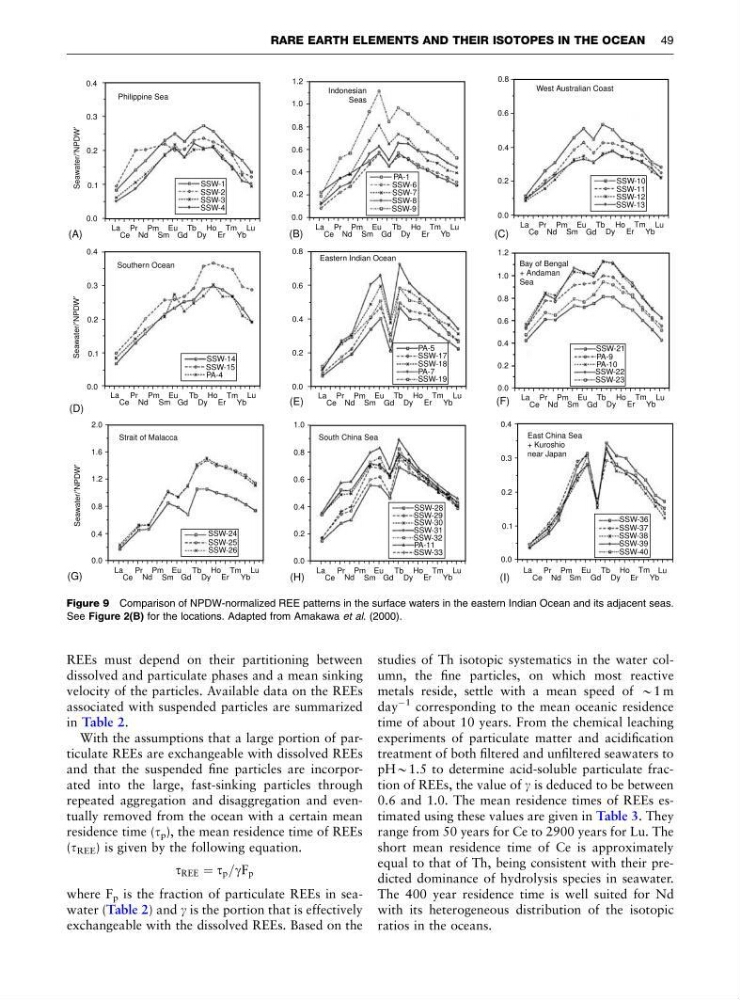
Figure 9 Comparison of NPDW-normalized REE patterns in the surface waters in the eastern Indian Ocean and its adjacent seas.
See Figure 2(B) for the locations. Adapted from Amakawa et al. (2000).
RARE EARTH ELEMENTS AND THEIR ISOTOPES IN THE OCEAN 49
dissolved and particulate phases and a mean sinking
velocity of the particles. Available data on the REEs
associated with suspended particles are summarized
in Table 2.
With the assumptions that a large portion of particulate REEs are exchangeable with dissolved REEs
and that the suspended fine particles are incorporated into the large, fast-sinking particles through
repeated aggregation and disaggregation and eventually removed from the ocean with a certain mean
residence time (t p ), the mean residence time of REEs
(t REE ) is given by the following equation.
t REE ¼ t p =gF p
where F p is the fraction of particulate REEs in seawater (Table 2) and g is the portion that is effectively
exchangeable with the dissolved REEs. Based on the
studies of Th isotopic systematics in the water column, the fine particles, on which most reactive
metals reside, settle with a mean speed of B1 m
day
À1 corresponding to the mean oceanic residence
time of about 10 years. From the chemical leaching
experiments of particulate matter and acidification
treatment of both filtered and unfiltered seawaters to
pHB1.5 to determine acid-soluble particulate fraction of REEs, the value of g is deduced to be between
0.6 and 1.0. The mean residence times of REEs estimated using these values are given in Table 3. They
range from 50 years for Ce to 2900 years for Lu. The
short mean residence time of Ce is approximately
equal to that of Th, being consistent with their predicted dominance of hydrolysis species in seawater.
The 400 year residence time is well suited for Nd
with its heterogeneous distribution of the isotopic
ratios in the oceans.
La
Pr Pm Eu Tb Ho Tm Lu
Yb
Er
Dy
Gd
Sm
Nd
Ce
La
Pr Pm Eu Tb Ho Tm Lu
Yb
Er
Dy
Gd
Sm
Nd
Ce
La Pr Pm Eu Tb Ho Tm Lu
Yb
Er
Dy
Gd
Sm
Nd
Ce
La Pr Pm Eu Tb Ho Tm Lu
Yb
Er
Dy
Gd
Sm
Nd
Ce
La Pr Pm Eu Tb Ho Tm Lu
Yb
Er
Dy
Gd
Sm
Nd
Ce
La Pr Pm Eu Tb Ho Tm Lu
Yb
Er
Dy
Gd
Sm
Nd
Ce
La Pr Pm Eu Tb Ho Tm Lu
Yb
Er
Dy
Gd
Sm
Nd
Ce
La Pr Pm Eu Tb Ho Tm Lu
Yb
Er
Dy
Gd
Sm
Nd
Ce
La Pr Pm Eu Tb Ho Tm Lu
Yb
Er
Dy
Gd
Sm
Nd
Ce
(G)
Strait of Malacca
2.0
1.6
1.2
0.8
0.4
0.0
Seawater/′NPDW′
Seawater/′NPDW′
Seawater/′NPDW′
SSW-24
SSW-26
SSW-25
0.0
0.2
0.4
0.6
0.8
1.0
South China Sea
(H)
0.0
0.1
0.2
0.3
0.4
0.0
0.1
0.2
0.3
0.4
0.0
0.1
0.2
0.3
0.4
East China Sea
+ Kuroshio
near Japan
(I)
Southern Ocean
(E)
0.0
Philippine Sea
(A)
Indonesian
Seas
(C)
West Australian Coast
0.0
0.2
0.4
0.6
0.8
Eastern Indian Ocean
Bay of Bengal
+ Andaman
Sea
(F)
0.0
0.2
0.4
0.6
0.8
1.0
1.2
0.0
0.2
0.4
0.6
0.8
0.2
0.4
0.6
0.8
1.0
1.2
SSW-1
SSW-2
SSW-4
SSW-3
PA-1
SSW-6
SSW-8
SSW-9
SSW-7
SSW-10
SSW-11
SSW-12
SSW-13
SSW-14
SSW-15
PA-4
PA-5
PA-7
SSW-17
SSW-18
SSW-19
SSW-21
SSW-22
SSW-23
PA-10
PA-9
SSW-28
SSW-29
SSW-30
SSW-31
SSW-32
SSW-33
PA-11
SSW-36
SSW-37
SSW-38
SSW-39
SSW-40
(B)
(D)
Figure 9 Comparison of NPDW-normalized REE patterns in the surface waters in the eastern Indian Ocean and its adjacent seas.
See Figure 2(B) for the locations. Adapted from Amakawa et al. (2000).
RARE EARTH ELEMENTS AND THEIR ISOTOPES IN THE OCEAN 49