

production pathways are not well known. In free sea
water, photochemical processes, ion substitution
and, possibly the alkylation of halide ions (during the
oxidation of organic matter by an electron acceptor
such as Fe(III)) are also potential formation mechanisms. Sunlight or microbial mediation are not required for these reactions. In the ocean, chemical
degradation of CH 3 Br occurs by nucleophilic
substitution by chloride and hydrolysis. Microbial
consumption is also a likely sink for halogenated
compounds.
Conclusions
The biogenic trace gases are influenced by the complete range of biological processes – from the biochemical and physiological to the ecological level of
food web dynamics. The gases that are influenced
directly by plant physiology (probably the light
NMHCs and isoprene, for example) tend to be most
closely related to phytoplankton biomass or primary
productivity. Other gases produced during grazing
and decomposition (e.g., DMS, NH 3 ), or gases
formed by photochemical reactions in dissolved organic material show differing temporal dynamics
and different dynamics spatially and with depth in
the ocean. As conditions change in an apparently
warming world, changes in the dynamics of surface
ocean gases can be expected. The behavior of these
trace gases or even the dynamics of the planktonic
community are not understood sufficiently to allow
good quantitative predictions about changes in trace
gas flux to be made. Changes in flux of some gases
could lead to an acceleration of warming, while
changes in others could lead to cooling. It is, thus,
important to understand the factors controlling trace
gas dynamics in the surface ocean.
See also
Air–Sea Transfer: Dimethyl Sulfide, COS, CS 2 , NH 4 ,
Non-Methane Hydrocarbons, Organo-Halogens.
Carbon Cycle. Chlorinated Hydrocarbons. Nitrogen
Cycle.
Further Reading
Andreae MO (1990) Ocean–atmosphere interactions in the
global biogeochemical sulfur cycle. Marine Chemistry
10: 1--29.
Andreae MO and Crutzen PJ (1997) Atmospheric aerosols:
biogeochemical sources and role in atmospheric
chemistry. Science 276: 1052--1058.
Barrett K (1998) Oceanic ammonia emissions in Europe
and their transboundary fluxes. Atmospheric Environment 32(3): 381--391.
Chin M and Davis DD (1993) Global sources and sinks of
OCS and CS 2 and their distributions. Global Biogeochemical Cycles 7: 321--337.
Cox RA, Rattigana OV, and Jones RL (1995) Laboratory
studies of BrO reactions of interest for the atmospheric
ozone balance. In: Bandy RA (ed.) The Chemistry of
the Atmosphere; Oxidants and Oxidation in the
Earth’s Atmosphere. Cambridge: The Royal Society of
Chemistry.
Crutzen PJ (1976) The possible importance of COS for the
sulfate layer of the stratosphere. Geosphysical Research
Letters 3: 73--76.
Graedel TE (1995) Tropospheric budget of reactive
chlorine. Global Biogeochemical Cycles 9: 47--77.
Kettle AJ and Andreae MO (1999) Flux of dimethylsulfide
from the oceans: a comparison of updated datasets and
flux models. Journal of Geophysical Research 105:
26793--26808.
Lovelock JE (1974) CS 2 and the natural sulfur cycle.
Nature 248: 625--626.
Turner SM and Liss PS (1985) Measurements of various
sulfur gases in a coastal marine environment. Journal of
Atmospheric Chemistry 2(3): 223--232.
Ocean
Troposphere
Ozone loss
Photolabile fraction
NO 2
Hv
Soluble fraction (HBr)
Dry deposition
Br
_
Wet
deposition
RCHO
CH 3 Br
Br
BrO
O 3
O 2
O 3
HOBr
HO 2
Hv
Hv
Hv
Coupling with CIO x
Temporary reservoirs
HBr, BrONO2, etc.
Stratosphere
Phytoplankton/Bacteria
CH 3 Br
Photochemistry
Dissolved organic matter
HO 2
CH 3 Br
Br
BrO
O 2
O 3
BrO
OH
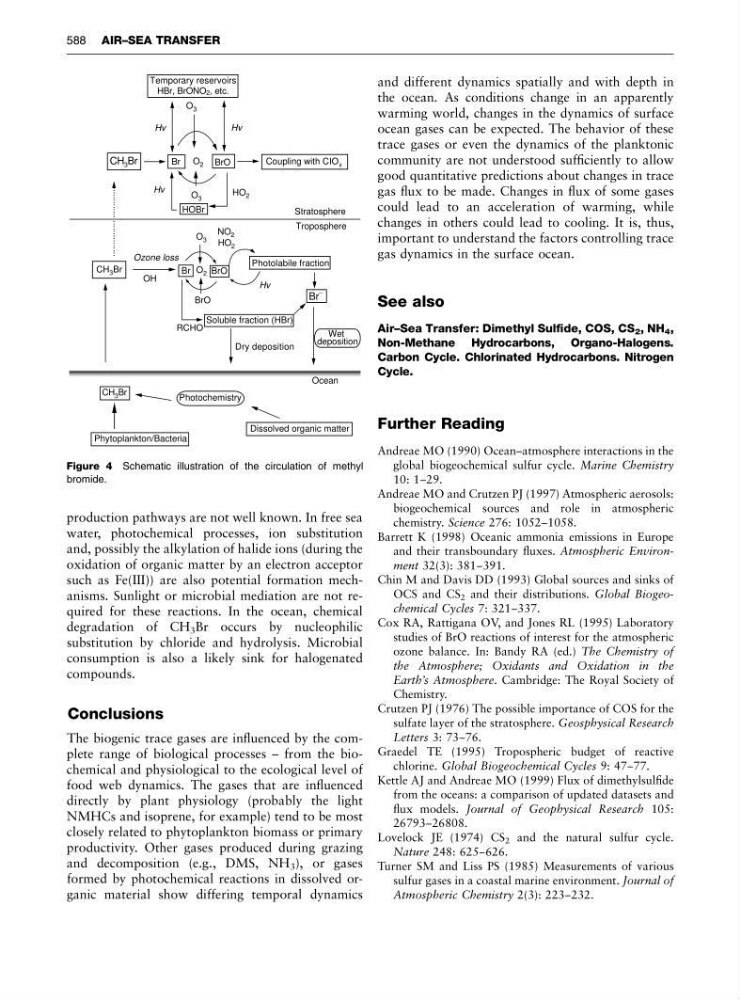
Figure 4 Schematic illustration of the circulation of methyl
bromide.
588 AIR–SEA TRANSFER