

atmosphere, even in regions of very low nutrients. In
the North Sea, an area situated in the middle of
densely populated and industrialized countries of
Western Europe, air from nearby terrestrial sources
may act as a source of NH 3 into surface waters.
It has been estimated that the annual biogenic
emission of ammonia from European seas is around
30 kt N y
À1 , which is comparable to the emissions of
smaller North European countries, leading to the
conclusion (amongst others) that seas are among the
largest sources of imported ammonium for maritime
countries. The net emission of ammonia from coastal
waters of the north-east Pacific Ocean to the atmosphere has been shown to be in the order of
10 mmol m
À2 d
À1
.
Organohalogens
Halogenated compounds, such as methyl chloride
(CH 3 Cl), methyl bromide (CH 3 Br) and methyl iodide
(CH 3 I) are a major source of halogens in the atmosphere, and subsequently form sources of reactive
species capable of catalytically destroying ozone.
Among these CH 3 I is likely to play an important role
in the budget of tropospheric ozone, through production of iodine atoms by photolysis. Due to their
higher photochemical stability methyl chloride and
methyl bromide are more important in stratospheric
chemistry; it has been suggested that BrO species are
responsible for losses of tropospheric ozone in the
Arctic (Figure 4).
Atmospheric methyl halides, measured over the
ocean by several cruise surveys, have been shown to
have average atmospheric mixing ratios of: CH 3 Cl,
550–600 pptv; CH 3 Br, 10–12 pptv; CH 3 I, 0.5–1 pptv.
Their temporal and spatial variations are not well
understood, neither is their production mechanism in
the ocean known. Measurements of atmospheric and
seawater concentrations of CH 3 Cl and CH 3 I have
indicated that the oceans form natural sources of
these methyl halides. In contrast, CH 3 Br appears to
be undersaturated in the open ocean and exhibits
moderate to 100% supersaturation in coastal and
upwelling regions, leading to a global atmosphere
to ocean flux of 13 Gg y
À1
. Coastal salt marshes,
although they constitute a minor area of the global
marine environment, may produce roughly 10% of
the total fluxes of atmospheric CH 3 Br and CH 3 Cl
and thus contribute significantly to the global
budgets.
Macrophytic and phytoplanktonic algae produce a
wide range of volatile organohalogens including
di- and tri-halomethanes and mixed organohalogens.
There is evidence for the involvement of enzymatic
synthesis of methyl halides, but the metabolic
NH 4
+
NO x
Oxidation
Dry and wet deposition
Troposphere
Water
NH 3(g)
Reduction
NH 4 -aerosol
Denitrification
Ammonification
Organic nitrogen
Nitrification
Nitrogen
fixation
NH 3(g)
NO 3
N 2
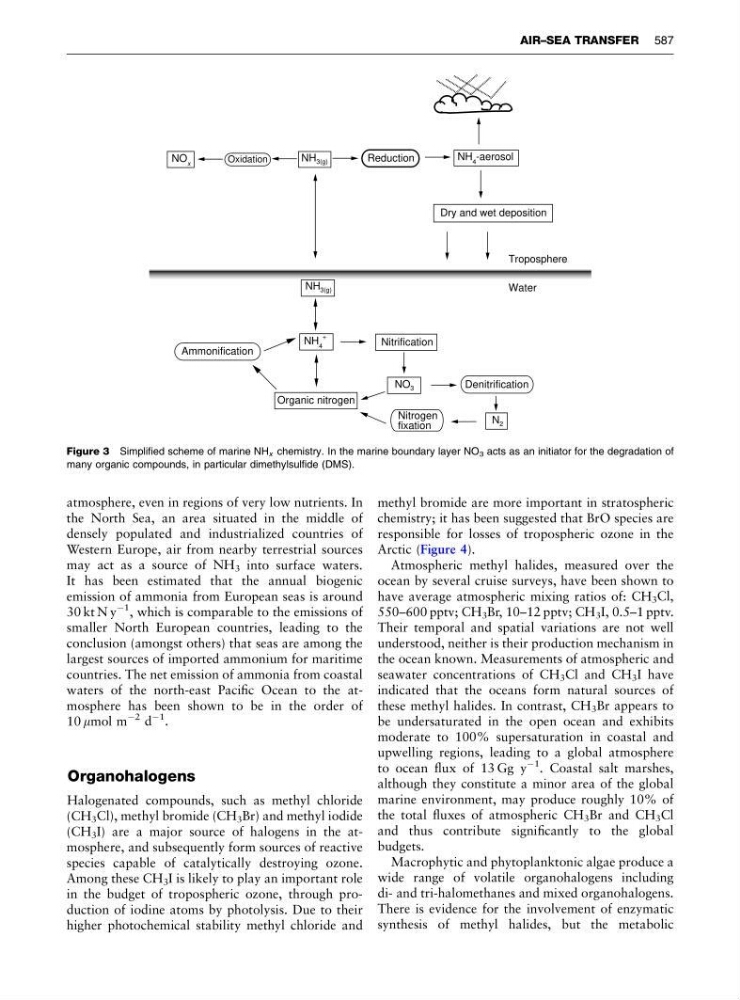
Figure 3 Simplified scheme of marine NH x chemistry. In the marine boundary layer NO 3 acts as an initiator for the degradation of
many organic compounds, in particular dimethylsulfide (DMS).
AIR–SEA TRANSFER 587