

Nitrogen Reservoirs
Dissolved Nitrogen
Nitrate Nitrate accounts for most of the fixed N in
the ocean. The d
15 N of deep ocean nitrate is
typically B5%. Regionally, the d
15 N of nitrate
varies between 2% and 20% due to the effects of N 2
fixation, nitrate assimilation, and denitrification
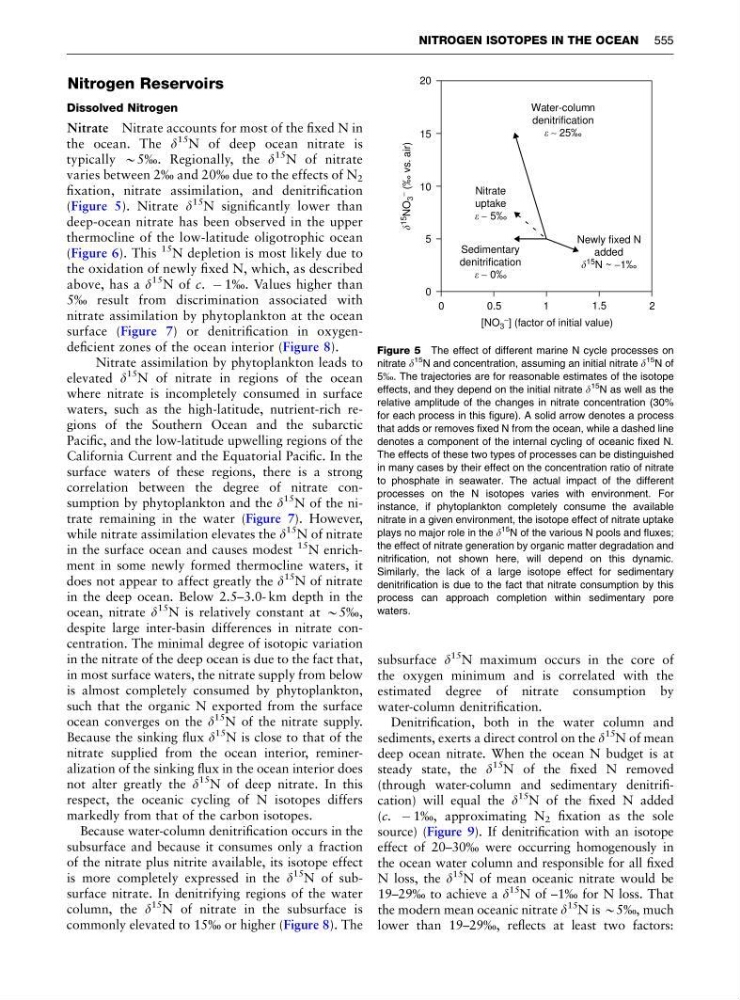
(Figure 5). Nitrate d
15 N significantly lower than
deep-ocean nitrate has been observed in the upper
thermocline of the low-latitude oligotrophic ocean
(Figure 6). This
15 N depletion is most likely due to
the oxidation of newly fixed N, which, as described
above, has a d
15 N of c. À 1%. Values higher than
5% result from discrimination associated with
nitrate assimilation by phytoplankton at the ocean
surface (Figure 7) or denitrification in oxygendeficient zones of the ocean interior (Figure 8).
Nitrate assimilation by phytoplankton leads to
elevated d
15 N of nitrate in regions of the ocean
where nitrate is incompletely consumed in surface
waters, such as the high-latitude, nutrient-rich regions of the Southern Ocean and the subarctic
Pacific, and the low-latitude upwelling regions of the
California Current and the Equatorial Pacific. In the
surface waters of these regions, there is a strong
correlation between the degree of nitrate consumption by phytoplankton and the d
15 N of the nitrate remaining in the water (Figure 7). However,
while nitrate assimilation elevates the d
15 N of nitrate
in the surface ocean and causes modest
15 N enrichment in some newly formed thermocline waters, it
does not appear to affect greatly the d
15 N of nitrate
in the deep ocean. Below 2.5–3.0- km depth in the
ocean, nitrate d
15 N is relatively constant at B5%,
despite large inter-basin differences in nitrate concentration. The minimal degree of isotopic variation
in the nitrate of the deep ocean is due to the fact that,
in most surface waters, the nitrate supply from below
is almost completely consumed by phytoplankton,
such that the organic N exported from the surface
ocean converges on the d
15 N of the nitrate supply.
Because the sinking flux d
15
N is close to that of the
nitrate supplied from the ocean interior, remineralization of the sinking flux in the ocean interior does
not alter greatly the d
15 N of deep nitrate. In this
respect, the oceanic cycling of N isotopes differs
markedly from that of the carbon isotopes.
Because water-column denitrification occurs in the
subsurface and because it consumes only a fraction
of the nitrate plus nitrite available, its isotope effect
is more completely expressed in the d
15 N of subsurface nitrate. In denitrifying regions of the water
column, the d
15 N of nitrate in the subsurface is
commonly elevated to 15% or higher (Figure 8). The
subsurface d
15 N maximum occurs in the core of
the oxygen minimum and is correlated with the
estimated degree of nitrate consumption by
water-column denitrification.
Denitrification, both in the water column and
sediments, exerts a direct control on the d
15
N of mean
deep ocean nitrate. When the ocean N budget is at
steady state, the d
15
N of the fixed N removed
(through water-column and sedimentary denitrification) will equal the d
15
N of the fixed N added
(c. À 1%, approximating N 2 fixation as the sole
source) (Figure 9). If denitrification with an isotope
effect of 20–30% were occurring homogenously in
the ocean water column and responsible for all fixed
N loss, the d
15
N of mean oceanic nitrate would be
19–29% to achieve a d
15
N of –1% for N loss. That
the modern mean oceanic nitrate d
15
N is B5%, much
lower than 19–29%, reflects at least two factors:
0
5
10
15
20
0
1
1.5
2
[NO 3
− ] (factor of initial value)
Newly fixed N
added
15 N ~ −1‰
Water-column
denitrification
∼ 25‰
Sedimentary
denitrification
∼ 0‰
Nitrate
uptake
∼ 5‰
15
NO
3
−
(‰ vs. air)
0.5
Figure 5 The effect of different marine N cycle processes on
nitrate d
15 N and concentration, assuming an initial nitrate d
15 N of
5%. The trajectories are for reasonable estimates of the isotope
effects, and they depend on the initial nitrate d
15
N as well as the
relative amplitude of the changes in nitrate concentration (30%
for each process in this figure). A solid arrow denotes a process
that adds or removes fixed N from the ocean, while a dashed line
denotes a component of the internal cycling of oceanic fixed N.
The effects of these two types of processes can be distinguished
in many cases by their effect on the concentration ratio of nitrate
to phosphate in seawater. The actual impact of the different
processes on the N isotopes varies with environment. For
instance, if phytoplankton completely consume the available
nitrate in a given environment, the isotope effect of nitrate uptake
plays no major role in the d
15 N of the various N pools and fluxes;
the effect of nitrate generation by organic matter degradation and
nitrification, not shown here, will depend on this dynamic.
Similarly, the lack of a large isotope effect for sedimentary
denitrification is due to the fact that nitrate consumption by this
process can approach completion within sedimentary pore
waters.
NITROGEN ISOTOPES IN THE OCEAN 555
Dissolved Nitrogen
Nitrate Nitrate accounts for most of the fixed N in
the ocean. The d
15 N of deep ocean nitrate is
typically B5%. Regionally, the d
15 N of nitrate
varies between 2% and 20% due to the effects of N 2
fixation, nitrate assimilation, and denitrification
(Figure 5). Nitrate d
15 N significantly lower than
deep-ocean nitrate has been observed in the upper
thermocline of the low-latitude oligotrophic ocean
(Figure 6). This
15 N depletion is most likely due to
the oxidation of newly fixed N, which, as described
above, has a d
15 N of c. À 1%. Values higher than
5% result from discrimination associated with
nitrate assimilation by phytoplankton at the ocean
surface (Figure 7) or denitrification in oxygendeficient zones of the ocean interior (Figure 8).
Nitrate assimilation by phytoplankton leads to
elevated d
15 N of nitrate in regions of the ocean
where nitrate is incompletely consumed in surface
waters, such as the high-latitude, nutrient-rich regions of the Southern Ocean and the subarctic
Pacific, and the low-latitude upwelling regions of the
California Current and the Equatorial Pacific. In the
surface waters of these regions, there is a strong
correlation between the degree of nitrate consumption by phytoplankton and the d
15 N of the nitrate remaining in the water (Figure 7). However,
while nitrate assimilation elevates the d
15 N of nitrate
in the surface ocean and causes modest
15 N enrichment in some newly formed thermocline waters, it
does not appear to affect greatly the d
15 N of nitrate
in the deep ocean. Below 2.5–3.0- km depth in the
ocean, nitrate d
15 N is relatively constant at B5%,
despite large inter-basin differences in nitrate concentration. The minimal degree of isotopic variation
in the nitrate of the deep ocean is due to the fact that,
in most surface waters, the nitrate supply from below
is almost completely consumed by phytoplankton,
such that the organic N exported from the surface
ocean converges on the d
15 N of the nitrate supply.
Because the sinking flux d
15
N is close to that of the
nitrate supplied from the ocean interior, remineralization of the sinking flux in the ocean interior does
not alter greatly the d
15 N of deep nitrate. In this
respect, the oceanic cycling of N isotopes differs
markedly from that of the carbon isotopes.
Because water-column denitrification occurs in the
subsurface and because it consumes only a fraction
of the nitrate plus nitrite available, its isotope effect
is more completely expressed in the d
15 N of subsurface nitrate. In denitrifying regions of the water
column, the d
15 N of nitrate in the subsurface is
commonly elevated to 15% or higher (Figure 8). The
subsurface d
15 N maximum occurs in the core of
the oxygen minimum and is correlated with the
estimated degree of nitrate consumption by
water-column denitrification.
Denitrification, both in the water column and
sediments, exerts a direct control on the d
15
N of mean
deep ocean nitrate. When the ocean N budget is at
steady state, the d
15
N of the fixed N removed
(through water-column and sedimentary denitrification) will equal the d
15
N of the fixed N added
(c. À 1%, approximating N 2 fixation as the sole
source) (Figure 9). If denitrification with an isotope
effect of 20–30% were occurring homogenously in
the ocean water column and responsible for all fixed
N loss, the d
15
N of mean oceanic nitrate would be
19–29% to achieve a d
15
N of –1% for N loss. That
the modern mean oceanic nitrate d
15
N is B5%, much
lower than 19–29%, reflects at least two factors:
0
5
10
15
20
0
1
1.5
2
[NO 3
− ] (factor of initial value)
Newly fixed N
added
15 N ~ −1‰
Water-column
denitrification
∼ 25‰
Sedimentary
denitrification
∼ 0‰
Nitrate
uptake
∼ 5‰
15
NO
3
−
(‰ vs. air)
0.5
Figure 5 The effect of different marine N cycle processes on
nitrate d
15 N and concentration, assuming an initial nitrate d
15 N of
5%. The trajectories are for reasonable estimates of the isotope
effects, and they depend on the initial nitrate d
15
N as well as the
relative amplitude of the changes in nitrate concentration (30%
for each process in this figure). A solid arrow denotes a process
that adds or removes fixed N from the ocean, while a dashed line
denotes a component of the internal cycling of oceanic fixed N.
The effects of these two types of processes can be distinguished
in many cases by their effect on the concentration ratio of nitrate
to phosphate in seawater. The actual impact of the different
processes on the N isotopes varies with environment. For
instance, if phytoplankton completely consume the available
nitrate in a given environment, the isotope effect of nitrate uptake
plays no major role in the d
15 N of the various N pools and fluxes;
the effect of nitrate generation by organic matter degradation and
nitrification, not shown here, will depend on this dynamic.
Similarly, the lack of a large isotope effect for sedimentary
denitrification is due to the fact that nitrate consumption by this
process can approach completion within sedimentary pore
waters.
NITROGEN ISOTOPES IN THE OCEAN 555