

produced and nearly completely consumed within
the open ocean surface mixed layer (Figure 3). Culture studies suggest an isotope effect for ammonium
assimilation of up to B20%, decreasing as ammonium concentration decreases, and minimal isotope
effects (o1%) for assimilation of nitrite and urea. In
estuaries, where ammonium can accumulate in the
shallow subsurface and be entrained into the surface
layer, ammonium assimilation causes a clear increase
in the d
15 N of the remaining ammonium pool. Isotope effect estimates based on ammonium concentrations and d
15 N in these environments range from
6.5% to 18.5% (Table 1).
Remineralization The return of organic N to
nitrate occurs in two steps, the degradation of
organic N to ammonium and the bacterial
oxidation of ammonium to nitrate, or ‘nitrification’
(Figure 3). Nitrification itself occurs in two steps,
the oxidation of ammonium to nitrite and the
oxidation of nitrite to nitrate, mediated by distinct
groups of microorganisms. Isotopic discrimination
may occur at all steps involved in remineralization.
Field studies generally suggest that both bacteria
and zooplankton preferentially degrade low-d
15 N
PN to ammonium, yielding residual organic matter
relatively high in
15 N. The wide spectrum of
reactions involved in organic N degradation and the
heterogeneous nature of organic matter (comprised
of compounds with distinct d
15 N that degrade at
various rates) make quantifying the isotope effect
associated with degradation difficult. A few
laboratory studies have quantified the isotope
effects of individual processes such as thermal
peptide bond cleavage, bacterial amino acid uptake
and transamination, and zooplankton ammonium
release. Laboratory studies attempting to mimic
degradation as a whole suggest a net isotope effect
of r3%.
Culture studies indicate a large isotope effect
for the conversion of ammonium to nitrite, the first
step in nitrification (Table 1). Estimates of the isotope effect for marine ammonia-oxidizing bacteria
(B14–19%) are lower than those for terrestrial
ammonia-oxidizing bacteria (as high as B38%),
possibly due to phylogenetic differences. The isotope
effect of nitrification estimated from ammonium
concentration and d
15
N measurements in the Chesapeake Bay is 12–16%, similar to the culture results
for marine ammonia-oxidizing bacteria (Table 1).
Thus far, no culture-based information is available
regarding isotope effects for ammonia-oxidizing
crenarchaea or nitrite-oxidizing bacteria.
200
150
100
50
0
Fluor.
PN
30
25
20
15
10
5
0
6
5
4
3
2
1
0
5
4
3
2
1
0
0
3 0
40
50
60
70
15 N of source
NO 3
−
15 N = 4.4−4.5 F
(a)
Time (h)
1.0
0.5
0
F
Nitrogen (μM)
Fluorescence
(b)
(c)
15
N-PN(‰)
15
N-PN(‰)
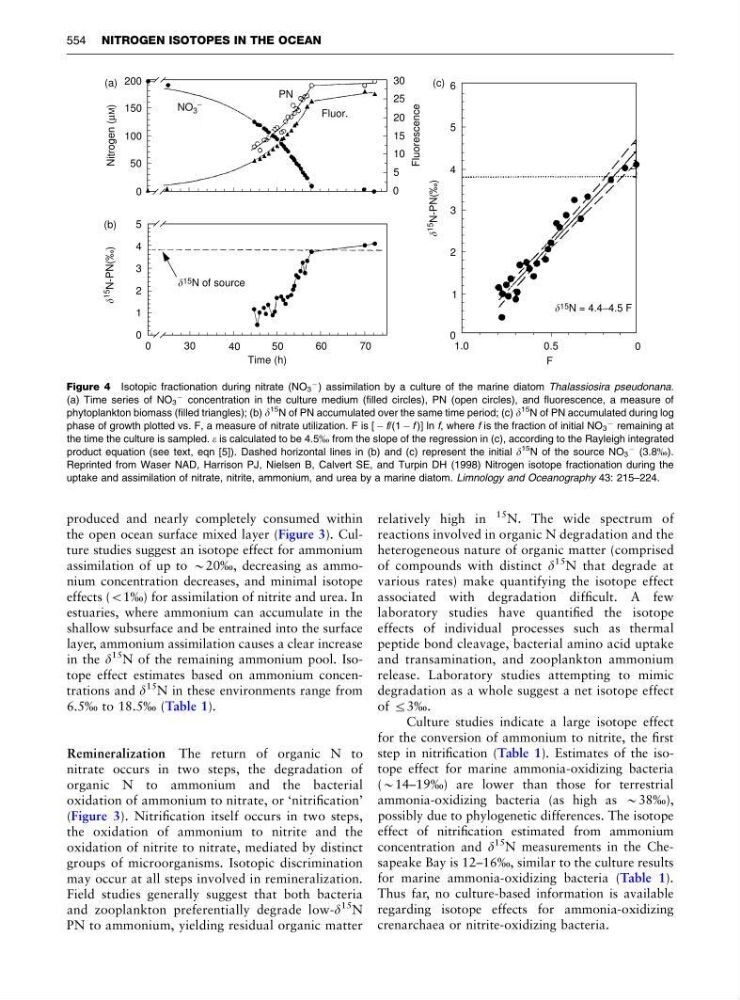
Figure 4 Isotopic fractionation during nitrate (NO 3
À ) assimilation by a culture of the marine diatom Thalassiosira pseudonana.
(a) Time series of NO 3
À concentration in the culture medium (filled circles), PN (open circles), and fluorescence, a measure of
phytoplankton biomass (filled triangles); (b) d
15 N of PN accumulated over the same time period; (c) d
15 N of PN accumulated during log
phase of growth plotted vs. F, a measure of nitrate utilization. F is [ À f/(1 À f )] ln f, where f is the fraction of initial NO 3
À remaining at
the time the culture is sampled. e is calculated to be 4.5% from the slope of the regression in (c), according to the Rayleigh integrated
product equation (see text, eqn [5]). Dashed horizontal lines in (b) and (c) represent the initial d
15 N of the source NO 3
À (3.8%).
Reprinted from Waser NAD, Harrison PJ, Nielsen B, Calvert SE, and Turpin DH (1998) Nitrogen isotope fractionation during the
uptake and assimilation of nitrate, nitrite, ammonium, and urea by a marine diatom. Limnology and Oceanography 43: 215–224.
554 NITROGEN ISOTOPES IN THE OCEAN
the open ocean surface mixed layer (Figure 3). Culture studies suggest an isotope effect for ammonium
assimilation of up to B20%, decreasing as ammonium concentration decreases, and minimal isotope
effects (o1%) for assimilation of nitrite and urea. In
estuaries, where ammonium can accumulate in the
shallow subsurface and be entrained into the surface
layer, ammonium assimilation causes a clear increase
in the d
15 N of the remaining ammonium pool. Isotope effect estimates based on ammonium concentrations and d
15 N in these environments range from
6.5% to 18.5% (Table 1).
Remineralization The return of organic N to
nitrate occurs in two steps, the degradation of
organic N to ammonium and the bacterial
oxidation of ammonium to nitrate, or ‘nitrification’
(Figure 3). Nitrification itself occurs in two steps,
the oxidation of ammonium to nitrite and the
oxidation of nitrite to nitrate, mediated by distinct
groups of microorganisms. Isotopic discrimination
may occur at all steps involved in remineralization.
Field studies generally suggest that both bacteria
and zooplankton preferentially degrade low-d
15 N
PN to ammonium, yielding residual organic matter
relatively high in
15 N. The wide spectrum of
reactions involved in organic N degradation and the
heterogeneous nature of organic matter (comprised
of compounds with distinct d
15 N that degrade at
various rates) make quantifying the isotope effect
associated with degradation difficult. A few
laboratory studies have quantified the isotope
effects of individual processes such as thermal
peptide bond cleavage, bacterial amino acid uptake
and transamination, and zooplankton ammonium
release. Laboratory studies attempting to mimic
degradation as a whole suggest a net isotope effect
of r3%.
Culture studies indicate a large isotope effect
for the conversion of ammonium to nitrite, the first
step in nitrification (Table 1). Estimates of the isotope effect for marine ammonia-oxidizing bacteria
(B14–19%) are lower than those for terrestrial
ammonia-oxidizing bacteria (as high as B38%),
possibly due to phylogenetic differences. The isotope
effect of nitrification estimated from ammonium
concentration and d
15
N measurements in the Chesapeake Bay is 12–16%, similar to the culture results
for marine ammonia-oxidizing bacteria (Table 1).
Thus far, no culture-based information is available
regarding isotope effects for ammonia-oxidizing
crenarchaea or nitrite-oxidizing bacteria.
200
150
100
50
0
Fluor.
PN
30
25
20
15
10
5
0
6
5
4
3
2
1
0
5
4
3
2
1
0
0
3 0
40
50
60
70
15 N of source
NO 3
−
15 N = 4.4−4.5 F
(a)
Time (h)
1.0
0.5
0
F
Nitrogen (μM)
Fluorescence
(b)
(c)
15
N-PN(‰)
15
N-PN(‰)
Figure 4 Isotopic fractionation during nitrate (NO 3
À ) assimilation by a culture of the marine diatom Thalassiosira pseudonana.
(a) Time series of NO 3
À concentration in the culture medium (filled circles), PN (open circles), and fluorescence, a measure of
phytoplankton biomass (filled triangles); (b) d
15 N of PN accumulated over the same time period; (c) d
15 N of PN accumulated during log
phase of growth plotted vs. F, a measure of nitrate utilization. F is [ À f/(1 À f )] ln f, where f is the fraction of initial NO 3
À remaining at
the time the culture is sampled. e is calculated to be 4.5% from the slope of the regression in (c), according to the Rayleigh integrated
product equation (see text, eqn [5]). Dashed horizontal lines in (b) and (c) represent the initial d
15 N of the source NO 3
À (3.8%).
Reprinted from Waser NAD, Harrison PJ, Nielsen B, Calvert SE, and Turpin DH (1998) Nitrogen isotope fractionation during the
uptake and assimilation of nitrate, nitrite, ammonium, and urea by a marine diatom. Limnology and Oceanography 43: 215–224.
554 NITROGEN ISOTOPES IN THE OCEAN