

deep waters in the Southern Ocean are on the order
of 100 years as compared to values of 500–1000
years in the Atlantic, Indian, and Pacific Oceans.
In terms of chemical equilibrium, biogenic silica is
undersaturated by a factor of 10–1000-fold in surface waters and by at least a factor of 5 in deep
waters. Therefore, siliceous biota must expend a
good deal of energy concentrating silicate in their
cells and bodies before precipitation can take place.
This is quite different from the case of calcium carbonate (a material used by another type of plankton
to form hard parts), which is supersaturated severalfold in most tropical and temperate surface waters.
Deep waters everywhere are undersaturated with
respect to biogenic silica (although to different extents). Therefore, inorganic dissolution of silica takes
place in the water column as soon as the plankton’s
protective organic matter is removed from the biota
(typically by microbial or grazing activities). It is not
until the siliceous skeletal material is buried in the
seabed that the water surrounding the silica even
approaches saturation levels (see later discussion on
sedimentary recycling), which diminishes the rate of
dissolution and enhances preservation and burial.
The Marine Silica Cycle
Sources of Dissolved Silicate to the Ocean
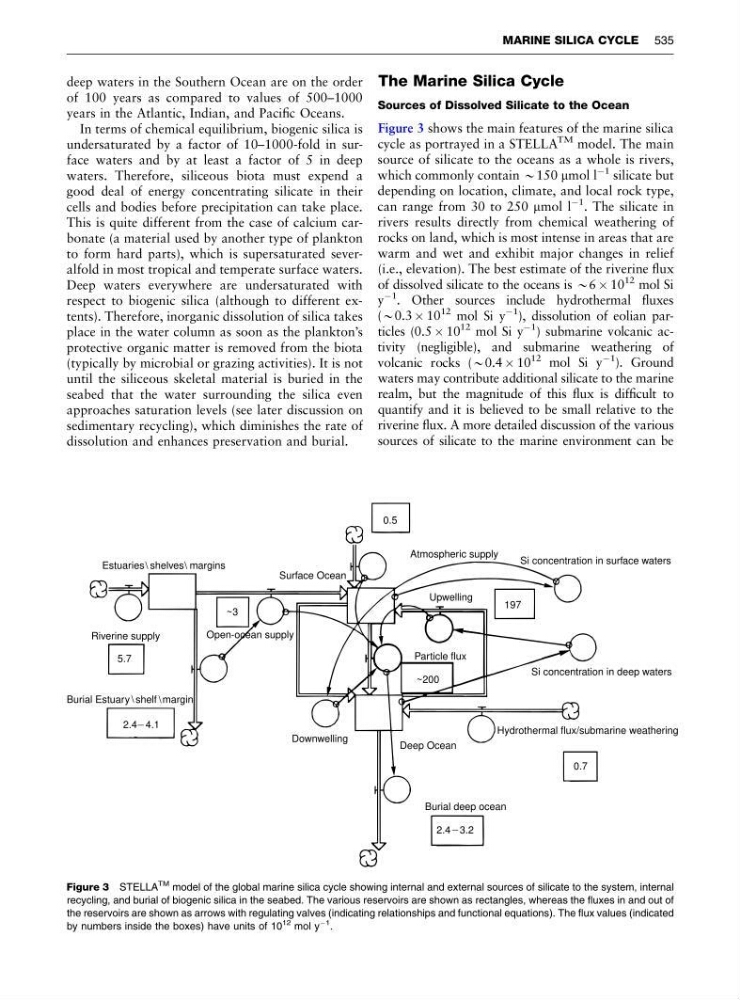
Figure 3 shows the main features of the marine silica
cycle as portrayed in a STELLA
TM model. The main
source of silicate to the oceans as a whole is rivers,
which commonly contain B150 mmol l
À1 silicate but
depending on location, climate, and local rock type,
can range from 30 to 250 mmol l
À1
. The silicate in
rivers results directly from chemical weathering of
rocks on land, which is most intense in areas that are
warm and wet and exhibit major changes in relief
(i.e., elevation). The best estimate of the riverine flux
of dissolved silicate to the oceans is B6 Â 10
12 mol Si
y
À1
. Other sources include hydrothermal fluxes
(B0.3 Â 10
12 mol Si y
À1
), dissolution of eolian particles (0.5 Â 10
12 mol Si y
À1
) submarine volcanic activity (negligible), and submarine weathering of
volcanic rocks (B0.4 Â 10
12 mol Si y
À1
). Ground
waters may contribute additional silicate to the marine
realm, but the magnitude of this flux is difficult to
quantify and it is believed to be small relative to the
riverine flux. A more detailed discussion of the various
sources of silicate to the marine environment can be
Estuaries\ shelves\ margins
Surface Ocean
Open-ocean supply
Burial Estuary \ shelf \ margin
Riverine supply
5.7
Si concentration in surface waters
Atmospheric supply
Deep Ocean
Downwelling
Si concentration in deep waters
Hydrothermal flux/submarine weathering
Upwelling
Burial deep ocean
2.4 _ 3.2
0.7
~3
~200
197
Particle flux
0.5
2.4 _ 4.1
Figure 3 STELLA
TM model of the global marine silica cycle showing internal and external sources of silicate to the system, internal
recycling, and burial of biogenic silica in the seabed. The various reservoirs are shown as rectangles, whereas the fluxes in and out of
the reservoirs are shown as arrows with regulating valves (indicating relationships and functional equations). The flux values (indicated
by numbers inside the boxes) have units of 10
12 mol y
À1 .
MARINE SILICA CYCLE 535
of 100 years as compared to values of 500–1000
years in the Atlantic, Indian, and Pacific Oceans.
In terms of chemical equilibrium, biogenic silica is
undersaturated by a factor of 10–1000-fold in surface waters and by at least a factor of 5 in deep
waters. Therefore, siliceous biota must expend a
good deal of energy concentrating silicate in their
cells and bodies before precipitation can take place.
This is quite different from the case of calcium carbonate (a material used by another type of plankton
to form hard parts), which is supersaturated severalfold in most tropical and temperate surface waters.
Deep waters everywhere are undersaturated with
respect to biogenic silica (although to different extents). Therefore, inorganic dissolution of silica takes
place in the water column as soon as the plankton’s
protective organic matter is removed from the biota
(typically by microbial or grazing activities). It is not
until the siliceous skeletal material is buried in the
seabed that the water surrounding the silica even
approaches saturation levels (see later discussion on
sedimentary recycling), which diminishes the rate of
dissolution and enhances preservation and burial.
The Marine Silica Cycle
Sources of Dissolved Silicate to the Ocean
Figure 3 shows the main features of the marine silica
cycle as portrayed in a STELLA
TM model. The main
source of silicate to the oceans as a whole is rivers,
which commonly contain B150 mmol l
À1 silicate but
depending on location, climate, and local rock type,
can range from 30 to 250 mmol l
À1
. The silicate in
rivers results directly from chemical weathering of
rocks on land, which is most intense in areas that are
warm and wet and exhibit major changes in relief
(i.e., elevation). The best estimate of the riverine flux
of dissolved silicate to the oceans is B6 Â 10
12 mol Si
y
À1
. Other sources include hydrothermal fluxes
(B0.3 Â 10
12 mol Si y
À1
), dissolution of eolian particles (0.5 Â 10
12 mol Si y
À1
) submarine volcanic activity (negligible), and submarine weathering of
volcanic rocks (B0.4 Â 10
12 mol Si y
À1
). Ground
waters may contribute additional silicate to the marine
realm, but the magnitude of this flux is difficult to
quantify and it is believed to be small relative to the
riverine flux. A more detailed discussion of the various
sources of silicate to the marine environment can be
Estuaries\ shelves\ margins
Surface Ocean
Open-ocean supply
Burial Estuary \ shelf \ margin
Riverine supply
5.7
Si concentration in surface waters
Atmospheric supply
Deep Ocean
Downwelling
Si concentration in deep waters
Hydrothermal flux/submarine weathering
Upwelling
Burial deep ocean
2.4 _ 3.2
0.7
~3
~200
197
Particle flux
0.5
2.4 _ 4.1
Figure 3 STELLA
TM model of the global marine silica cycle showing internal and external sources of silicate to the system, internal
recycling, and burial of biogenic silica in the seabed. The various reservoirs are shown as rectangles, whereas the fluxes in and out of
the reservoirs are shown as arrows with regulating valves (indicating relationships and functional equations). The flux values (indicated
by numbers inside the boxes) have units of 10
12 mol y
À1 .
MARINE SILICA CYCLE 535