

cycle, but the complexity (if not always the sophistication) of the models and analysis has grown with
time. Ocean carbon models can be roughly divided into idealized models (multi-box, 1-D and 2-D
advection–diffusion models) and 3-D general circulation models (GCMs). Although the distinction can
be blurry at times, idealized models are characterized
typically by reduced dimensionality and/or kinematic
rather than dynamic physics. That is, the circulation
and mixing are specified rather than computed by the
model and are often adjusted to best match the
transient tracer data.
Global Box Models
An example of a simple, high-latitude outcrop box
model is shown in Figures 3(a) and 3(b). The boxes
represent the atmosphere, the high- and low-latitude
surface ocean, and the deep interior. In the model, the
ocean thermohaline circulation is represented by oneway flow with high-latitude sinking, low-latitude
upwelling, and poleward surface return flow. Horizontal and vertical mixing is included by two-way
exchange of water between each pair of boxes. The
physical parameters are constrained so that model
natural radiocarbon values roughly match observations. Note that the
14
C concentration in the deep
water is significantly depleted relative to the surface
boxes and amounts to a mean deep-water ventilation
age of about 1150 years.
The model circulation also transports phosphate,
inorganic carbon, and alkalinity. Biological production, particle export, and remineralization are
simulated by the uptake of these species in the surface boxes and release in the deep box. The model
allows for air–sea fluxes of CO 2 between the surface
boxes and the atmosphere. The low-latitude nutrient
concentrations are set near zero as observed. The
surface nutrients in the high-latitude box are allowed
to vary and are never completely depleted in the
simulation of modern conditions. Similar regions of
‘high-nutrient, low-chlorophyll’ concentrations are
observed in the subpolar North Pacific and Southern
Oceans and are thought to be maintained by a
combination of light and iron limitation as well as
zooplankton grazing. The nutrient and DIC concentrations in the deep box are higher than either of
the surface boxes, reflecting the remineralization of
sinking organic particles.
The three-box ocean outcrop model predicts that
atmospheric CO 2 is controlled primarily by the degree of nutrient utilization in high-latitude surface
regions. Marine production and remineralization
occur with approximately fixed carbon-to-nutrient
ratios, the elevated nutrients in the deep box are
associated with an equivalent increase in DIC and
pCO 2 . Large adjustments in the partitioning of
140 160 180 200 220 240
0
1000
2000
3000
4000
5000
6000
Oxygen (μmol kg
−1 )
Depth (m)
−200
−250
−150
−100
0
1000
2000
3000
4000
5000
6000
δ
14 C
Depth (m)
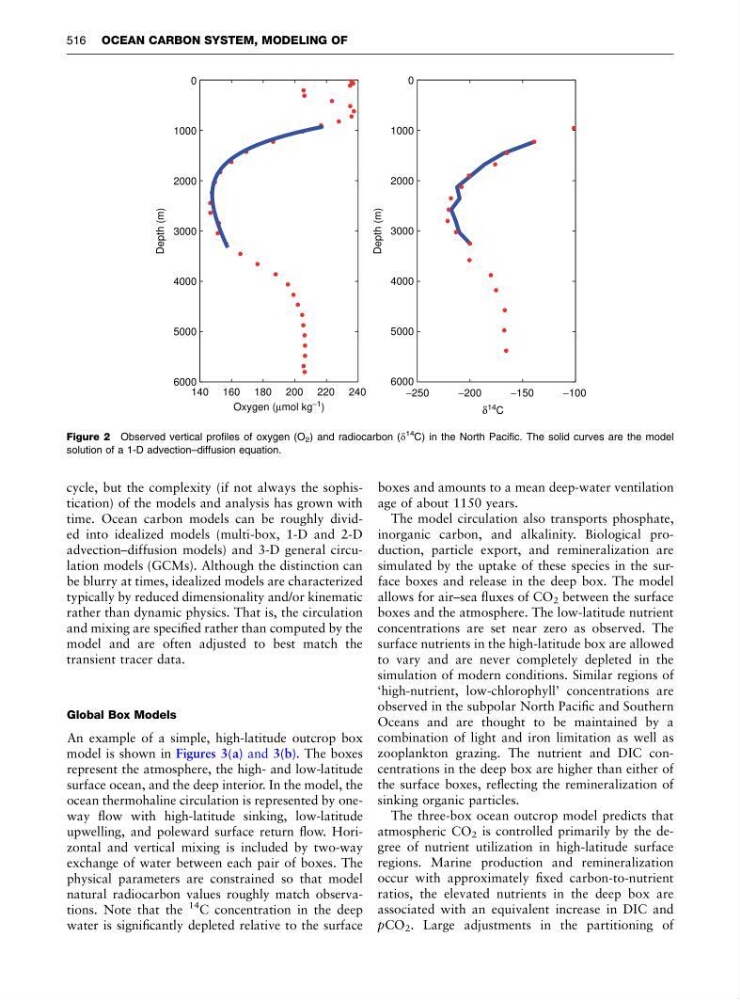
Figure 2 Observed vertical profiles of oxygen (O 2 ) and radiocarbon (d
14
C) in the North Pacific. The solid curves are the model
solution of a 1-D advection–diffusion equation.
516 OCEAN CARBON SYSTEM, MODELING OF
time. Ocean carbon models can be roughly divided into idealized models (multi-box, 1-D and 2-D
advection–diffusion models) and 3-D general circulation models (GCMs). Although the distinction can
be blurry at times, idealized models are characterized
typically by reduced dimensionality and/or kinematic
rather than dynamic physics. That is, the circulation
and mixing are specified rather than computed by the
model and are often adjusted to best match the
transient tracer data.
Global Box Models
An example of a simple, high-latitude outcrop box
model is shown in Figures 3(a) and 3(b). The boxes
represent the atmosphere, the high- and low-latitude
surface ocean, and the deep interior. In the model, the
ocean thermohaline circulation is represented by oneway flow with high-latitude sinking, low-latitude
upwelling, and poleward surface return flow. Horizontal and vertical mixing is included by two-way
exchange of water between each pair of boxes. The
physical parameters are constrained so that model
natural radiocarbon values roughly match observations. Note that the
14
C concentration in the deep
water is significantly depleted relative to the surface
boxes and amounts to a mean deep-water ventilation
age of about 1150 years.
The model circulation also transports phosphate,
inorganic carbon, and alkalinity. Biological production, particle export, and remineralization are
simulated by the uptake of these species in the surface boxes and release in the deep box. The model
allows for air–sea fluxes of CO 2 between the surface
boxes and the atmosphere. The low-latitude nutrient
concentrations are set near zero as observed. The
surface nutrients in the high-latitude box are allowed
to vary and are never completely depleted in the
simulation of modern conditions. Similar regions of
‘high-nutrient, low-chlorophyll’ concentrations are
observed in the subpolar North Pacific and Southern
Oceans and are thought to be maintained by a
combination of light and iron limitation as well as
zooplankton grazing. The nutrient and DIC concentrations in the deep box are higher than either of
the surface boxes, reflecting the remineralization of
sinking organic particles.
The three-box ocean outcrop model predicts that
atmospheric CO 2 is controlled primarily by the degree of nutrient utilization in high-latitude surface
regions. Marine production and remineralization
occur with approximately fixed carbon-to-nutrient
ratios, the elevated nutrients in the deep box are
associated with an equivalent increase in DIC and
pCO 2 . Large adjustments in the partitioning of
140 160 180 200 220 240
0
1000
2000
3000
4000
5000
6000
Oxygen (μmol kg
−1 )
Depth (m)
−200
−250
−150
−100
0
1000
2000
3000
4000
5000
6000
δ
14 C
Depth (m)
Figure 2 Observed vertical profiles of oxygen (O 2 ) and radiocarbon (d
14
C) in the North Pacific. The solid curves are the model
solution of a 1-D advection–diffusion equation.
516 OCEAN CARBON SYSTEM, MODELING OF