

the air–sea transfer of CO 2 . Without this pump in
action, atmospheric CO 2 concentration might be as
high as 500 to 1000 ppm versus the 360 ppm observed today.
Contribution of POC Versus DOC in the Biological
Pump
Historically, sinking particles were thought of as the
dominant export mechanism of the biological pump
and the primary driver of respiration in the ocean’s
interior. However, downward mixing of surface
water can also transport large quantities of DOC
trapped within the sinking water mass. In order for
DOC to be an important contributor to the biological pump two sets of conditions must exist. First,
the producer–consumer dynamics in the surface
waters must yield DOC of a quality that is resistant
to rapid remineralization by bacteria and lead to net
DOC production. Second, the physical system must
undergo periods of deep convective mixing or
subduction in order to remove surface waters and
DOC to depth. Although approximately 80% of the
globally exported carbon is in the form of POC,
DOC can represent 30–50% of carbon export in the
upper 500 m of the water column at specific ocean
sites. The biological/physical controls on DOC export are complex and are currently being assessed for
various regions of the worlds’ ocean.
Factors That Affect the Efficiency of the Biological
Pump
An efficient biological pump means that a large
fraction of the system’s net production is removed
from the surface waters via export mechanisms.
Factors that affect the efficiency of the biological
pump are numerous and include nutrient supply and
plankton community structure.
Nutrient supply Does an increased partial
pressure of atmospheric CO 2 lead to a more
Break up
Seabed
3
1
2
Physical mixing
of DOC
Base of euphotic zone
(Bacteria)
(Zooplankton)
Active
vertical migration
Respiration
Consumption,
repackaging
Decomposition
Passive
sinking of
POC, PIC
Egestion
Aggregate
formation
Fixation of carbon
by phytoplankton
Excretion
Excretion
Respiration
Grazing
CO 2
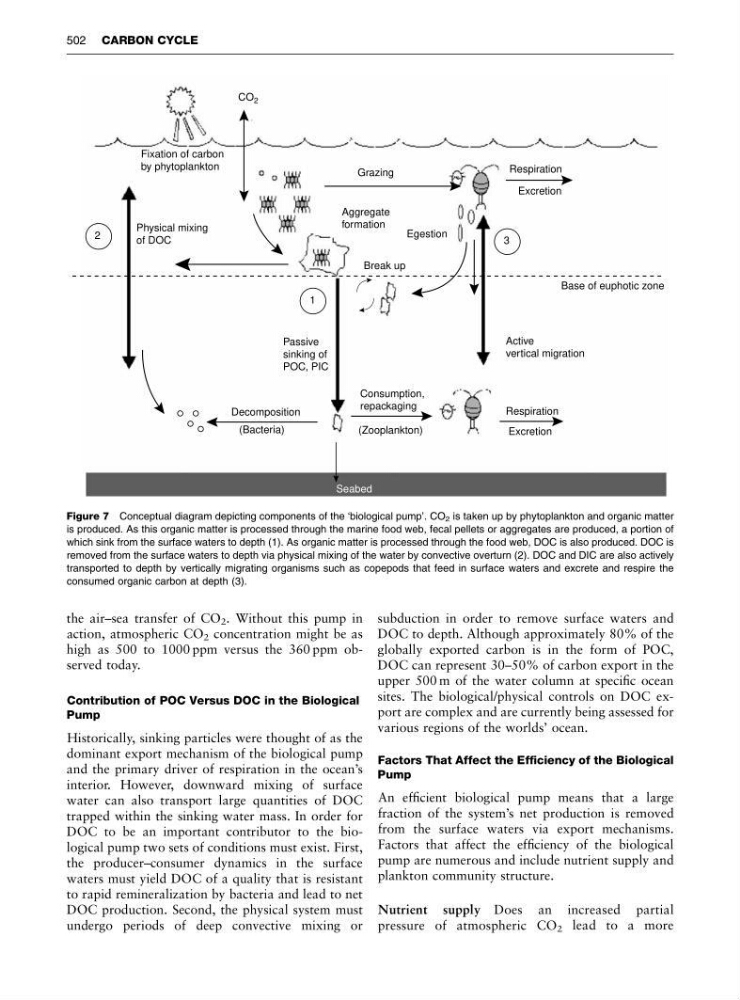
Figure 7 Conceptual diagram depicting components of the ‘biological pump’. CO 2 is taken up by phytoplankton and organic matter
is produced. As this organic matter is processed through the marine food web, fecal pellets or aggregates are produced, a portion of
which sink from the surface waters to depth (1). As organic matter is processed through the food web, DOC is also produced. DOC is
removed from the surface waters to depth via physical mixing of the water by convective overturn (2). DOC and DIC are also actively
transported to depth by vertically migrating organisms such as copepods that feed in surface waters and excrete and respire the
consumed organic carbon at depth (3).
502 CARBON CYCLE
action, atmospheric CO 2 concentration might be as
high as 500 to 1000 ppm versus the 360 ppm observed today.
Contribution of POC Versus DOC in the Biological
Pump
Historically, sinking particles were thought of as the
dominant export mechanism of the biological pump
and the primary driver of respiration in the ocean’s
interior. However, downward mixing of surface
water can also transport large quantities of DOC
trapped within the sinking water mass. In order for
DOC to be an important contributor to the biological pump two sets of conditions must exist. First,
the producer–consumer dynamics in the surface
waters must yield DOC of a quality that is resistant
to rapid remineralization by bacteria and lead to net
DOC production. Second, the physical system must
undergo periods of deep convective mixing or
subduction in order to remove surface waters and
DOC to depth. Although approximately 80% of the
globally exported carbon is in the form of POC,
DOC can represent 30–50% of carbon export in the
upper 500 m of the water column at specific ocean
sites. The biological/physical controls on DOC export are complex and are currently being assessed for
various regions of the worlds’ ocean.
Factors That Affect the Efficiency of the Biological
Pump
An efficient biological pump means that a large
fraction of the system’s net production is removed
from the surface waters via export mechanisms.
Factors that affect the efficiency of the biological
pump are numerous and include nutrient supply and
plankton community structure.
Nutrient supply Does an increased partial
pressure of atmospheric CO 2 lead to a more
Break up
Seabed
3
1
2
Physical mixing
of DOC
Base of euphotic zone
(Bacteria)
(Zooplankton)
Active
vertical migration
Respiration
Consumption,
repackaging
Decomposition
Passive
sinking of
POC, PIC
Egestion
Aggregate
formation
Fixation of carbon
by phytoplankton
Excretion
Excretion
Respiration
Grazing
CO 2
Figure 7 Conceptual diagram depicting components of the ‘biological pump’. CO 2 is taken up by phytoplankton and organic matter
is produced. As this organic matter is processed through the marine food web, fecal pellets or aggregates are produced, a portion of
which sink from the surface waters to depth (1). As organic matter is processed through the food web, DOC is also produced. DOC is
removed from the surface waters to depth via physical mixing of the water by convective overturn (2). DOC and DIC are also actively
transported to depth by vertically migrating organisms such as copepods that feed in surface waters and excrete and respire the
consumed organic carbon at depth (3).
502 CARBON CYCLE