

associated with the biota is extremely important to
the cycling of carbon between the atmosphere and
the ocean. The largest and most rapid fluxes in the
global carbon cycle are those that link atmospheric
CO 2 to photosynthetic production (primary production) on the land and in the ocean. Globally,
marine phytoplankton are responsible for more than
one-third of the total gross photosynthetic production (50 Â 10
15 g C y
À1
). In the sea, photosynthesis is limited to the euphotic zone, the upper
100–150 m of the water column where light can
penetrate. Photosynthetic organisms use light energy
to reduce CO 2 to high-energy organic compounds. In
turn, a portion of these synthesized organic compounds are utilized by heterotrophic organisms as an
energy source, being remineralized to CO 2 via respiration. Eqn [III] represents the overall reactions of
photosynthesis and respiration.
Light energy (photosynthesis)
Metabolic energy (respiration)
(CH 2 O) n
CO 2 (gas) ϩ H 2 O
ϩ O 2 (gas)
½III
In the sea, net primary production (primary production in excess of respiration) converts CO 2 to
organic matter that is stored as particulate organic
carbon (POC; in living and detrital particles) and as
dissolved organic carbon (DOC). In stratified regions
of the ocean (lower latitudes), net primary production results in a drawdown of DIC and an accumulation of organic matter as POC and DOC
(Figure 6B). However, it is the portion of organic
carbon production that can be exported from the
surface ocean and remineralized in the deep ocean
that is important in the exchange of CO 2 between the
atmosphere and the ocean. The biological pump refers to the processes that convert CO 2 (thereby
drawing down DIC) to organic matter by photosynthesis, and remove the organic carbon to depth
(where it is respired) via sinking, mixing, and active
transport mechanisms (Figure 7). Once at great
depth, it is effectively removed from exchange with
the atmosphere. As living biomass is produced, some
particles becomes senescent and form sinking aggregates, while other particles are consumed by
herbivores and sinking fecal pellets (POC) are
formed. These sinking aggregates and pellets remove
carbon from the surface to be remineralized at depth
via decomposition by bacteria or consumption by
zooplankton and fish (Figure 7). In addition, DOC
produced by phytoplankton or by animal excretion
Equator
CO 2 escapes
Wind stress and cooling
CO 2 invades
Pole
Upper ocean layer
Pycnocline
Deep ocean layer
SINKING
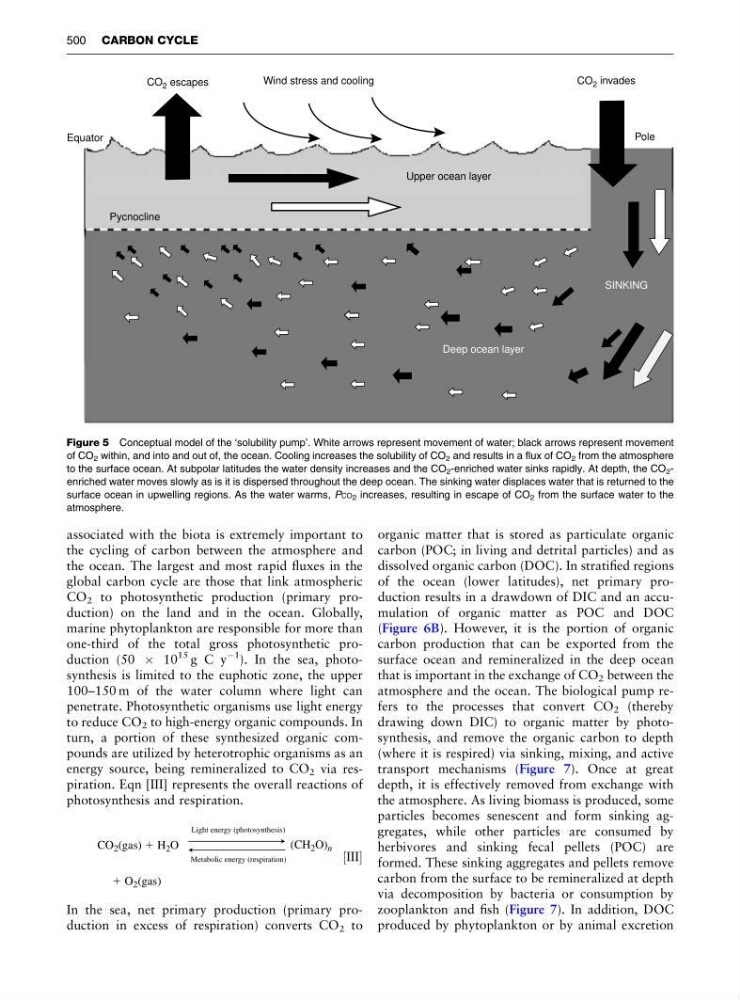
Figure 5 Conceptual model of the ‘solubility pump’. White arrows represent movement of water; black arrows represent movement
of CO 2 within, and into and out of, the ocean. Cooling increases the solubility of CO 2 and results in a flux of CO 2 from the atmosphere
to the surface ocean. At subpolar latitudes the water density increases and the CO 2 -enriched water sinks rapidly. At depth, the CO 2 -
enriched water moves slowly as is it is dispersed throughout the deep ocean. The sinking water displaces water that is returned to the
surface ocean in upwelling regions. As the water warms, PCO 2 increases, resulting in escape of CO 2 from the surface water to the
atmosphere.
500 CARBON CYCLE
the cycling of carbon between the atmosphere and
the ocean. The largest and most rapid fluxes in the
global carbon cycle are those that link atmospheric
CO 2 to photosynthetic production (primary production) on the land and in the ocean. Globally,
marine phytoplankton are responsible for more than
one-third of the total gross photosynthetic production (50 Â 10
15 g C y
À1
). In the sea, photosynthesis is limited to the euphotic zone, the upper
100–150 m of the water column where light can
penetrate. Photosynthetic organisms use light energy
to reduce CO 2 to high-energy organic compounds. In
turn, a portion of these synthesized organic compounds are utilized by heterotrophic organisms as an
energy source, being remineralized to CO 2 via respiration. Eqn [III] represents the overall reactions of
photosynthesis and respiration.
Light energy (photosynthesis)
Metabolic energy (respiration)
(CH 2 O) n
CO 2 (gas) ϩ H 2 O
ϩ O 2 (gas)
½III
In the sea, net primary production (primary production in excess of respiration) converts CO 2 to
organic matter that is stored as particulate organic
carbon (POC; in living and detrital particles) and as
dissolved organic carbon (DOC). In stratified regions
of the ocean (lower latitudes), net primary production results in a drawdown of DIC and an accumulation of organic matter as POC and DOC
(Figure 6B). However, it is the portion of organic
carbon production that can be exported from the
surface ocean and remineralized in the deep ocean
that is important in the exchange of CO 2 between the
atmosphere and the ocean. The biological pump refers to the processes that convert CO 2 (thereby
drawing down DIC) to organic matter by photosynthesis, and remove the organic carbon to depth
(where it is respired) via sinking, mixing, and active
transport mechanisms (Figure 7). Once at great
depth, it is effectively removed from exchange with
the atmosphere. As living biomass is produced, some
particles becomes senescent and form sinking aggregates, while other particles are consumed by
herbivores and sinking fecal pellets (POC) are
formed. These sinking aggregates and pellets remove
carbon from the surface to be remineralized at depth
via decomposition by bacteria or consumption by
zooplankton and fish (Figure 7). In addition, DOC
produced by phytoplankton or by animal excretion
Equator
CO 2 escapes
Wind stress and cooling
CO 2 invades
Pole
Upper ocean layer
Pycnocline
Deep ocean layer
SINKING
Figure 5 Conceptual model of the ‘solubility pump’. White arrows represent movement of water; black arrows represent movement
of CO 2 within, and into and out of, the ocean. Cooling increases the solubility of CO 2 and results in a flux of CO 2 from the atmosphere
to the surface ocean. At subpolar latitudes the water density increases and the CO 2 -enriched water sinks rapidly. At depth, the CO 2 -
enriched water moves slowly as is it is dispersed throughout the deep ocean. The sinking water displaces water that is returned to the
surface ocean in upwelling regions. As the water warms, PCO 2 increases, resulting in escape of CO 2 from the surface water to the
atmosphere.
500 CARBON CYCLE