

lower saturation state in turn leads to the likelihood
of lower rates of inorganic and biological precipitation of carbonate and hence deposition and accumulation of sedimentary carbonate.
In addition, the present-day burial rate of organic
carbon in the ocean may be about double that of the
late Holocene flux, supported by increased fluxes of
organic carbon to the ocean via rivers and groundwater flows and increased in situ new primary production supported by increased inputs of inorganic N
and P from land and of N deposited from the atmosphere. The organic carbon flux into sediments
may constitute a sink of anthropogenic CO 2 and a
minor negative feedback on accumulation of CO 2 in
the atmosphere.
The increased flux of land-derived organic carbon
delivered to the ocean by rivers may accumulate
there or be respired, with subsequent emission of
CO 2 back to the atmosphere. This release flux of
CO 2 may be great enough to offset the increased
burial flux of organic carbon to the seafloor due to
enhanced fertilization of the ocean by nutrients derived from human activities. The magnitude of the
CO 2 exchange is a poorly constrained flux today.
One area for which there is a substantial lack of
knowledge is the Asian Pacific region. This is an area
of several large seas, a region of important river inputs to the ocean of N, P, organic carbon, and sediments from land, and a region of important CO 2
exchange between the ocean and the atmosphere.
Anticipated Response to Global Warming
From 1850 to modern times, the direction of the net
flux of CO 2 between coastal zone waters and the
atmosphere due to organic metabolism and calcium
carbonate accumulation in coastal marine sediments
was from the coastal surface ocean to the atmosphere (negative flux, Figure 3).This flux in 1850 was
on the order of À0.2 Â 10
9 t yr
À1
. In a condition
not disturbed by changes in the stratification and
thermohaline circulation of the ocean brought about
by a global warming of the Earth, the direction of
this flux is projected to remain negative (flux out of
the coastal ocean to the atmosphere) until early in
the twenty-first century. The increasing partial pressure of CO 2 in the atmosphere because of emissions
from anthropogenic sources leads to a reversal in the
gradient of CO 2 across the air–sea interface of
coastal zone waters and, hence, invasion of CO 2 into
the coastal waters. From that time on the coastal
ocean will begin to operate as a net sink (positive
flux) of atmospheric CO 2 (Figure 3). The role of the
open ocean as a sink for anthropogenic CO 2 is
slightly reduced while that of the coastal oceans
50
40
30
20
10
(a)
3
2
1
0
(b)
0.6
0.4
0.2
0
1850
1900
1950
2000
Year
(c)
Riverine total
organic flux
Riverine dissolved inorganic flux
Phosphorus
Riverine dissolved inorganic flux
Atmospheric deposition flux
Riverine total
organic flux
Denitrification
Nitrogen
Organic carbon
Accumulation in sediments
Riverine dissolved inorganic flux
Riverine total organic flux
Carbon
4
5
6
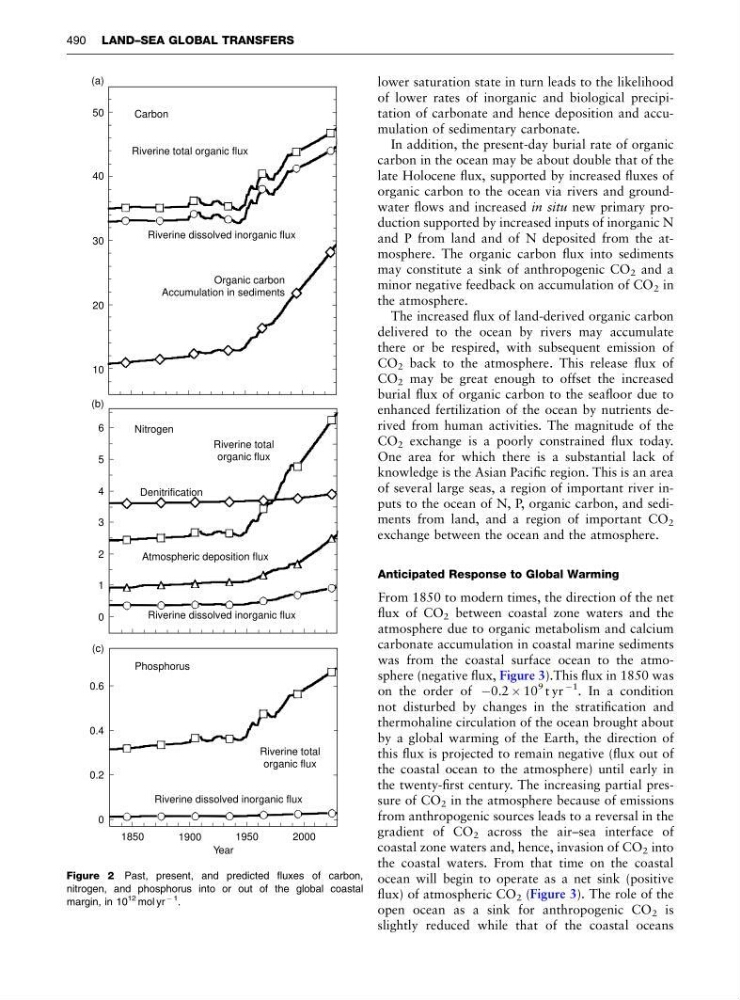
Figure 2 Past, present, and predicted fluxes of carbon,
nitrogen, and phosphorus into or out of the global coastal
margin, in 10
12 mol yr
À 1
.
490 LAND–SEA GLOBAL TRANSFERS
of lower rates of inorganic and biological precipitation of carbonate and hence deposition and accumulation of sedimentary carbonate.
In addition, the present-day burial rate of organic
carbon in the ocean may be about double that of the
late Holocene flux, supported by increased fluxes of
organic carbon to the ocean via rivers and groundwater flows and increased in situ new primary production supported by increased inputs of inorganic N
and P from land and of N deposited from the atmosphere. The organic carbon flux into sediments
may constitute a sink of anthropogenic CO 2 and a
minor negative feedback on accumulation of CO 2 in
the atmosphere.
The increased flux of land-derived organic carbon
delivered to the ocean by rivers may accumulate
there or be respired, with subsequent emission of
CO 2 back to the atmosphere. This release flux of
CO 2 may be great enough to offset the increased
burial flux of organic carbon to the seafloor due to
enhanced fertilization of the ocean by nutrients derived from human activities. The magnitude of the
CO 2 exchange is a poorly constrained flux today.
One area for which there is a substantial lack of
knowledge is the Asian Pacific region. This is an area
of several large seas, a region of important river inputs to the ocean of N, P, organic carbon, and sediments from land, and a region of important CO 2
exchange between the ocean and the atmosphere.
Anticipated Response to Global Warming
From 1850 to modern times, the direction of the net
flux of CO 2 between coastal zone waters and the
atmosphere due to organic metabolism and calcium
carbonate accumulation in coastal marine sediments
was from the coastal surface ocean to the atmosphere (negative flux, Figure 3).This flux in 1850 was
on the order of À0.2 Â 10
9 t yr
À1
. In a condition
not disturbed by changes in the stratification and
thermohaline circulation of the ocean brought about
by a global warming of the Earth, the direction of
this flux is projected to remain negative (flux out of
the coastal ocean to the atmosphere) until early in
the twenty-first century. The increasing partial pressure of CO 2 in the atmosphere because of emissions
from anthropogenic sources leads to a reversal in the
gradient of CO 2 across the air–sea interface of
coastal zone waters and, hence, invasion of CO 2 into
the coastal waters. From that time on the coastal
ocean will begin to operate as a net sink (positive
flux) of atmospheric CO 2 (Figure 3). The role of the
open ocean as a sink for anthropogenic CO 2 is
slightly reduced while that of the coastal oceans
50
40
30
20
10
(a)
3
2
1
0
(b)
0.6
0.4
0.2
0
1850
1900
1950
2000
Year
(c)
Riverine total
organic flux
Riverine dissolved inorganic flux
Phosphorus
Riverine dissolved inorganic flux
Atmospheric deposition flux
Riverine total
organic flux
Denitrification
Nitrogen
Organic carbon
Accumulation in sediments
Riverine dissolved inorganic flux
Riverine total organic flux
Carbon
4
5
6
Figure 2 Past, present, and predicted fluxes of carbon,
nitrogen, and phosphorus into or out of the global coastal
margin, in 10
12 mol yr
À 1
.
490 LAND–SEA GLOBAL TRANSFERS