

availability of nutrients from these external inputs,
without consideration of internal recycling of nutrients. Thus any changes in the supply of nutrients to
the coastal zone owing to changes in the magnitude
of these source fluxes are likely to affect the cycling
pathways and balances of the nutrient elements. In
particular, input of nutrients from the open ocean by
coastal upwelling is quantitatively greater than the
combined inputs from land and the atmosphere. This
makes it likely that there could be significant effects
on coastal primary production because of changes in
ocean circulation. For example, because of global
warming, the oceans could become more strongly
stratified owing to freshening of polar oceanic waters
and warming of the ocean in the tropical zone. This
could lead to a reduction in the intensity of the
oceanic thermohaline circulation (oceanic circulation
owing to differences in density of water masses, also
popularly known as the ‘conveyor belt’) and hence
the rate at which nutrient-rich waters upwell into
coastal environments.
Another potential consequence of the reduction in
the rate of nutrient inputs to the coastal zone by
upwelling is the change in the CO 2 balance of coastal
waters: reduction in the input of DIC to the coastal
zone from the deeper ocean means less dissolved
CO 2 , HCO
À
3 , and CO
2À
3
coming from that source.
With increasing accumulation of anthropogenic CO 2
in the atmosphere, the increased dissolution of atmospheric CO 2 in coastal water is favored. The
combined result of a decrease in the upwelling flux of
DIC and an enhancement in the transfer of atmospheric CO 2 across the air–sea interface of coastal
waters is a lower saturation state for coastal waters
with respect to the carbonate minerals calcite, aragonite, and a variety of magnesian calcites. The
10
5
0
150
150
100
100
50
50
0
0
1700
1800
1900
2000
Year
(c)
C emissions (Gt yr
−1
)
Fertilizer input (Mt yr
−1
)
(a)
Fossil fuel
Land use
N, S emissions (Mt yr −1 )
Sulfur
Nitrogen
Nitrogen
Phosphorus
(b)
150
100
50
0
1.5
1.0
0.5
0
1700
1800
1900
2000
Year
Δ temperature (°C)
(e)
(d)
Carbon
Nitrogen
Phosphorus
Sewage input (Mt yr −1 )
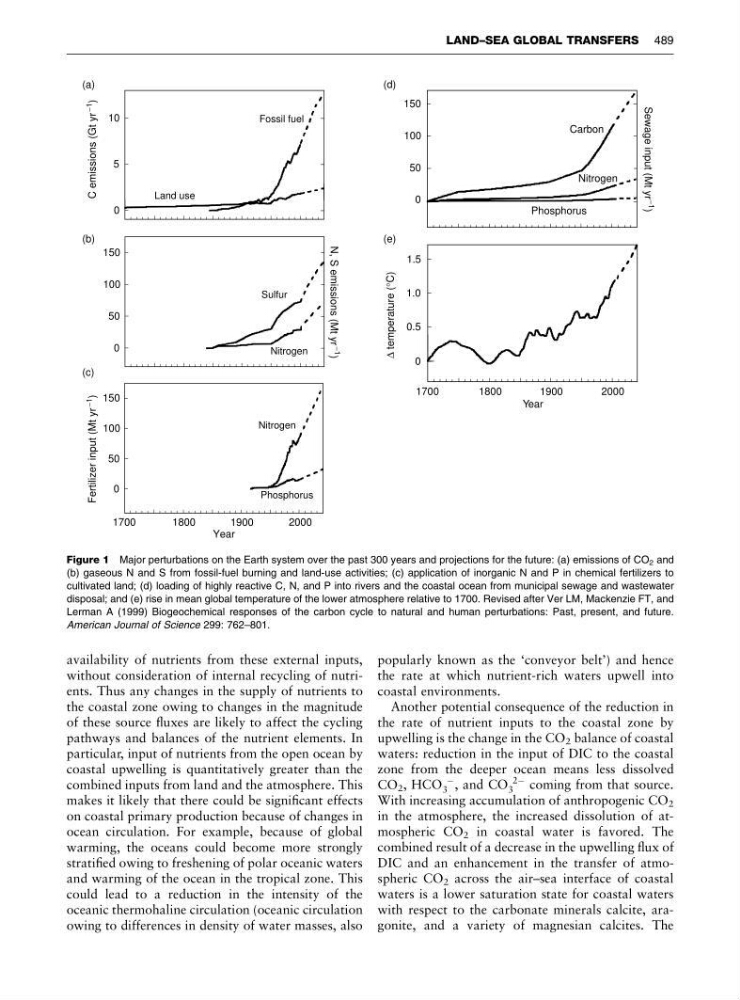
Figure 1 Major perturbations on the Earth system over the past 300 years and projections for the future: (a) emissions of CO 2 and
(b) gaseous N and S from fossil-fuel burning and land-use activities; (c) application of inorganic N and P in chemical fertilizers to
cultivated land; (d) loading of highly reactive C, N, and P into rivers and the coastal ocean from municipal sewage and wastewater
disposal; and (e) rise in mean global temperature of the lower atmosphere relative to 1700. Revised after Ver LM, Mackenzie FT, and
Lerman A (1999) Biogeochemical responses of the carbon cycle to natural and human perturbations: Past, present, and future.
American Journal of Science 299: 762–801.
LAND–SEA GLOBAL TRANSFERS 489
without consideration of internal recycling of nutrients. Thus any changes in the supply of nutrients to
the coastal zone owing to changes in the magnitude
of these source fluxes are likely to affect the cycling
pathways and balances of the nutrient elements. In
particular, input of nutrients from the open ocean by
coastal upwelling is quantitatively greater than the
combined inputs from land and the atmosphere. This
makes it likely that there could be significant effects
on coastal primary production because of changes in
ocean circulation. For example, because of global
warming, the oceans could become more strongly
stratified owing to freshening of polar oceanic waters
and warming of the ocean in the tropical zone. This
could lead to a reduction in the intensity of the
oceanic thermohaline circulation (oceanic circulation
owing to differences in density of water masses, also
popularly known as the ‘conveyor belt’) and hence
the rate at which nutrient-rich waters upwell into
coastal environments.
Another potential consequence of the reduction in
the rate of nutrient inputs to the coastal zone by
upwelling is the change in the CO 2 balance of coastal
waters: reduction in the input of DIC to the coastal
zone from the deeper ocean means less dissolved
CO 2 , HCO
À
3 , and CO
2À
3
coming from that source.
With increasing accumulation of anthropogenic CO 2
in the atmosphere, the increased dissolution of atmospheric CO 2 in coastal water is favored. The
combined result of a decrease in the upwelling flux of
DIC and an enhancement in the transfer of atmospheric CO 2 across the air–sea interface of coastal
waters is a lower saturation state for coastal waters
with respect to the carbonate minerals calcite, aragonite, and a variety of magnesian calcites. The
10
5
0
150
150
100
100
50
50
0
0
1700
1800
1900
2000
Year
(c)
C emissions (Gt yr
−1
)
Fertilizer input (Mt yr
−1
)
(a)
Fossil fuel
Land use
N, S emissions (Mt yr −1 )
Sulfur
Nitrogen
Nitrogen
Phosphorus
(b)
150
100
50
0
1.5
1.0
0.5
0
1700
1800
1900
2000
Year
Δ temperature (°C)
(e)
(d)
Carbon
Nitrogen
Phosphorus
Sewage input (Mt yr −1 )
Figure 1 Major perturbations on the Earth system over the past 300 years and projections for the future: (a) emissions of CO 2 and
(b) gaseous N and S from fossil-fuel burning and land-use activities; (c) application of inorganic N and P in chemical fertilizers to
cultivated land; (d) loading of highly reactive C, N, and P into rivers and the coastal ocean from municipal sewage and wastewater
disposal; and (e) rise in mean global temperature of the lower atmosphere relative to 1700. Revised after Ver LM, Mackenzie FT, and
Lerman A (1999) Biogeochemical responses of the carbon cycle to natural and human perturbations: Past, present, and future.
American Journal of Science 299: 762–801.
LAND–SEA GLOBAL TRANSFERS 489