

concentration acts as a filter that excludes non-tolerant species and (ii) the tolerant species that do survive
are able to flourish because food is abundant and
predation is reduced. Utrastructural studies of some
species have revealed features, e.g., bacterial symbionts and unusually high abundances of peroxisomes, that may be adaptations to extreme oxygen
depletion. In addition, mitachondria-laden pseudopodia have the potential to extend into overlying
sediment layers where some oxygen may be present.
Many low-oxygen-tolerant foraminifera belong to
the Orders Rotaliida and Buliminida. They often
have thin-walled, calcareous tests with either flattened, elongate biserial or triserial morphologies
(e.g., Bolivina, Bulimina, Globobulimina, Fursenkoina, Loxotomum, Uvigerina) or planispiral/lenticular morphologies (e.g., Cassidulina, Chilostomella,
Epistominella, Loxotomum, Nonion, Nonionella).
Some agglutinated foraminifera, e.g., Textularia,
Trochammina (both multilocular), Bathysiphon, and
Psammosphaera (both unilocular), are also abundant.
However, miliolids, allogromiids, and other softshelled foraminifera are generally rare in low-oxygen
environments. It is important to note that no foraminiferal taxon is currently known to be confined
entirely to oxygen-depleted environments.
Deep-Sea Foraminifera in
Paleo-Oceanography
Geologists require proxy indicators of important
environmental variables in order to reconstruct ancient oceans. Benthic foraminifera provide good
proxies for seafloor parameters because they are
widely distributed, highly sensitive to environmental
conditions, and abundant in Cenozoic and Cretaceous deep-sea sediments (note that deep-sea
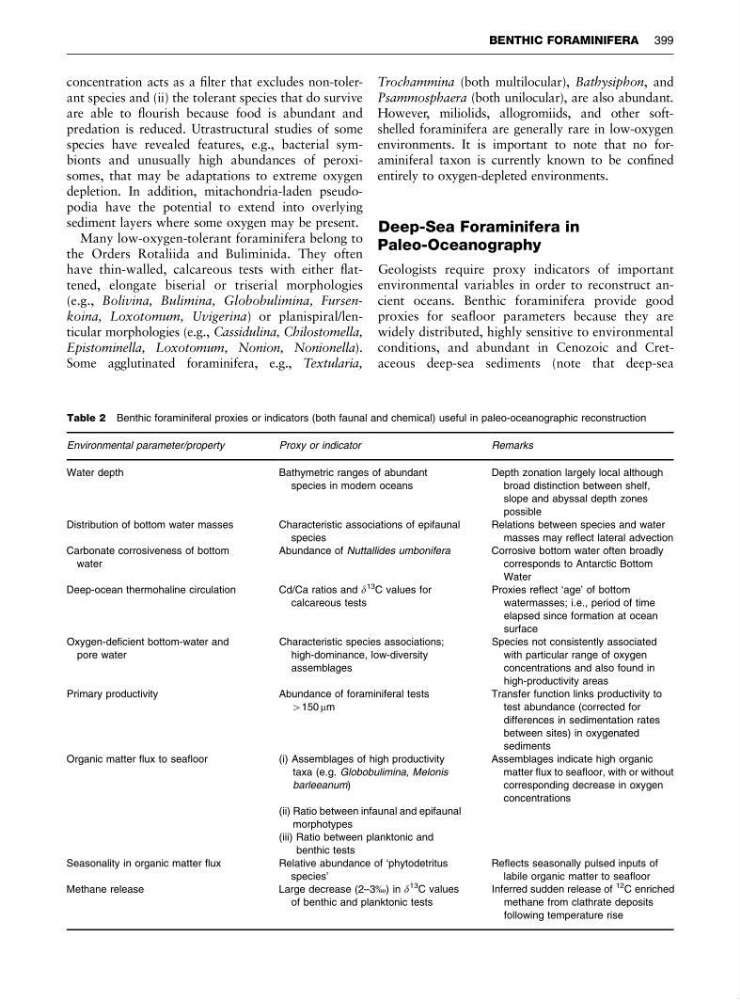
Table 2 Benthic foraminiferal proxies or indicators (both faunal and chemical) useful in paleo-oceanographic reconstruction
Environmental parameter/property
Proxy or indicator
Remarks
Water depth
Bathymetric ranges of abundant
species in modern oceans
Depth zonation largely local although
broad distinction between shelf,
slope and abyssal depth zones
possible
Distribution of bottom water masses
Characteristic associations of epifaunal
species
Relations between species and water
masses may reflect lateral advection
Carbonate corrosiveness of bottom
water
Abundance of Nuttallides umbonifera
Corrosive bottom water often broadly
corresponds to Antarctic Bottom
Water
Deep-ocean thermohaline circulation
Cd/Ca ratios and d
13 C values for
calcareous tests
Proxies reflect ‘age’ of bottom
watermasses; i.e., period of time
elapsed since formation at ocean
surface
Oxygen-deficient bottom-water and
pore water
Characteristic species associations;
high-dominance, low-diversity
assemblages
Species not consistently associated
with particular range of oxygen
concentrations and also found in
high-productivity areas
Primary productivity
Abundance of foraminiferal tests
4150 mm
Transfer function links productivity to
test abundance (corrected for
differences in sedimentation rates
between sites) in oxygenated
sediments
Organic matter flux to seafloor
(i) Assemblages of high productivity
taxa (e.g. Globobulimina, Melonis
barleeanum)
Assemblages indicate high organic
matter flux to seafloor, with or without
corresponding decrease in oxygen
concentrations
(ii) Ratio between infaunal and epifaunal
morphotypes
(iii) Ratio between planktonic and
benthic tests
Seasonality in organic matter flux
Relative abundance of ‘phytodetritus
species’
Reflects seasonally pulsed inputs of
labile organic matter to seafloor
Methane release
Large decrease (2–3%) in d
13 C values
of benthic and planktonic tests
Inferred sudden release of
12 C enriched
methane from clathrate deposits
following temperature rise
BENTHIC FORAMINIFERA 399
are able to flourish because food is abundant and
predation is reduced. Utrastructural studies of some
species have revealed features, e.g., bacterial symbionts and unusually high abundances of peroxisomes, that may be adaptations to extreme oxygen
depletion. In addition, mitachondria-laden pseudopodia have the potential to extend into overlying
sediment layers where some oxygen may be present.
Many low-oxygen-tolerant foraminifera belong to
the Orders Rotaliida and Buliminida. They often
have thin-walled, calcareous tests with either flattened, elongate biserial or triserial morphologies
(e.g., Bolivina, Bulimina, Globobulimina, Fursenkoina, Loxotomum, Uvigerina) or planispiral/lenticular morphologies (e.g., Cassidulina, Chilostomella,
Epistominella, Loxotomum, Nonion, Nonionella).
Some agglutinated foraminifera, e.g., Textularia,
Trochammina (both multilocular), Bathysiphon, and
Psammosphaera (both unilocular), are also abundant.
However, miliolids, allogromiids, and other softshelled foraminifera are generally rare in low-oxygen
environments. It is important to note that no foraminiferal taxon is currently known to be confined
entirely to oxygen-depleted environments.
Deep-Sea Foraminifera in
Paleo-Oceanography
Geologists require proxy indicators of important
environmental variables in order to reconstruct ancient oceans. Benthic foraminifera provide good
proxies for seafloor parameters because they are
widely distributed, highly sensitive to environmental
conditions, and abundant in Cenozoic and Cretaceous deep-sea sediments (note that deep-sea
Table 2 Benthic foraminiferal proxies or indicators (both faunal and chemical) useful in paleo-oceanographic reconstruction
Environmental parameter/property
Proxy or indicator
Remarks
Water depth
Bathymetric ranges of abundant
species in modern oceans
Depth zonation largely local although
broad distinction between shelf,
slope and abyssal depth zones
possible
Distribution of bottom water masses
Characteristic associations of epifaunal
species
Relations between species and water
masses may reflect lateral advection
Carbonate corrosiveness of bottom
water
Abundance of Nuttallides umbonifera
Corrosive bottom water often broadly
corresponds to Antarctic Bottom
Water
Deep-ocean thermohaline circulation
Cd/Ca ratios and d
13 C values for
calcareous tests
Proxies reflect ‘age’ of bottom
watermasses; i.e., period of time
elapsed since formation at ocean
surface
Oxygen-deficient bottom-water and
pore water
Characteristic species associations;
high-dominance, low-diversity
assemblages
Species not consistently associated
with particular range of oxygen
concentrations and also found in
high-productivity areas
Primary productivity
Abundance of foraminiferal tests
4150 mm
Transfer function links productivity to
test abundance (corrected for
differences in sedimentation rates
between sites) in oxygenated
sediments
Organic matter flux to seafloor
(i) Assemblages of high productivity
taxa (e.g. Globobulimina, Melonis
barleeanum)
Assemblages indicate high organic
matter flux to seafloor, with or without
corresponding decrease in oxygen
concentrations
(ii) Ratio between infaunal and epifaunal
morphotypes
(iii) Ratio between planktonic and
benthic tests
Seasonality in organic matter flux
Relative abundance of ‘phytodetritus
species’
Reflects seasonally pulsed inputs of
labile organic matter to seafloor
Methane release
Large decrease (2–3%) in d
13 C values
of benthic and planktonic tests
Inferred sudden release of
12 C enriched
methane from clathrate deposits
following temperature rise
BENTHIC FORAMINIFERA 399