

sediments older than the middle Jurassic age have
been destroyed by subduction, except where preserved in ophiolite complexes).
Foraminiferal faunas, and the chemical tracers
preserved in the tests of calcitic species, can be used
to reconstruct a variety of paleoenvironmental parameters and attributes. The main emphasis has been
on organic matter fluxes and bottom-water/pore
water oxygen concentrations (inversely related parameters), the distribution of bottom-water masses,
and the development of thermohaline circulation
(Table 2). Modern deep-sea faunas became established during the Middle Miocene (10–15 million
years ago), and these assemblages can often be interpreted in terms of modern analogues. This approach is difficult or impossible to apply to sediments
from the Cretaceous and earlier Cenozoic, which
contain many foraminiferal species that are now extinct. In these cases, it can be useful to work with test
morphotypes (e.g., trochospiral, cylindrical, biserial/
triserial) rather than species. The relative abundance
of infaunal morphotypes, for example, has been used
as an index of bottom-water oxygenation or relative
intensities of organic matter inputs. The trace element
(e.g., cadmium) content and stable isotope (d
13
C; i.e.,
the deviation from a standard
12
C :
12
C ratio)
chemistry of the calcium carbonate shells of benthic
foraminifera provide powerful tools for making
paleo-oceanographic reconstructions, particularly
during the climatically unstable Quaternary period.
The cadmium/calcium ratio is a proxy for the nutrient
(phosphate) content of sea water that reflects abyssal
circulation patterns. Carbon isotope ratios also reflect
deep-ocean circulation and the strength of organic
matter fluxes to the seafloor.
It is important to appreciate that the accuracy with
which fossil foraminifera can be used to reconstruct
ancient deep-sea environments is often limited. These
limitations reflect the complexities of deep-sea foraminiferal biology, many aspects of which remain
poorly understood. Moreover, simple relationships
between the composition of foraminiferal assemblages
and environmental variables are elusive, and it is often
difficult to identify faunal characteristics that can be
used as precise proxies for paleo-oceanographic parameters. For example, geologists often wish to establish paleobathymetry. However, the bathymetric
distributions of foraminiferal species are inconsistent
and depend largely on the organic flux to the seafloor,
which decreases with increasing depth (Figure 8) and
is strongly influenced by surface productivity. Thus,
foraminifera can be used only to discriminate in a
general way between shelf, slope, and abyssal faunas,
but not to estimate precise paleodepths. Oxygen
concentrations and organic matter inputs are particularly problematic. Certain species and morphotypes dominate in low-oxygen habitats that also are
usually characterized by high organic loadings.
However, the same foraminifera may occur in organically enriched settings where oxygen levels are
0
5 000
10 000
15 000
20 000
25 000
30 000
35 000
40 000
45 000
0
3000
6000
9000
Number per gram
Phytodetritus species,
YD
0
25
50
75
100
0
5 000
10 000
15 000
20 000
25 000
30 000
35 000
40 000
45 000
Phytodetritus species,
Relative abundance
YD
H1
H2
H3
H4
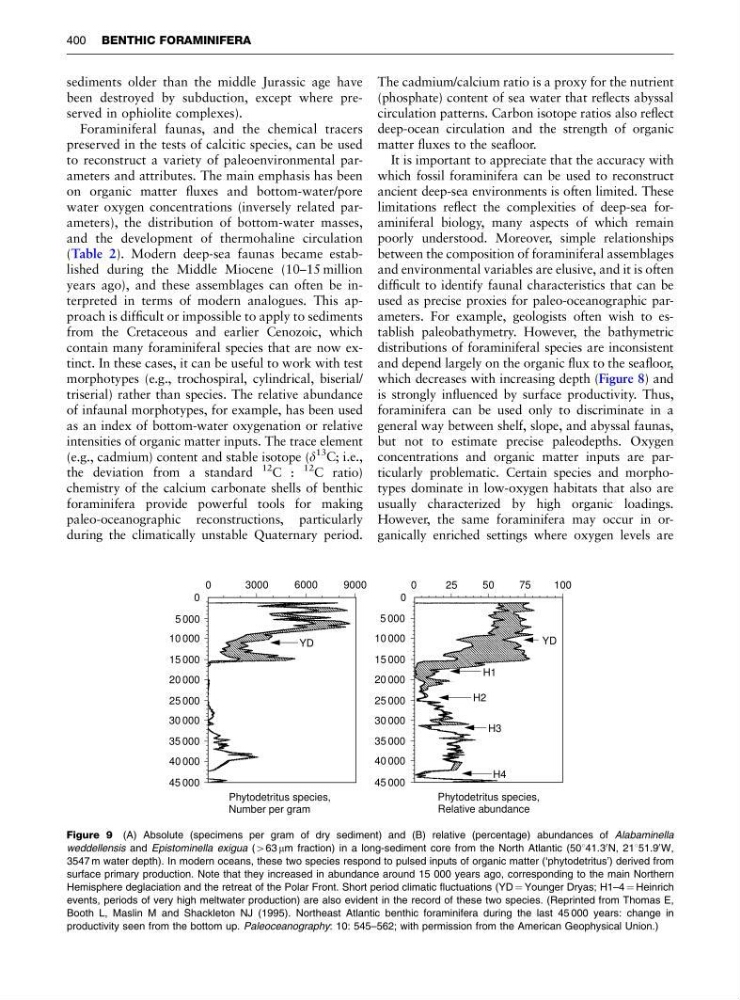
Figure 9 (A) Absolute (specimens per gram of dry sediment) and (B) relative (percentage) abundances of Alabaminella
weddellensis and Epistominella exigua (463 mm fraction) in a long-sediment core from the North Atlantic (50141.3
0 N, 21151.9
0 W,
3547 m water depth). In modern oceans, these two species respond to pulsed inputs of organic matter (‘phytodetritus’) derived from
surface primary production. Note that they increased in abundance around 15 000 years ago, corresponding to the main Northern
Hemisphere deglaciation and the retreat of the Polar Front. Short period climatic fluctuations (YD ¼ Younger Dryas; H1–4 ¼ Heinrich
events, periods of very high meltwater production) are also evident in the record of these two species. (Reprinted from Thomas E,
Booth L, Maslin M and Shackleton NJ (1995). Northeast Atlantic benthic foraminifera during the last 45 000 years: change in
productivity seen from the bottom up. Paleoceanography: 10: 545–562; with permission from the American Geophysical Union.)
400 BENTHIC FORAMINIFERA
been destroyed by subduction, except where preserved in ophiolite complexes).
Foraminiferal faunas, and the chemical tracers
preserved in the tests of calcitic species, can be used
to reconstruct a variety of paleoenvironmental parameters and attributes. The main emphasis has been
on organic matter fluxes and bottom-water/pore
water oxygen concentrations (inversely related parameters), the distribution of bottom-water masses,
and the development of thermohaline circulation
(Table 2). Modern deep-sea faunas became established during the Middle Miocene (10–15 million
years ago), and these assemblages can often be interpreted in terms of modern analogues. This approach is difficult or impossible to apply to sediments
from the Cretaceous and earlier Cenozoic, which
contain many foraminiferal species that are now extinct. In these cases, it can be useful to work with test
morphotypes (e.g., trochospiral, cylindrical, biserial/
triserial) rather than species. The relative abundance
of infaunal morphotypes, for example, has been used
as an index of bottom-water oxygenation or relative
intensities of organic matter inputs. The trace element
(e.g., cadmium) content and stable isotope (d
13
C; i.e.,
the deviation from a standard
12
C :
12
C ratio)
chemistry of the calcium carbonate shells of benthic
foraminifera provide powerful tools for making
paleo-oceanographic reconstructions, particularly
during the climatically unstable Quaternary period.
The cadmium/calcium ratio is a proxy for the nutrient
(phosphate) content of sea water that reflects abyssal
circulation patterns. Carbon isotope ratios also reflect
deep-ocean circulation and the strength of organic
matter fluxes to the seafloor.
It is important to appreciate that the accuracy with
which fossil foraminifera can be used to reconstruct
ancient deep-sea environments is often limited. These
limitations reflect the complexities of deep-sea foraminiferal biology, many aspects of which remain
poorly understood. Moreover, simple relationships
between the composition of foraminiferal assemblages
and environmental variables are elusive, and it is often
difficult to identify faunal characteristics that can be
used as precise proxies for paleo-oceanographic parameters. For example, geologists often wish to establish paleobathymetry. However, the bathymetric
distributions of foraminiferal species are inconsistent
and depend largely on the organic flux to the seafloor,
which decreases with increasing depth (Figure 8) and
is strongly influenced by surface productivity. Thus,
foraminifera can be used only to discriminate in a
general way between shelf, slope, and abyssal faunas,
but not to estimate precise paleodepths. Oxygen
concentrations and organic matter inputs are particularly problematic. Certain species and morphotypes dominate in low-oxygen habitats that also are
usually characterized by high organic loadings.
However, the same foraminifera may occur in organically enriched settings where oxygen levels are
0
5 000
10 000
15 000
20 000
25 000
30 000
35 000
40 000
45 000
0
3000
6000
9000
Number per gram
Phytodetritus species,
YD
0
25
50
75
100
0
5 000
10 000
15 000
20 000
25 000
30 000
35 000
40 000
45 000
Phytodetritus species,
Relative abundance
YD
H1
H2
H3
H4
Figure 9 (A) Absolute (specimens per gram of dry sediment) and (B) relative (percentage) abundances of Alabaminella
weddellensis and Epistominella exigua (463 mm fraction) in a long-sediment core from the North Atlantic (50141.3
0 N, 21151.9
0 W,
3547 m water depth). In modern oceans, these two species respond to pulsed inputs of organic matter (‘phytodetritus’) derived from
surface primary production. Note that they increased in abundance around 15 000 years ago, corresponding to the main Northern
Hemisphere deglaciation and the retreat of the Polar Front. Short period climatic fluctuations (YD ¼ Younger Dryas; H1–4 ¼ Heinrich
events, periods of very high meltwater production) are also evident in the record of these two species. (Reprinted from Thomas E,
Booth L, Maslin M and Shackleton NJ (1995). Northeast Atlantic benthic foraminifera during the last 45 000 years: change in
productivity seen from the bottom up. Paleoceanography: 10: 545–562; with permission from the American Geophysical Union.)
400 BENTHIC FORAMINIFERA