

Foraminifera are also a dominant constituent of
deep-sea hard-substrate communities. Dense populations encrust the surfaces of manganese nodules as
well as experimental settlement plates deployed on
the sea floor for periods of months. They include
various undescribed matlike taxa and branched
tubular forms, as well as a variety of small coiled
agglutinated species (many in the superfamily Trochamminacea), and calcareous forms.
Role in Benthic Communities
The abundance of foraminifera suggests that they play
an important ecological role in deep-sea communities,
although many aspects of this role remain poorly
understood. One of the defining features of these
protists, their highly mobile and pervasive pseudopodial net, enables them to gather food particles very
efficiently. As a group, foraminifera exhibit a wide
variety of trophic mechanisms (e.g., suspension feeding, deposit feeding, parasitism, symbiosis) and diets
(herbivory, carnivory, detritus feeding, use of dissolved organic matter). Many deep-sea species appear
to feed at a low trophic level on organic detritus,
sediment particles, and bacteria. Foraminifera are
prey, in turn, for specialist deep-sea predators (scaphopod mollusks and certain asellote isopods), and
also ingested (probably incidentally) in large numbers
by surface deposit feeders such as holothurians. They
may therefore provide a link between lower and
higher levels of deep-sea food webs.
Some deep-sea foraminifera exhibit opportunistic
characteristics – rapid reproduction and population
growth responses to episodic food inputs. Wellknown examples are Epistominella exigua, Alabaminella weddellensis and Eponides pusillus. These
small (generally o200 mm), calcareous species feed
on fresh algal detritus (‘phytodetritus’) that sinks
through the water column to the deep-ocean floor
after the spring bloom (a seasonal burst of phytoplankton primary production that occurs most
strongly in temperate latitudes). Utilizing energy
from this labile food source, they reproduce rapidly
to build up large populations that then decline when
their ephemeral food source has been consumed.
Moreover, certain large foraminifera can reduce
their metabolism or consume cytoplasmic reserves
when food is scarce, and then rapidly increase their
metabolic rate when food again becomes available.
These characteristics, together with the sheer abundance of foraminifera, suggest that their role in the
cycling of organic carbon on the deep-seafloor is very
significant.
The tests of large foraminifera are an important
source of environmental heterogeneity in the deep
sea, providing habitats and attachment substrates
for other foraminifera and metazoans. Mobile infaunal species bioturbate the sediment as they move
through it. Conversely, the pseudopodial systems of
Species ordered by rank
0
20
40
60
80
100
120
Numbers per 25 cm
2
Figure 4 Deep-sea foraminiferal diversity: all species from a
single multiple corer sample collected at the Porcupine Abyssal
Plain, NE Atlantic (4850 m water depth), ranked by abundance.
Each bar represents one ‘live’ (rose Bengal-stained) species. The
sample was 25.5 cm
2 surface area, 0–1 cm depth, and sieved on
a 63 mm mesh sieve. It contained 705 ‘live’ specimens and 130
species.
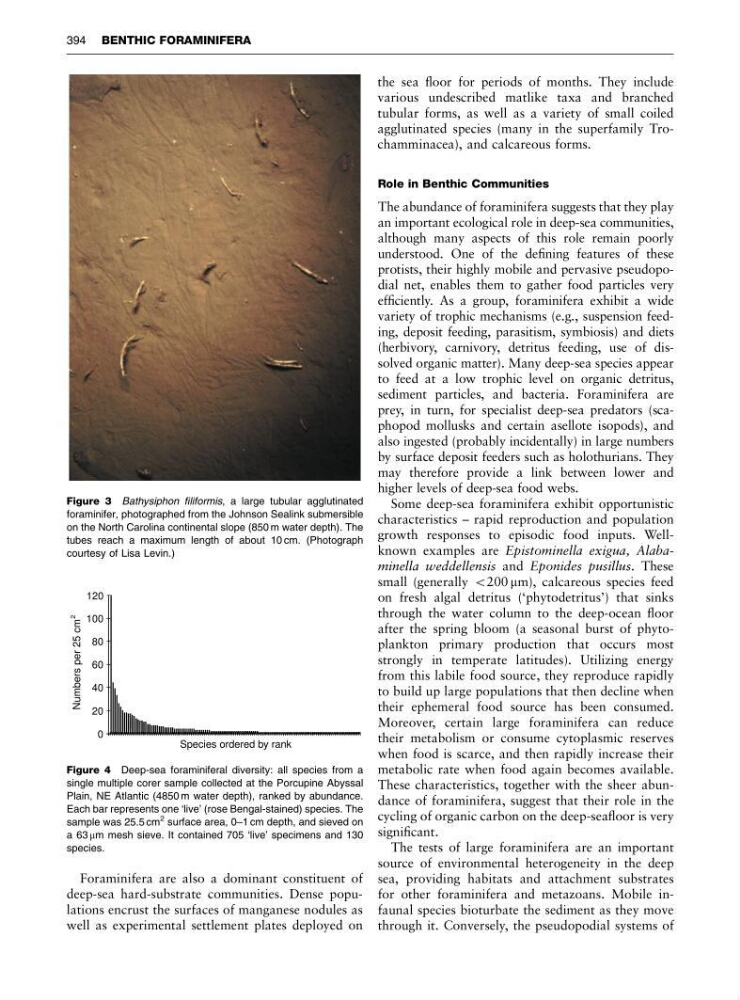
Figure 3 Bathysiphon filiformis, a large tubular agglutinated
foraminifer, photographed from the Johnson Sealink submersible
on the North Carolina continental slope (850 m water depth). The
tubes reach a maximum length of about 10 cm. (Photograph
courtesy of Lisa Levin.)
394 BENTHIC FORAMINIFERA
deep-sea hard-substrate communities. Dense populations encrust the surfaces of manganese nodules as
well as experimental settlement plates deployed on
the sea floor for periods of months. They include
various undescribed matlike taxa and branched
tubular forms, as well as a variety of small coiled
agglutinated species (many in the superfamily Trochamminacea), and calcareous forms.
Role in Benthic Communities
The abundance of foraminifera suggests that they play
an important ecological role in deep-sea communities,
although many aspects of this role remain poorly
understood. One of the defining features of these
protists, their highly mobile and pervasive pseudopodial net, enables them to gather food particles very
efficiently. As a group, foraminifera exhibit a wide
variety of trophic mechanisms (e.g., suspension feeding, deposit feeding, parasitism, symbiosis) and diets
(herbivory, carnivory, detritus feeding, use of dissolved organic matter). Many deep-sea species appear
to feed at a low trophic level on organic detritus,
sediment particles, and bacteria. Foraminifera are
prey, in turn, for specialist deep-sea predators (scaphopod mollusks and certain asellote isopods), and
also ingested (probably incidentally) in large numbers
by surface deposit feeders such as holothurians. They
may therefore provide a link between lower and
higher levels of deep-sea food webs.
Some deep-sea foraminifera exhibit opportunistic
characteristics – rapid reproduction and population
growth responses to episodic food inputs. Wellknown examples are Epistominella exigua, Alabaminella weddellensis and Eponides pusillus. These
small (generally o200 mm), calcareous species feed
on fresh algal detritus (‘phytodetritus’) that sinks
through the water column to the deep-ocean floor
after the spring bloom (a seasonal burst of phytoplankton primary production that occurs most
strongly in temperate latitudes). Utilizing energy
from this labile food source, they reproduce rapidly
to build up large populations that then decline when
their ephemeral food source has been consumed.
Moreover, certain large foraminifera can reduce
their metabolism or consume cytoplasmic reserves
when food is scarce, and then rapidly increase their
metabolic rate when food again becomes available.
These characteristics, together with the sheer abundance of foraminifera, suggest that their role in the
cycling of organic carbon on the deep-seafloor is very
significant.
The tests of large foraminifera are an important
source of environmental heterogeneity in the deep
sea, providing habitats and attachment substrates
for other foraminifera and metazoans. Mobile infaunal species bioturbate the sediment as they move
through it. Conversely, the pseudopodial systems of
Species ordered by rank
0
20
40
60
80
100
120
Numbers per 25 cm
2
Figure 4 Deep-sea foraminiferal diversity: all species from a
single multiple corer sample collected at the Porcupine Abyssal
Plain, NE Atlantic (4850 m water depth), ranked by abundance.
Each bar represents one ‘live’ (rose Bengal-stained) species. The
sample was 25.5 cm
2 surface area, 0–1 cm depth, and sieved on
a 63 mm mesh sieve. It contained 705 ‘live’ specimens and 130
species.
Figure 3 Bathysiphon filiformis, a large tubular agglutinated
foraminifer, photographed from the Johnson Sealink submersible
on the North Carolina continental slope (850 m water depth). The
tubes reach a maximum length of about 10 cm. (Photograph
courtesy of Lisa Levin.)
394 BENTHIC FORAMINIFERA