

oxyhydroxides supplying the iron, (2) sea-water
supplying the magnesium and other minor to trace
elements, (3) biogenic silica supplying the silicon,
and (4) allochthonous accessory particles (e.g., aeolian clay) supplying the other chemical elements
(e.g., Al). Notice that the distinction between pure
hydrothermal and pure hydrogenous clay minerals
forming on the deep-sea floor necessitates detailed
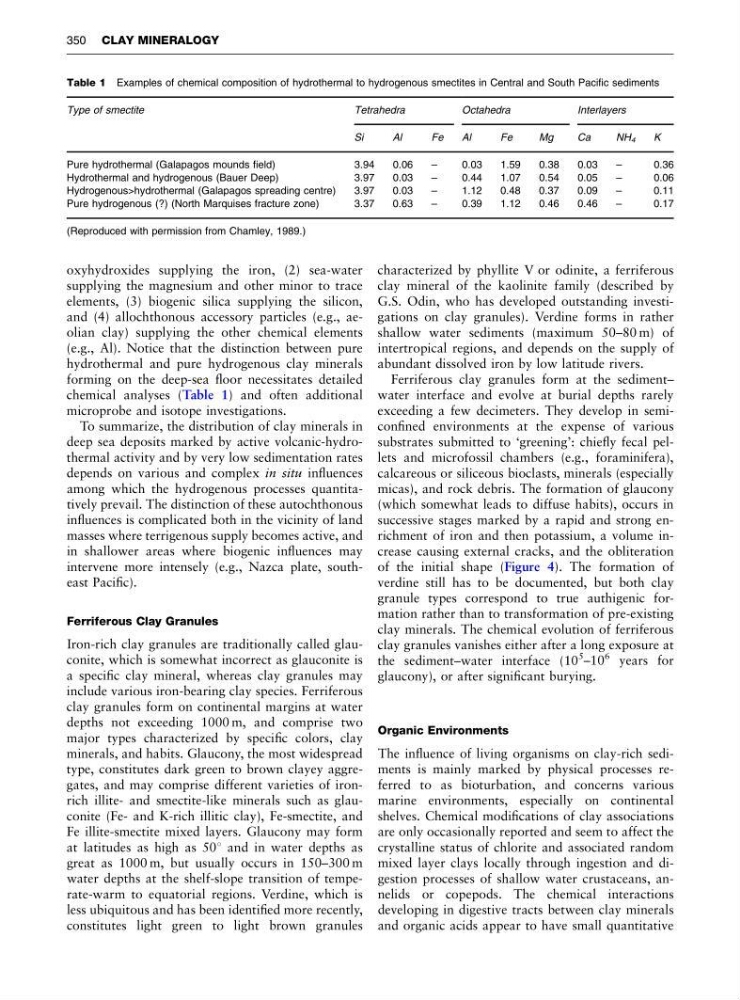
chemical analyses (Table 1) and often additional
microprobe and isotope investigations.
To summarize, the distribution of clay minerals in
deep sea deposits marked by active volcanic-hydrothermal activity and by very low sedimentation rates
depends on various and complex in situ influences
among which the hydrogenous processes quantitatively prevail. The distinction of these autochthonous
influences is complicated both in the vicinity of land
masses where terrigenous supply becomes active, and
in shallower areas where biogenic influences may
intervene more intensely (e.g., Nazca plate, southeast Pacific).
Ferriferous Clay Granules
Iron-rich clay granules are traditionally called glauconite, which is somewhat incorrect as glauconite is
a specific clay mineral, whereas clay granules may
include various iron-bearing clay species. Ferriferous
clay granules form on continental margins at water
depths not exceeding 1000 m, and comprise two
major types characterized by specific colors, clay
minerals, and habits. Glaucony, the most widespread
type, constitutes dark green to brown clayey aggregates, and may comprise different varieties of ironrich illite- and smectite-like minerals such as glauconite (Fe- and K-rich illitic clay), Fe-smectite, and
Fe illite-smectite mixed layers. Glaucony may form
at latitudes as high as 501 and in water depths as
great as 1000 m, but usually occurs in 150–300 m
water depths at the shelf-slope transition of temperate-warm to equatorial regions. Verdine, which is
less ubiquitous and has been identified more recently,
constitutes light green to light brown granules
characterized by phyllite V or odinite, a ferriferous
clay mineral of the kaolinite family (described by
G.S. Odin, who has developed outstanding investigations on clay granules). Verdine forms in rather
shallow water sediments (maximum 50–80 m) of
intertropical regions, and depends on the supply of
abundant dissolved iron by low latitude rivers.
Ferriferous clay granules form at the sediment–
water interface and evolve at burial depths rarely
exceeding a few decimeters. They develop in semiconfined environments at the expense of various
substrates submitted to ‘greening’: chiefly fecal pellets and microfossil chambers (e.g., foraminifera),
calcareous or siliceous bioclasts, minerals (especially
micas), and rock debris. The formation of glaucony
(which somewhat leads to diffuse habits), occurs in
successive stages marked by a rapid and strong enrichment of iron and then potassium, a volume increase causing external cracks, and the obliteration
of the initial shape (Figure 4). The formation of
verdine still has to be documented, but both clay
granule types correspond to true authigenic formation rather than to transformation of pre-existing
clay minerals. The chemical evolution of ferriferous
clay granules vanishes either after a long exposure at
the sediment–water interface (10
5
–10
6 years for
glaucony), or after significant burying.
Organic Environments
The influence of living organisms on clay-rich sediments is mainly marked by physical processes referred to as bioturbation, and concerns various
marine environments, especially on continental
shelves. Chemical modifications of clay associations
are only occasionally reported and seem to affect the
crystalline status of chlorite and associated random
mixed layer clays locally through ingestion and digestion processes of shallow water crustaceans, annelids or copepods. The chemical interactions
developing in digestive tracts between clay minerals
and organic acids appear to have small quantitative
Table 1 Examples of chemical composition of hydrothermal to hydrogenous smectites in Central and South Pacific sediments
Type of smectite
Tetrahedra
Octahedra
Interlayers
Si
Al
Fe
Al
Fe
Mg
Ca
NH 4
K
Pure hydrothermal (Galapagos mounds field)
3.94
0.06
–
0.03
1.59
0.38
0.03
–
0.36
Hydrothermal and hydrogenous (Bauer Deep)
3.97
0.03
–
0.44
1.07
0.54
0.05
–
0.06
Hydrogenous>hydrothermal (Galapagos spreading centre)
3.97
0.03
–
1.12
0.48
0.37
0.09
–
0.11
Pure hydrogenous (?) (North Marquises fracture zone)
3.37
0.63
–
0.39
1.12
0.46
0.46
–
0.17
(Reproduced with permission from Chamley, 1989.)
350 CLAY MINERALOGY
supplying the magnesium and other minor to trace
elements, (3) biogenic silica supplying the silicon,
and (4) allochthonous accessory particles (e.g., aeolian clay) supplying the other chemical elements
(e.g., Al). Notice that the distinction between pure
hydrothermal and pure hydrogenous clay minerals
forming on the deep-sea floor necessitates detailed
chemical analyses (Table 1) and often additional
microprobe and isotope investigations.
To summarize, the distribution of clay minerals in
deep sea deposits marked by active volcanic-hydrothermal activity and by very low sedimentation rates
depends on various and complex in situ influences
among which the hydrogenous processes quantitatively prevail. The distinction of these autochthonous
influences is complicated both in the vicinity of land
masses where terrigenous supply becomes active, and
in shallower areas where biogenic influences may
intervene more intensely (e.g., Nazca plate, southeast Pacific).
Ferriferous Clay Granules
Iron-rich clay granules are traditionally called glauconite, which is somewhat incorrect as glauconite is
a specific clay mineral, whereas clay granules may
include various iron-bearing clay species. Ferriferous
clay granules form on continental margins at water
depths not exceeding 1000 m, and comprise two
major types characterized by specific colors, clay
minerals, and habits. Glaucony, the most widespread
type, constitutes dark green to brown clayey aggregates, and may comprise different varieties of ironrich illite- and smectite-like minerals such as glauconite (Fe- and K-rich illitic clay), Fe-smectite, and
Fe illite-smectite mixed layers. Glaucony may form
at latitudes as high as 501 and in water depths as
great as 1000 m, but usually occurs in 150–300 m
water depths at the shelf-slope transition of temperate-warm to equatorial regions. Verdine, which is
less ubiquitous and has been identified more recently,
constitutes light green to light brown granules
characterized by phyllite V or odinite, a ferriferous
clay mineral of the kaolinite family (described by
G.S. Odin, who has developed outstanding investigations on clay granules). Verdine forms in rather
shallow water sediments (maximum 50–80 m) of
intertropical regions, and depends on the supply of
abundant dissolved iron by low latitude rivers.
Ferriferous clay granules form at the sediment–
water interface and evolve at burial depths rarely
exceeding a few decimeters. They develop in semiconfined environments at the expense of various
substrates submitted to ‘greening’: chiefly fecal pellets and microfossil chambers (e.g., foraminifera),
calcareous or siliceous bioclasts, minerals (especially
micas), and rock debris. The formation of glaucony
(which somewhat leads to diffuse habits), occurs in
successive stages marked by a rapid and strong enrichment of iron and then potassium, a volume increase causing external cracks, and the obliteration
of the initial shape (Figure 4). The formation of
verdine still has to be documented, but both clay
granule types correspond to true authigenic formation rather than to transformation of pre-existing
clay minerals. The chemical evolution of ferriferous
clay granules vanishes either after a long exposure at
the sediment–water interface (10
5
–10
6 years for
glaucony), or after significant burying.
Organic Environments
The influence of living organisms on clay-rich sediments is mainly marked by physical processes referred to as bioturbation, and concerns various
marine environments, especially on continental
shelves. Chemical modifications of clay associations
are only occasionally reported and seem to affect the
crystalline status of chlorite and associated random
mixed layer clays locally through ingestion and digestion processes of shallow water crustaceans, annelids or copepods. The chemical interactions
developing in digestive tracts between clay minerals
and organic acids appear to have small quantitative
Table 1 Examples of chemical composition of hydrothermal to hydrogenous smectites in Central and South Pacific sediments
Type of smectite
Tetrahedra
Octahedra
Interlayers
Si
Al
Fe
Al
Fe
Mg
Ca
NH 4
K
Pure hydrothermal (Galapagos mounds field)
3.94
0.06
–
0.03
1.59
0.38
0.03
–
0.36
Hydrothermal and hydrogenous (Bauer Deep)
3.97
0.03
–
0.44
1.07
0.54
0.05
–
0.06
Hydrogenous>hydrothermal (Galapagos spreading centre)
3.97
0.03
–
1.12
0.48
0.37
0.09
–
0.11
Pure hydrogenous (?) (North Marquises fracture zone)
3.37
0.63
–
0.39
1.12
0.46
0.46
–
0.17
(Reproduced with permission from Chamley, 1989.)
350 CLAY MINERALOGY