

sufficient electron transport proteins and the cell’s
ability to transfer reducing power from the photocenter. These have been shown to be symptomatic of
iron deficiency.
The Role of Iron
Iron is a required micronutrient for all living systems.
Because of its d-electron configuration, iron readily
undergoes redox transitions between Fe(II) and
Fe(III) at physiological redox potentials. For this
reason, iron is particularly well suited to many enzyme and electron carrier proteins. The genetic sequences coding for many iron-containing electron
carriers and enzymes are highly conserved, indicating
iron and iron-containing proteins were key features
of early biosynthesis. When life evolved, the atmosphere and waters of the planet were reducing and
iron was abundant in the form of soluble Fe(II).
Readily available and at high concentration, iron
was not likely to have been limiting in the primordial
biosphere. As photosynthesis evolved, oxygen was
produced as a by-product. As the biosphere became
more oxidizing, iron precipitated from aquatic systems in vast quantities, leaving phytoplankton and
other aquatic life forms in a vastly changed and
newly deficient chemical milieu. Evidence of this
mass Fe(III) precipitation event is captured in the
ancient banded iron formations in many parts of the
world. Many primitive aquatic and terrestrial
organisms have subsequently evolved the ability to
sequester iron through the elaboration of specific
Fe(II)-binding ligands, known as siderophores. Evidence for siderophore production has been found in
several marine dinoflagellates and bacteria and some
researchers have detected similar compounds in sea
water.
Today, iron exists in sea water at vanishingly small
concentrations. Owing to both inorganic precipitation and biological uptake, typical surface water
values are on the order of 20 pmol l
À1 , perhaps a
billion times less than during the prehistoric past.
Iron concentrations in the oceans increase with
depth, in much the same manner as the major plant
nutrients (Figure 5).
The discovery that iron concentrations in surface
waters is so low and shows a nutrient-like profile led
some to speculate that iron availability limits plant
growth in the oceans. This notion has been tested in
bottle enrichment experiments throughout the major
HNLC regions of the world’s oceans. These experiments have demonstrated dramatic phytoplankton
growth and nutrient uptake upon the addition of
iron relative to control experiments in which no iron
was added.
Criticism that such small-scale, enclosed experiments may not accurately reflect the response of
the HNLC system at the level of the community
has led to several large-scale iron fertilization experiments in the equatorial Pacific and Southern
Ocean. These have been some of the most dramatic
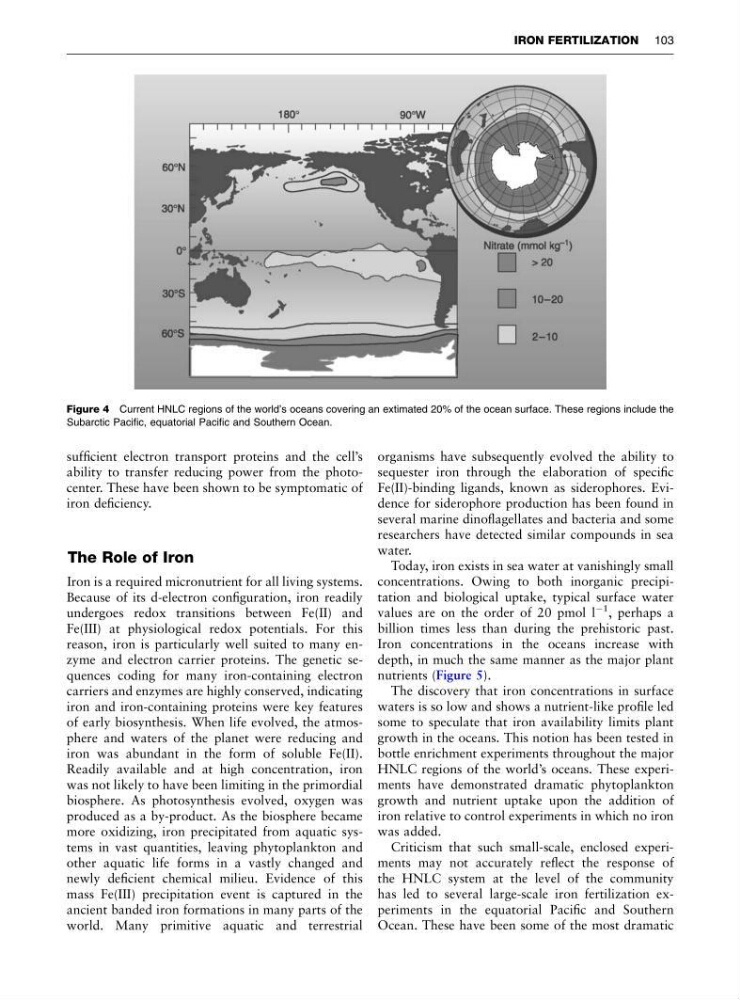
Figure 4 Current HNLC regions of the world’s oceans covering an extimated 20% of the ocean surface. These regions include the
Subarctic Pacific, equatorial Pacific and Southern Ocean.
IRON FERTILIZATION 103
ability to transfer reducing power from the photocenter. These have been shown to be symptomatic of
iron deficiency.
The Role of Iron
Iron is a required micronutrient for all living systems.
Because of its d-electron configuration, iron readily
undergoes redox transitions between Fe(II) and
Fe(III) at physiological redox potentials. For this
reason, iron is particularly well suited to many enzyme and electron carrier proteins. The genetic sequences coding for many iron-containing electron
carriers and enzymes are highly conserved, indicating
iron and iron-containing proteins were key features
of early biosynthesis. When life evolved, the atmosphere and waters of the planet were reducing and
iron was abundant in the form of soluble Fe(II).
Readily available and at high concentration, iron
was not likely to have been limiting in the primordial
biosphere. As photosynthesis evolved, oxygen was
produced as a by-product. As the biosphere became
more oxidizing, iron precipitated from aquatic systems in vast quantities, leaving phytoplankton and
other aquatic life forms in a vastly changed and
newly deficient chemical milieu. Evidence of this
mass Fe(III) precipitation event is captured in the
ancient banded iron formations in many parts of the
world. Many primitive aquatic and terrestrial
organisms have subsequently evolved the ability to
sequester iron through the elaboration of specific
Fe(II)-binding ligands, known as siderophores. Evidence for siderophore production has been found in
several marine dinoflagellates and bacteria and some
researchers have detected similar compounds in sea
water.
Today, iron exists in sea water at vanishingly small
concentrations. Owing to both inorganic precipitation and biological uptake, typical surface water
values are on the order of 20 pmol l
À1 , perhaps a
billion times less than during the prehistoric past.
Iron concentrations in the oceans increase with
depth, in much the same manner as the major plant
nutrients (Figure 5).
The discovery that iron concentrations in surface
waters is so low and shows a nutrient-like profile led
some to speculate that iron availability limits plant
growth in the oceans. This notion has been tested in
bottle enrichment experiments throughout the major
HNLC regions of the world’s oceans. These experiments have demonstrated dramatic phytoplankton
growth and nutrient uptake upon the addition of
iron relative to control experiments in which no iron
was added.
Criticism that such small-scale, enclosed experiments may not accurately reflect the response of
the HNLC system at the level of the community
has led to several large-scale iron fertilization experiments in the equatorial Pacific and Southern
Ocean. These have been some of the most dramatic
Figure 4 Current HNLC regions of the world’s oceans covering an extimated 20% of the ocean surface. These regions include the
Subarctic Pacific, equatorial Pacific and Southern Ocean.
IRON FERTILIZATION 103