

D n (d)
1nN o
µ n (d - )
n
r 2
P
4 m filtered dialysis bags
Whole bacterial community
0.92
13.54
0.75
49
0.86
0.001
Coccoid shaped bacteria
0.98
13.16
0.71
14
0.76
0.01
Rod shaped bacteria
0.85
12.18
0.82
14
0.91
0.001
60 m filtered dialysis bags
Whole bacterial community
2.04
13.40
0.34
41
0.74
0.001
Coccoid shaped bacteria
2.89
13.30
0.24
11
0.77
0.01
Rod shaped bacteria
0.99
11.28
0.70
11
0.90
0.001
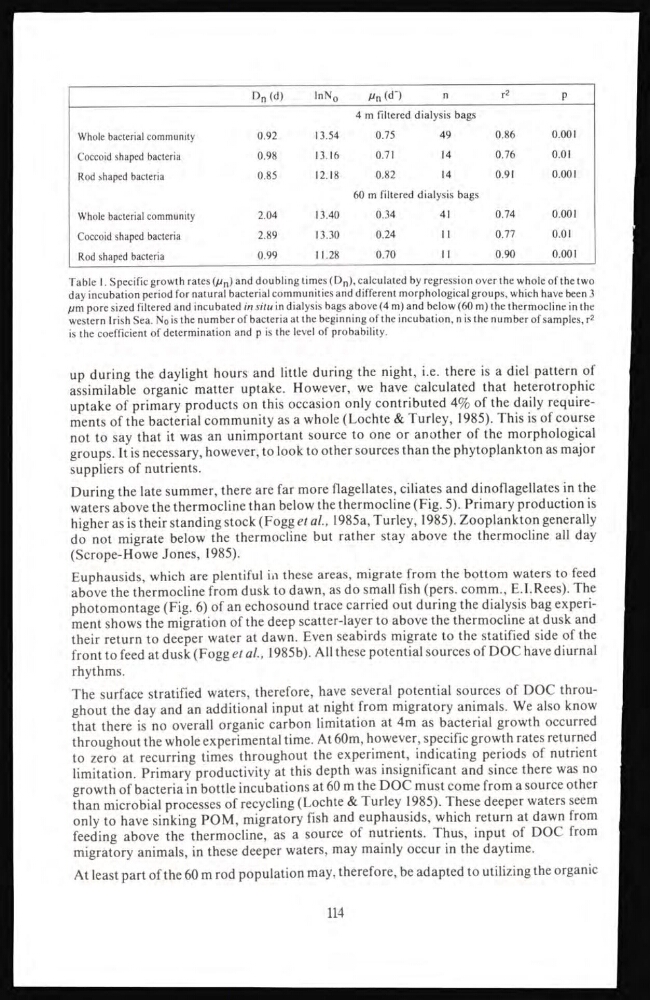
Table 1. Specific growth rates (µ n ) and doubling times (D
n
), calculated by regression over the whole of the two
day incubation period for natural bacterial communities and different morphological groups, which have been 3
µm pore sized filtered and incubated in situ in dialysis bags above (4 m) and below (60 m) the thermocline in the
western Irish Sea. No is the number of bacteria at the beginning of the incubation, n is the number of samples, r 2
is the coefficient of determination and p is the level of probability.
up during the daylight hours and little during the night, i.e. there is a diel pattern of
assimilable organic matter uptake. However, we have calculated that heterotrophic
uptake of primary products on this occasion only contributed 4% of the daily requirements of the bacterial community as a whole (Lochte & Turley, 1985). This is of course
not to say that it was an unimportant source to one or another of the morphological
groups. It is necessary, however, to look to other sources than the phytoplankton as major
suppliers of nutrients.
During the late summer, there are far more flagellates, ciliates and dinoflagellates in the
waters above the thermocline than below the thermocline (Fig. 5). Primary production is
higher as is their standing stock (Fogg et al., 1985a, Turley, 1985). Zooplankton generally
do not migrate below the thermocline but rather stay above the thermocline all day
(Scrope-Howe Jones, 1985).
Euphausids, which are plentiful in these areas, migrate from the bottom waters to feed
above the thermocline from dusk to dawn, as do small fish (pers. comm., E.I.Rees). The
photomontage (Fig. 6) of an echosound trace carried out during the dialysis bag experiment shows the migration of the deep scatter-layer to above the thermocline at dusk and
their return to deeper water at dawn. Even seabirds migrate to the statified side of the
front to feed at dusk (Fogg et al, 1985b). All these potential sources of DOC have diurnal
rhythms.
The surface stratified waters, therefore, have several potential sources of DOC throughout the day and an additional input at night from migratory animals. We also know
that there is no overall organic carbon limitation at 4m as bacterial growth occurred
throughout the whole experimental time. At 60m, however, specific growth rates returned
to zero at recurring times throughout the experiment, indicating periods of nutrient
limitation. Primary productivity at this depth was insignificant and since there was no
growth of bacteria in bottle incubations at 60 m the DOC must come from a source other
than microbial processes of recycling (Lochte & Turley 1985). These deeper waters seem
only to have sinking POM, migratory fish and euphausids, which return at dawn from
feeding above the thermocline, as a source of nutrients. Thus, input of DOC from
migratory animals, in these deeper waters, may mainly occur in the daytime.
At least part of the 60 m rod population may, therefore, be adapted to utilizing the organic
114
1nN o
µ n (d - )
n
r 2
P
4 m filtered dialysis bags
Whole bacterial community
0.92
13.54
0.75
49
0.86
0.001
Coccoid shaped bacteria
0.98
13.16
0.71
14
0.76
0.01
Rod shaped bacteria
0.85
12.18
0.82
14
0.91
0.001
60 m filtered dialysis bags
Whole bacterial community
2.04
13.40
0.34
41
0.74
0.001
Coccoid shaped bacteria
2.89
13.30
0.24
11
0.77
0.01
Rod shaped bacteria
0.99
11.28
0.70
11
0.90
0.001
Table 1. Specific growth rates (µ n ) and doubling times (D
n
), calculated by regression over the whole of the two
day incubation period for natural bacterial communities and different morphological groups, which have been 3
µm pore sized filtered and incubated in situ in dialysis bags above (4 m) and below (60 m) the thermocline in the
western Irish Sea. No is the number of bacteria at the beginning of the incubation, n is the number of samples, r 2
is the coefficient of determination and p is the level of probability.
up during the daylight hours and little during the night, i.e. there is a diel pattern of
assimilable organic matter uptake. However, we have calculated that heterotrophic
uptake of primary products on this occasion only contributed 4% of the daily requirements of the bacterial community as a whole (Lochte & Turley, 1985). This is of course
not to say that it was an unimportant source to one or another of the morphological
groups. It is necessary, however, to look to other sources than the phytoplankton as major
suppliers of nutrients.
During the late summer, there are far more flagellates, ciliates and dinoflagellates in the
waters above the thermocline than below the thermocline (Fig. 5). Primary production is
higher as is their standing stock (Fogg et al., 1985a, Turley, 1985). Zooplankton generally
do not migrate below the thermocline but rather stay above the thermocline all day
(Scrope-Howe Jones, 1985).
Euphausids, which are plentiful in these areas, migrate from the bottom waters to feed
above the thermocline from dusk to dawn, as do small fish (pers. comm., E.I.Rees). The
photomontage (Fig. 6) of an echosound trace carried out during the dialysis bag experiment shows the migration of the deep scatter-layer to above the thermocline at dusk and
their return to deeper water at dawn. Even seabirds migrate to the statified side of the
front to feed at dusk (Fogg et al, 1985b). All these potential sources of DOC have diurnal
rhythms.
The surface stratified waters, therefore, have several potential sources of DOC throughout the day and an additional input at night from migratory animals. We also know
that there is no overall organic carbon limitation at 4m as bacterial growth occurred
throughout the whole experimental time. At 60m, however, specific growth rates returned
to zero at recurring times throughout the experiment, indicating periods of nutrient
limitation. Primary productivity at this depth was insignificant and since there was no
growth of bacteria in bottle incubations at 60 m the DOC must come from a source other
than microbial processes of recycling (Lochte & Turley 1985). These deeper waters seem
only to have sinking POM, migratory fish and euphausids, which return at dawn from
feeding above the thermocline, as a source of nutrients. Thus, input of DOC from
migratory animals, in these deeper waters, may mainly occur in the daytime.
At least part of the 60 m rod population may, therefore, be adapted to utilizing the organic
114