

Time of day (BSD
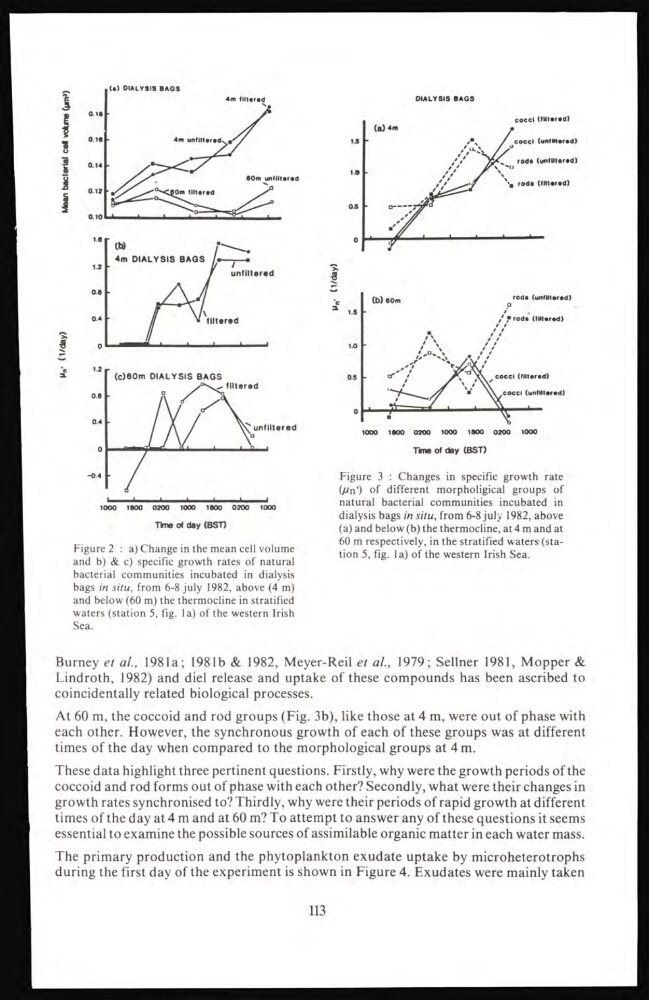
Figure 2 : a) Change in the mean cell volume
and b) & c) specific growth rates of natural
bacterial communities incubated in dialysis
bags in situ, from 6-8 july 1982, above (4 m)
and below (60 m) the thermocline in stratified
waters (station 5, fig. 1a) of the western Irish
Sea.
DIALYSIS BASS
Time of day (BST)
Figure 3 : Changes in specific growth rate
of different morpholigical groups of
natural bacterial communities incubated in
dialysis bags in situ, from 6-8 july 1982, above
(a) and below (b) the thermocline, at 4 m and at
60 m respectively, in the stratified waters (station 5, fig. la) of the western Irish Sea.
Burney et ai, 1981a; 1981b & 1982, Meyer-Reil et ai, 1979; Sellner 1981, Mopper &
Lindroth, 1982) and diel release and uptake of these compounds has been ascribed to
coincidentally related biological processes.
At 60 m, the coccoid and rod groups (Fig. 3b), like those at 4 m, were out of phase with
each other. However, the synchronous growth of each of these groups was at different
times of the day when compared to the morphological groups at 4 m.
These data highlight three pertinent questions. Firstly, why were the growth periods of the
coccoid and rod forms out of phase with each other? Secondly, what were their changes in
growth rates synchronised to? Thirdly, why were their periods of rapid growth at different
times of the day at 4 m and at 60 m? To attempt to answer any of these questions it seems
essential to examine the possible sources of assimilable organic matter in each water mass.
The primary production and the phytoplankton exudate uptake by microheterotrophs
during the first day of the experiment is shown in Figure 4. Exudates were mainly taken
113
Figure 2 : a) Change in the mean cell volume
and b) & c) specific growth rates of natural
bacterial communities incubated in dialysis
bags in situ, from 6-8 july 1982, above (4 m)
and below (60 m) the thermocline in stratified
waters (station 5, fig. 1a) of the western Irish
Sea.
DIALYSIS BASS
Time of day (BST)
Figure 3 : Changes in specific growth rate
of different morpholigical groups of
natural bacterial communities incubated in
dialysis bags in situ, from 6-8 july 1982, above
(a) and below (b) the thermocline, at 4 m and at
60 m respectively, in the stratified waters (station 5, fig. la) of the western Irish Sea.
Burney et ai, 1981a; 1981b & 1982, Meyer-Reil et ai, 1979; Sellner 1981, Mopper &
Lindroth, 1982) and diel release and uptake of these compounds has been ascribed to
coincidentally related biological processes.
At 60 m, the coccoid and rod groups (Fig. 3b), like those at 4 m, were out of phase with
each other. However, the synchronous growth of each of these groups was at different
times of the day when compared to the morphological groups at 4 m.
These data highlight three pertinent questions. Firstly, why were the growth periods of the
coccoid and rod forms out of phase with each other? Secondly, what were their changes in
growth rates synchronised to? Thirdly, why were their periods of rapid growth at different
times of the day at 4 m and at 60 m? To attempt to answer any of these questions it seems
essential to examine the possible sources of assimilable organic matter in each water mass.
The primary production and the phytoplankton exudate uptake by microheterotrophs
during the first day of the experiment is shown in Figure 4. Exudates were mainly taken
113