

144
WILLIAM N. TAVOLGA
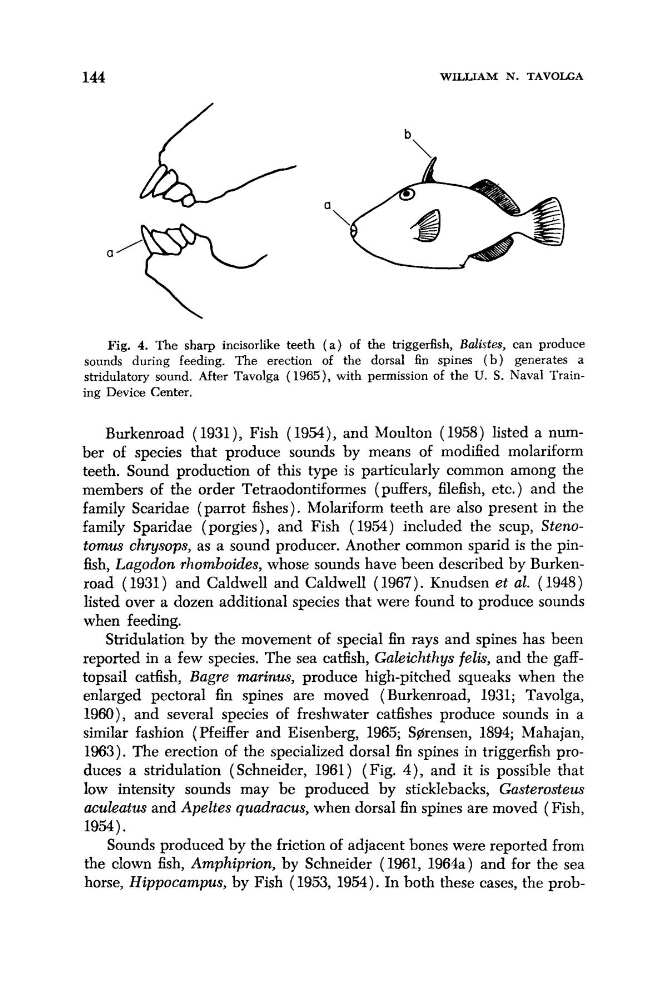
Fig. 4. The sharp incisorlike teeth ( a ) of the triggerfish, Bulistes, can produce
sounds during feeding. The erection of the dorsal fin spines ( b ) generates a
stridulatory sound. After Tavolga (1965), with permission of the U. S . Naval Training Device Center.
Burkenroad (1931), Fish (1954), and Moulton (1958) listed a number of species that produce sounds by means of modified molariform
teeth. Sound production of this type is particularly common among the
members of the order Tetraodontiformes (puffers, filefish, etc.) and the
family Scaridae (parrot fishes). Molariform teeth are also present in the
family Sparidae (porgies), and Fish ( 1954) included the scup, Stenotomus chrysops, as a sound producer. Another common sparid is the pinfish, Lagodon rhomboides, whose sounds have been described by Burkenroad (1931) and Caldwell and Caldwell (1967). Knudsen et al. (1948)
listed over a dozen additional species that were found to produce sounds
when feeding.
Stridulation by the movement of special fin rays and spines has been
reported in a few species. The sea caffish, Gabichthys felis, and the gafftopsail catfish, Bagre marinus, produce high-pitched squeaks when the
enlarged pectoral fin spines are moved ( Burkenroad, 1931; Tavolga,
1960), and several species of freshwater catfishes produce sounds in a
similar fashion ( Pfeiffer and Eisenberg, 1965; SGrensen, 1894; Mahajan,
1963). The erection of the specialized dorsal fin spines in triggerfish produces a stridulation (Schneider, 1961) (Fig. 4), and it is possible that
low intensity sounds may be produced by sticklebacks, Gasterosteus
acubatus and Apeltes quadracus, when dorsal fin spines are moved (Fish,
1954).
Sounds produced by the friction of adjacent bones were reported from
the clown fish, Amphiprion, by Schneider (1961, 1964a) and for the sea
horse, Hippocampus, by Fish (1953, 1954). In both these cases, the prob-
WILLIAM N. TAVOLGA
Fig. 4. The sharp incisorlike teeth ( a ) of the triggerfish, Bulistes, can produce
sounds during feeding. The erection of the dorsal fin spines ( b ) generates a
stridulatory sound. After Tavolga (1965), with permission of the U. S . Naval Training Device Center.
Burkenroad (1931), Fish (1954), and Moulton (1958) listed a number of species that produce sounds by means of modified molariform
teeth. Sound production of this type is particularly common among the
members of the order Tetraodontiformes (puffers, filefish, etc.) and the
family Scaridae (parrot fishes). Molariform teeth are also present in the
family Sparidae (porgies), and Fish ( 1954) included the scup, Stenotomus chrysops, as a sound producer. Another common sparid is the pinfish, Lagodon rhomboides, whose sounds have been described by Burkenroad (1931) and Caldwell and Caldwell (1967). Knudsen et al. (1948)
listed over a dozen additional species that were found to produce sounds
when feeding.
Stridulation by the movement of special fin rays and spines has been
reported in a few species. The sea caffish, Gabichthys felis, and the gafftopsail catfish, Bagre marinus, produce high-pitched squeaks when the
enlarged pectoral fin spines are moved ( Burkenroad, 1931; Tavolga,
1960), and several species of freshwater catfishes produce sounds in a
similar fashion ( Pfeiffer and Eisenberg, 1965; SGrensen, 1894; Mahajan,
1963). The erection of the specialized dorsal fin spines in triggerfish produces a stridulation (Schneider, 1961) (Fig. 4), and it is possible that
low intensity sounds may be produced by sticklebacks, Gasterosteus
acubatus and Apeltes quadracus, when dorsal fin spines are moved (Fish,
1954).
Sounds produced by the friction of adjacent bones were reported from
the clown fish, Amphiprion, by Schneider (1961, 1964a) and for the sea
horse, Hippocampus, by Fish (1953, 1954). In both these cases, the prob-