

6. SOUND PRODUCTION AND DETECTION
143
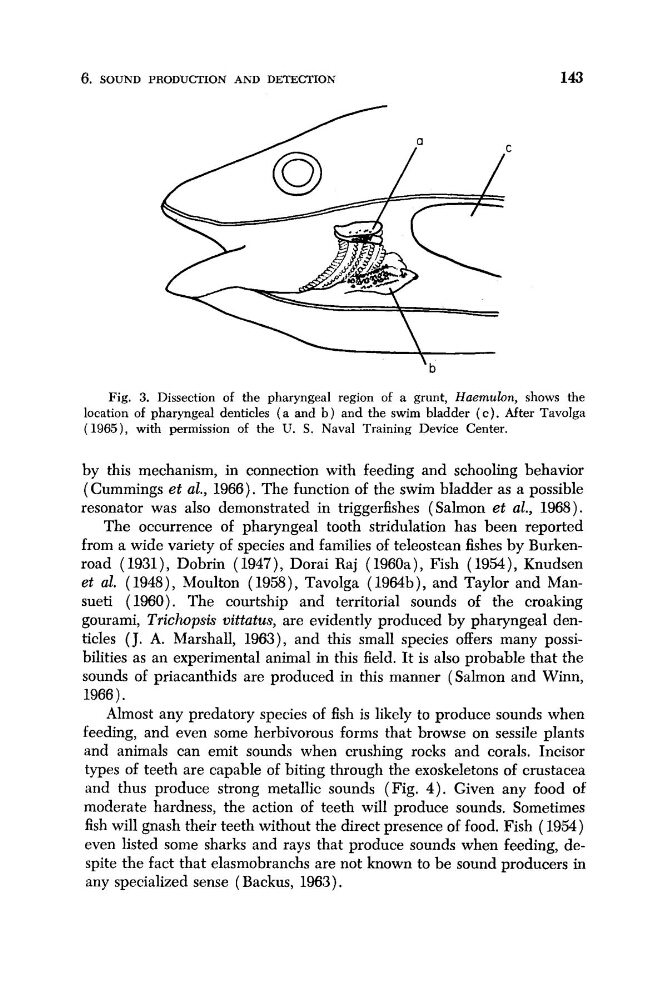
Fig. 3. Dissection of the pharyngeal region of a grunt, Haemulon, shows the
location of pharyngeal denticles ( a and b ) and the swim bladder ( c ) . After Tavolga
(1965), with permission of the U. S. Naval Training Device Center.
by this mechanism, in connection with feeding and schooling behavior
(Cummings et al., 1966). The function of the swim bladder as a possible
resonator was also demonstrated in triggerfishes (Salmon et al., 1968).
The occurrence of pharyngeal tooth stridulation has been reported
from a wide variety of species and families of teleostean fishes by Burkenroad (1931), Dobrin (1947), Dorai Raj ( 1960a), Fish ( 1954), Knudsen
et al. (1948), Moulton (1958), Tavolga ( 1964b), and Taylor and Mansueti (1960). The courtship and territorial sounds of the croaking
gourami, Trichopsis vittatus, are evidently produced by pharyngeal denticles (J. A. Marshall, 1963), and this small species offers many possibilities as an experimental animal in this field. It is also probable that the
sounds of priacanthids are produced in this manner (Salmon and Winn,
1966 ) .
Almost any predatory species of fish is likely to produce sounds when
feeding, and even some herbivorous forms that browse on sessile plants
and animals can emit sounds when crushing rocks and corals. Incisor
types of teeth are capable of biting through the exoskeletons of crustacea
and thus produce strong metallic sounds (Fig. 4). Given any food of
moderate hardness, the action of teeth will produce sounds. Sometimes
fish will gnash their teeth without the direct presence of food. Fish (1954)
even listed some sharks and rays that produce sounds when feeding, despite the fact that elasmobranchs are not known to be sound producers in
any specialized sense ( Backus, 1963).
143
Fig. 3. Dissection of the pharyngeal region of a grunt, Haemulon, shows the
location of pharyngeal denticles ( a and b ) and the swim bladder ( c ) . After Tavolga
(1965), with permission of the U. S. Naval Training Device Center.
by this mechanism, in connection with feeding and schooling behavior
(Cummings et al., 1966). The function of the swim bladder as a possible
resonator was also demonstrated in triggerfishes (Salmon et al., 1968).
The occurrence of pharyngeal tooth stridulation has been reported
from a wide variety of species and families of teleostean fishes by Burkenroad (1931), Dobrin (1947), Dorai Raj ( 1960a), Fish ( 1954), Knudsen
et al. (1948), Moulton (1958), Tavolga ( 1964b), and Taylor and Mansueti (1960). The courtship and territorial sounds of the croaking
gourami, Trichopsis vittatus, are evidently produced by pharyngeal denticles (J. A. Marshall, 1963), and this small species offers many possibilities as an experimental animal in this field. It is also probable that the
sounds of priacanthids are produced in this manner (Salmon and Winn,
1966 ) .
Almost any predatory species of fish is likely to produce sounds when
feeding, and even some herbivorous forms that browse on sessile plants
and animals can emit sounds when crushing rocks and corals. Incisor
types of teeth are capable of biting through the exoskeletons of crustacea
and thus produce strong metallic sounds (Fig. 4). Given any food of
moderate hardness, the action of teeth will produce sounds. Sometimes
fish will gnash their teeth without the direct presence of food. Fish (1954)
even listed some sharks and rays that produce sounds when feeding, despite the fact that elasmobranchs are not known to be sound producers in
any specialized sense ( Backus, 1963).