

6. PROPERTIES OF FISH HEMOGLOBINS
233
PH
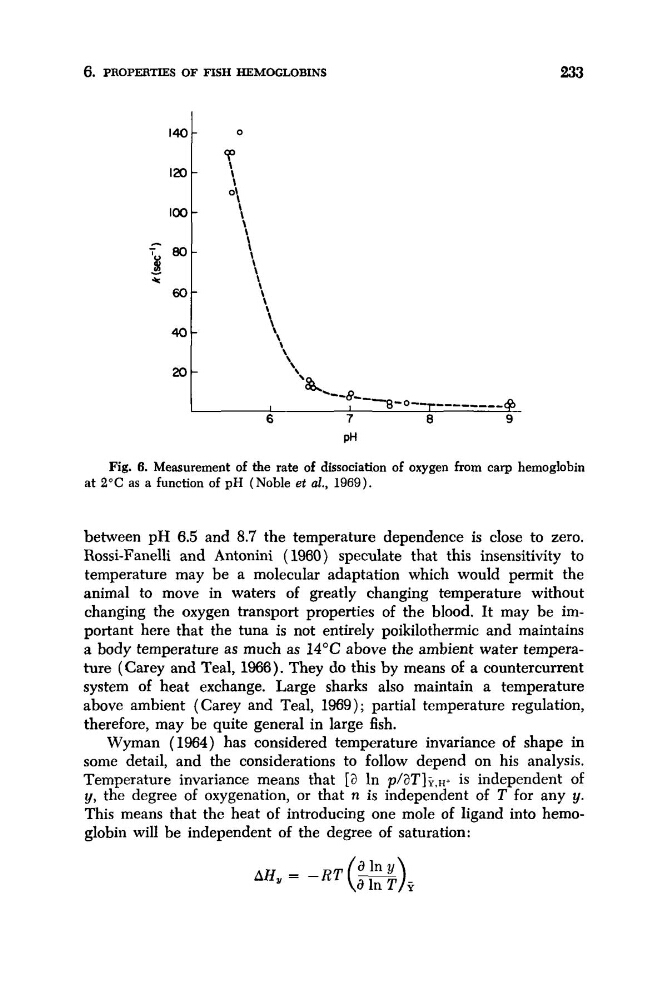
Fig. 6. Measurement of the rate of dissociation of oxygen from carp hemoglobin
at 2°C as a function of pH (Noble et al., 1969).
between pH 6.5 and 8.7 the temperature dependence is close to zero.
Rossi-Fanelli and Antonini ( 1960) speculate that this insensitivity to
temperature may be a molecular adaptation which would permit the
animal to move in waters of greatly changing temperature without
changing the oxygen transport properties of the blood. It may be important here that the tuna is not entirely poikilothermic and maintains
a body temperature as much as 14°C above the ambient water temperature (Carey and Teal, 1966). They do this by means of a countercurrent
system of heat exchange. Large sharks also maintain a temperature
above ambient ( Carey and Teal, 1969) ; partial temperature regulation,
therefore, may be quite general in large fish.
Wyman (1964) has considered temperature invariance of shape in
some detail, and the considerations to follow depend on his analysis.
Temperature invariance means that [a In p/aT] Y , ~ + is independent of
y, the degree of oxygenation, or that n is independent of T for any y.
This means that the heat of introducing one mole of ligand into hemoglobin will be independent of the degree of saturation:
233
PH
Fig. 6. Measurement of the rate of dissociation of oxygen from carp hemoglobin
at 2°C as a function of pH (Noble et al., 1969).
between pH 6.5 and 8.7 the temperature dependence is close to zero.
Rossi-Fanelli and Antonini ( 1960) speculate that this insensitivity to
temperature may be a molecular adaptation which would permit the
animal to move in waters of greatly changing temperature without
changing the oxygen transport properties of the blood. It may be important here that the tuna is not entirely poikilothermic and maintains
a body temperature as much as 14°C above the ambient water temperature (Carey and Teal, 1966). They do this by means of a countercurrent
system of heat exchange. Large sharks also maintain a temperature
above ambient ( Carey and Teal, 1969) ; partial temperature regulation,
therefore, may be quite general in large fish.
Wyman (1964) has considered temperature invariance of shape in
some detail, and the considerations to follow depend on his analysis.
Temperature invariance means that [a In p/aT] Y , ~ + is independent of
y, the degree of oxygenation, or that n is independent of T for any y.
This means that the heat of introducing one mole of ligand into hemoglobin will be independent of the degree of saturation: