

UPWELLING AND TEE PRODUCTION OF FISH
313
[exp-2 exp(-kZp) - exp( - 2 ) ]
- a10
-
2k Wh
I am grateful to my colleague, Mr. J. G. K. Harris, for the development
of equations ( 2 ) t o ( 5 ) .
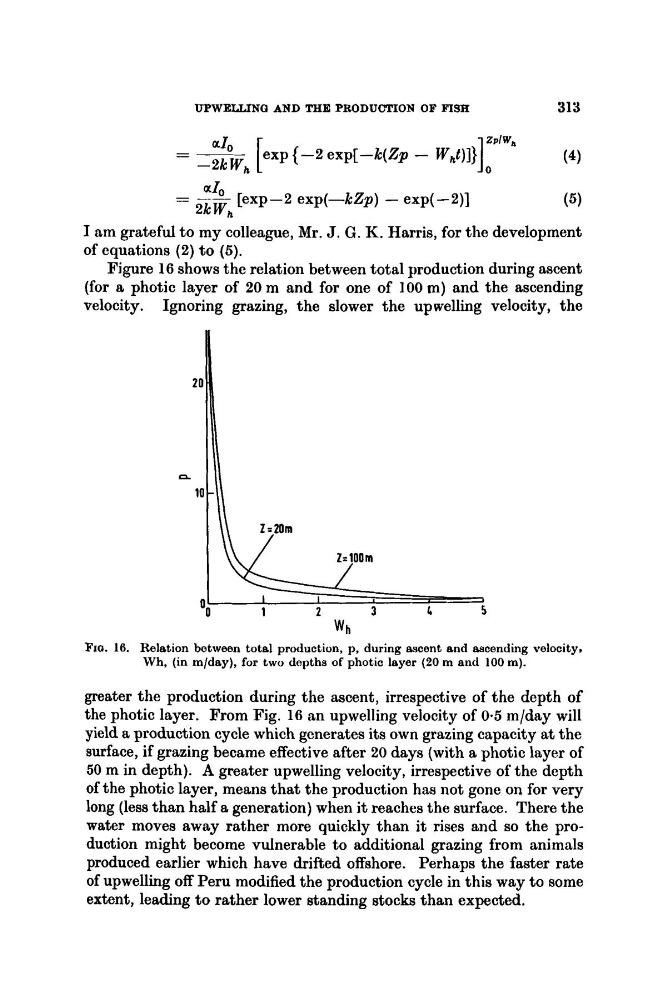
Figure 16 shows the relation between total production during ascent
(for a photic layer of 20 m and for one of 100 m) and the ascending
velocity. Ignoring grazing, the slower the upwelling velocity, the
Fro. 16. Relation botween total production, p. during ascent and ascending
Wh, (in m/day), for two depths of photic layer (20 m and 100 m).
velocity.
greater the production during the ascent, irrespective of the depth of
the photic layer. From Fig. 16 an upwelling velocity of 0.5 m/day will
yield a production cycle which generates its own grazing capacity at the
surface, if grazing became effective after 20 days (with a photic layer of
50 m in depth). A greater upwelling velocity, irrespective of the depth
of the photic layer, means that the production has not gone on for very
long (less than half a generation) when it reaches the surface. There the
water moves away rather more quickly than it rises and so the production might become vulnerable to additional grazing from animals
produced earlier which have drifted offshore. Perhaps the faster rate
of upwelling off Peru modified the production cycle in this way to some
extent, leading t o rather lower standing stocks than expected.
313
[exp-2 exp(-kZp) - exp( - 2 ) ]
- a10
-
2k Wh
I am grateful to my colleague, Mr. J. G. K. Harris, for the development
of equations ( 2 ) t o ( 5 ) .
Figure 16 shows the relation between total production during ascent
(for a photic layer of 20 m and for one of 100 m) and the ascending
velocity. Ignoring grazing, the slower the upwelling velocity, the
Fro. 16. Relation botween total production, p. during ascent and ascending
Wh, (in m/day), for two depths of photic layer (20 m and 100 m).
velocity.
greater the production during the ascent, irrespective of the depth of
the photic layer. From Fig. 16 an upwelling velocity of 0.5 m/day will
yield a production cycle which generates its own grazing capacity at the
surface, if grazing became effective after 20 days (with a photic layer of
50 m in depth). A greater upwelling velocity, irrespective of the depth
of the photic layer, means that the production has not gone on for very
long (less than half a generation) when it reaches the surface. There the
water moves away rather more quickly than it rises and so the production might become vulnerable to additional grazing from animals
produced earlier which have drifted offshore. Perhaps the faster rate
of upwelling off Peru modified the production cycle in this way to some
extent, leading t o rather lower standing stocks than expected.