

214
J. A. AILEN AND M. R. GARRETT
vertebrates* (but still t o be confirmed in invertebrates) the taurine
concentration in tissue may be constant, even when its synthesis is
reduced, for example, by vitamin B, deficiency (Hope, 1957). It is
present in the greatest quantities in tissues having the greatest metabolic activity, vide heart and muscle, and is held there against a large
concentration gradient.
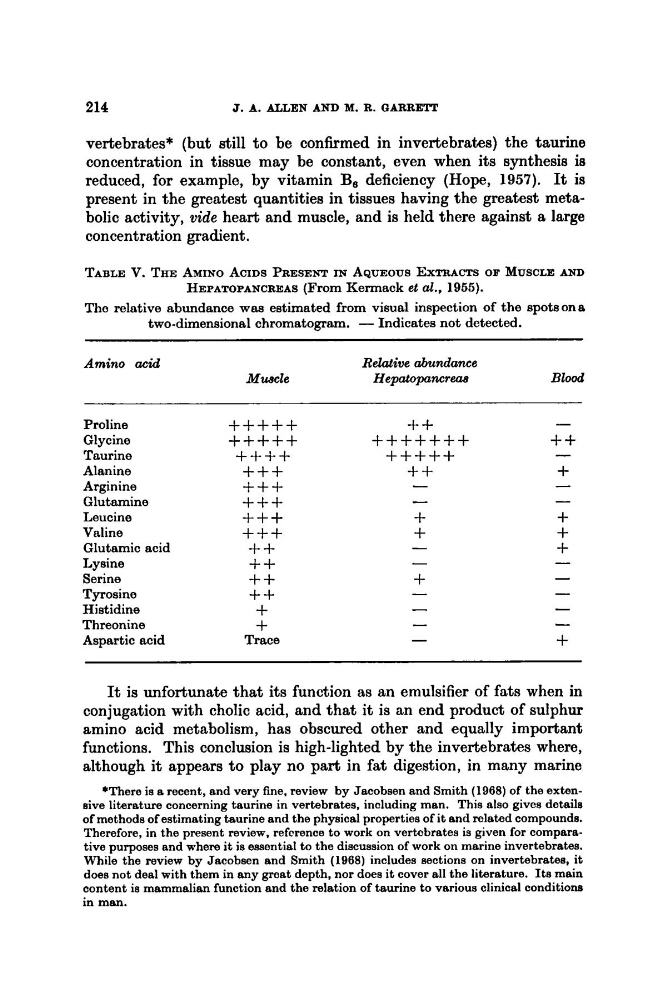
TABLE V. THE AMINO ACIDS PRESENT IN AQUEOUS EXTRACTS OF MUSCLE AND
HEPATOPANCREAS (From Kermack et al., 1955).
The relative abundance was estimated from visual inspection of the SpOtSona
two-dimensional chromatogram. - Indicates not detected.
Amino acid
Relalive abundance
Muscle
Hepatopancreaa
Blood
Proline
Glycine
Taurine
Alanine
Arginine
Glutamine
Leucine
Valine
Glutamic acid
Lysine
Serine
Tyrosine
Histidine
Threonine
Aspartic acid
+++++
+++++
++++
+++
+++
+++
+++
+++
++
++
++
++
+
+
Trace
++
+++++++
+++++
++ -
-
+
+
-
-
+
-
-
+
It is unfortunate that its function as an emulsifier of fats when in
conjugation with cholic acid, and that it is an end product of sulphur
amino acid metabolism, has obscured other and equally important
functions. This conclusion is high-lighted by the invertebrates where,
although it appears t o play no part in fat digestion, in many marine
*There is a recent, and very fine, review by Jacobsen and Smith (1968) of the extensive literature concerning taurine in vertebrates, including man. This also gives details
of methods of estimating taurine and the physical properties of it and related compounds.
Therefore, in the present review, reference to work on vertebrates is given for comparative purposes and where it is essential to the discussion of work on marine invertebrates.
While the review by Jacobsen and Smith (1968) includes sections on invertebrates, it
does not deal with them in any great depth, nor does it cover all the literature. Its main
content is mammalian function and the relation of taurine to various clinical conditions
in man.
J. A. AILEN AND M. R. GARRETT
vertebrates* (but still t o be confirmed in invertebrates) the taurine
concentration in tissue may be constant, even when its synthesis is
reduced, for example, by vitamin B, deficiency (Hope, 1957). It is
present in the greatest quantities in tissues having the greatest metabolic activity, vide heart and muscle, and is held there against a large
concentration gradient.
TABLE V. THE AMINO ACIDS PRESENT IN AQUEOUS EXTRACTS OF MUSCLE AND
HEPATOPANCREAS (From Kermack et al., 1955).
The relative abundance was estimated from visual inspection of the SpOtSona
two-dimensional chromatogram. - Indicates not detected.
Amino acid
Relalive abundance
Muscle
Hepatopancreaa
Blood
Proline
Glycine
Taurine
Alanine
Arginine
Glutamine
Leucine
Valine
Glutamic acid
Lysine
Serine
Tyrosine
Histidine
Threonine
Aspartic acid
+++++
+++++
++++
+++
+++
+++
+++
+++
++
++
++
++
+
+
Trace
++
+++++++
+++++
++ -
-
+
+
-
-
+
-
-
+
It is unfortunate that its function as an emulsifier of fats when in
conjugation with cholic acid, and that it is an end product of sulphur
amino acid metabolism, has obscured other and equally important
functions. This conclusion is high-lighted by the invertebrates where,
although it appears t o play no part in fat digestion, in many marine
*There is a recent, and very fine, review by Jacobsen and Smith (1968) of the extensive literature concerning taurine in vertebrates, including man. This also gives details
of methods of estimating taurine and the physical properties of it and related compounds.
Therefore, in the present review, reference to work on vertebrates is given for comparative purposes and where it is essential to the discussion of work on marine invertebrates.
While the review by Jacobsen and Smith (1968) includes sections on invertebrates, it
does not deal with them in any great depth, nor does it cover all the literature. Its main
content is mammalian function and the relation of taurine to various clinical conditions
in man.