

222
THE BIOLOGY OF EUPHAUSIIDS
and the Carr-Price reaction observed in situ. The results obtained by
the first method are shown in Table XX and suggest that most of the
vitamin A and astaxanthin is present in the ommatidia, especially a t
TABLE XX. DISTRIBUTION OF VITAMIN A AND ASTAXANTHIN IN THE EYES OF
Meganyctiphanes norvegica (Fisher, 1962b)
Part of the eye
(1) Exoskeleton
0.092
0
0
0.10
1070
(2) Distal ends of ommatidia
1.2
0.20
169
0.88
750
(3) Proximal ends of ommatidia
0.075
0.64
8 530
2.3
30 600
(4) Photophore
0.055
0.02
354
0.21
3 790
(5) Nerve and muscle
0-22
0.078
360
0.55
2 570
(6) Tissues 1-5 combined
1.64
0.94
571
4.04
2 500
(7) Undissected eyes
2.9
0.90
307
4.1
1398
their proximal ends where the rhabdoms are situated. The discrepancies
between the total concentrations in the whole eyes and in the dissected
eyes were probably caused by loss of weight through evaporation while
the dissections were being completed because the total amounts of
vitamin A and astaxanthin in dissected and whole eyes agree well.
Using the second method, vitamin A fluorescence was observed in the
regions of the rhabdoms and the photophore and likewise the third
method produced the strongest reactions in these two regions. Consequently, although these techniques all lack precision, the combined
results indicate that most of the vitamin A is present in the rhabdoms
and a small quantity in the photophore.
Il-cis
C Y O H
II 13-di-cis
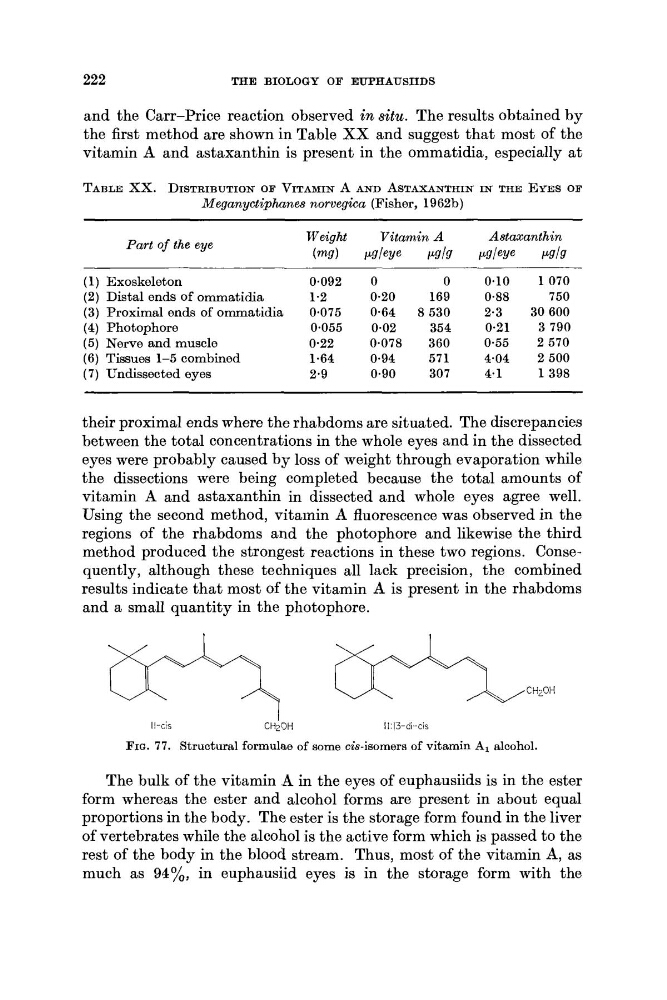
FIG. 77. Structural formulae of some cis-isomers of vitamin A, alcohol.
The bulk of the vitamin A in the eyes of euphausiids is in the ester
form whereas the ester and alcohol forms are present in about equal
proportions in the body. The ester is the storage form found in the liver
of vertebrates while the alcohol is the active form which is passed to the
rest of the body in the blood stream. Thus, most of the vitamin A, as
much as 94%) in euphausiid eyes is in the storage form with the
THE BIOLOGY OF EUPHAUSIIDS
and the Carr-Price reaction observed in situ. The results obtained by
the first method are shown in Table XX and suggest that most of the
vitamin A and astaxanthin is present in the ommatidia, especially a t
TABLE XX. DISTRIBUTION OF VITAMIN A AND ASTAXANTHIN IN THE EYES OF
Meganyctiphanes norvegica (Fisher, 1962b)
Part of the eye
(1) Exoskeleton
0.092
0
0
0.10
1070
(2) Distal ends of ommatidia
1.2
0.20
169
0.88
750
(3) Proximal ends of ommatidia
0.075
0.64
8 530
2.3
30 600
(4) Photophore
0.055
0.02
354
0.21
3 790
(5) Nerve and muscle
0-22
0.078
360
0.55
2 570
(6) Tissues 1-5 combined
1.64
0.94
571
4.04
2 500
(7) Undissected eyes
2.9
0.90
307
4.1
1398
their proximal ends where the rhabdoms are situated. The discrepancies
between the total concentrations in the whole eyes and in the dissected
eyes were probably caused by loss of weight through evaporation while
the dissections were being completed because the total amounts of
vitamin A and astaxanthin in dissected and whole eyes agree well.
Using the second method, vitamin A fluorescence was observed in the
regions of the rhabdoms and the photophore and likewise the third
method produced the strongest reactions in these two regions. Consequently, although these techniques all lack precision, the combined
results indicate that most of the vitamin A is present in the rhabdoms
and a small quantity in the photophore.
Il-cis
C Y O H
II 13-di-cis
FIG. 77. Structural formulae of some cis-isomers of vitamin A, alcohol.
The bulk of the vitamin A in the eyes of euphausiids is in the ester
form whereas the ester and alcohol forms are present in about equal
proportions in the body. The ester is the storage form found in the liver
of vertebrates while the alcohol is the active form which is passed to the
rest of the body in the blood stream. Thus, most of the vitamin A, as
much as 94%) in euphausiid eyes is in the storage form with the