

122
A. D. BONEY
2. North America
Data on the standing crops of brown seaweeds on the Pacific and
Atlantic coasts of North America are available from numerous sources
(Tseng, 1947 ; MacFarlane, 1952a,b, 1956a ; Woodward, 1952 ; Aleem,
1956a,b ; Scagel, 1969, 1961). Much of the information concerns the
giant kelps, Macrocystis pyrifera, M . integrifolia, and Nereocystis
Zuetkeana. Surveys of the giant kelp populations were stimulated
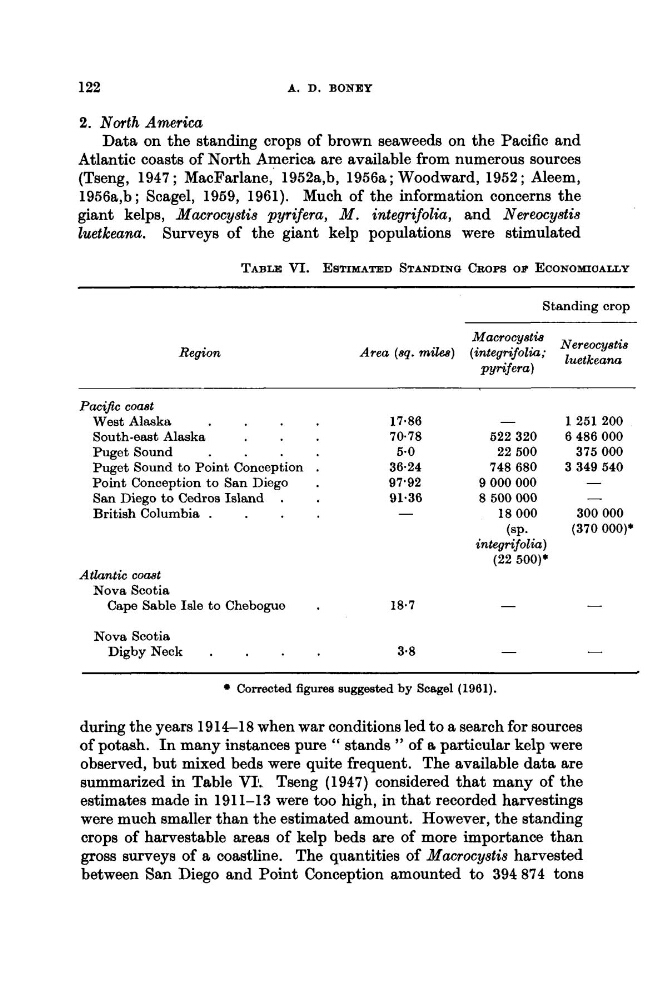
TABLE VI. ESTIMATED STANDING CROPS OF ECONOMIUALLY
Standing crop
Region
Macrocystis
Area (sq. miles) (integrtfolia; Nereocystis luetkeana
PYrtf era)
Pacific coast
West Alaska
.
17.86
-
1 2 5 1 200
South-east Alaska
70.78
522 320
6 486 000
Puget Sound to Point Conception .
36.24
748 680
3 349 540
Puget Sound
.
5.0
22 500
375 000
Point Conception to Sen Diego
.
97.92
9 000 000
-
San Diego to Cedros Island .
91.36
8 500 000
-
British Columbia .
-
18 000
300 000
(SP.
(370 OOO)*
integrif olia)
(22 500)*
Atlantic comt
Nova Scotia
-
-
Cape Sable Isle to Chebogue
.
18.7
Nova Scotia
-
-
Digby Neck
.
3.8
* Corrected figures suggested by Scegel (1961).
during the years 1914-18 when war conditions led to a search for sources
of potash. I n many instances pure “ stands ” of a particular kelp were
observed, but mixed beds were quite frequent. The available data are
summarized in Table VZ. Tseng (1947) considered that many of the
estimates made in 1911-13 were too high, in that recorded harvesting5
were much smaller than the estimated amount. However, the standing
crops of harvestable areas of kelp beds are of more importance than
gross surveys of a coastline. The quantities of Macrocystis harvested
between San Diego and Point Conception amounted to 394 874 tons
A. D. BONEY
2. North America
Data on the standing crops of brown seaweeds on the Pacific and
Atlantic coasts of North America are available from numerous sources
(Tseng, 1947 ; MacFarlane, 1952a,b, 1956a ; Woodward, 1952 ; Aleem,
1956a,b ; Scagel, 1969, 1961). Much of the information concerns the
giant kelps, Macrocystis pyrifera, M . integrifolia, and Nereocystis
Zuetkeana. Surveys of the giant kelp populations were stimulated
TABLE VI. ESTIMATED STANDING CROPS OF ECONOMIUALLY
Standing crop
Region
Macrocystis
Area (sq. miles) (integrtfolia; Nereocystis luetkeana
PYrtf era)
Pacific coast
West Alaska
.
17.86
-
1 2 5 1 200
South-east Alaska
70.78
522 320
6 486 000
Puget Sound to Point Conception .
36.24
748 680
3 349 540
Puget Sound
.
5.0
22 500
375 000
Point Conception to Sen Diego
.
97.92
9 000 000
-
San Diego to Cedros Island .
91.36
8 500 000
-
British Columbia .
-
18 000
300 000
(SP.
(370 OOO)*
integrif olia)
(22 500)*
Atlantic comt
Nova Scotia
-
-
Cape Sable Isle to Chebogue
.
18.7
Nova Scotia
-
-
Digby Neck
.
3.8
* Corrected figures suggested by Scegel (1961).
during the years 1914-18 when war conditions led to a search for sources
of potash. I n many instances pure “ stands ” of a particular kelp were
observed, but mixed beds were quite frequent. The available data are
summarized in Table VZ. Tseng (1947) considered that many of the
estimates made in 1911-13 were too high, in that recorded harvesting5
were much smaller than the estimated amount. However, the standing
crops of harvestable areas of kelp beds are of more importance than
gross surveys of a coastline. The quantities of Macrocystis harvested
between San Diego and Point Conception amounted to 394 874 tons