

BIOLOQY OF SEAWEEDS OF ECONOMIU IMPORTANCE
121
Laminaria hyperborea predominated, although localized areas containing mainly L. saccharina were observed, e.g. off North Shapinsay
(Walker, 1954a).
The Gigartina and Chondrus survey of the British Isles (Marshall
et al., 1949) showed that harvestable quantities of seaweed were available
on coasts of Devon and Cornwall ; on the Gower Peninsular, St. David’s
Head, south of Cardigan Bay, the Lleyn Peninsula and Anglesey in
Wales ; Ayrshire, Wigshire, Mull, Skye and the west coast of Scotland,
and in the south-east of Scotland and north-east England. In many of
these areas Gigartina made up between 50 to 90% of the standing crop.
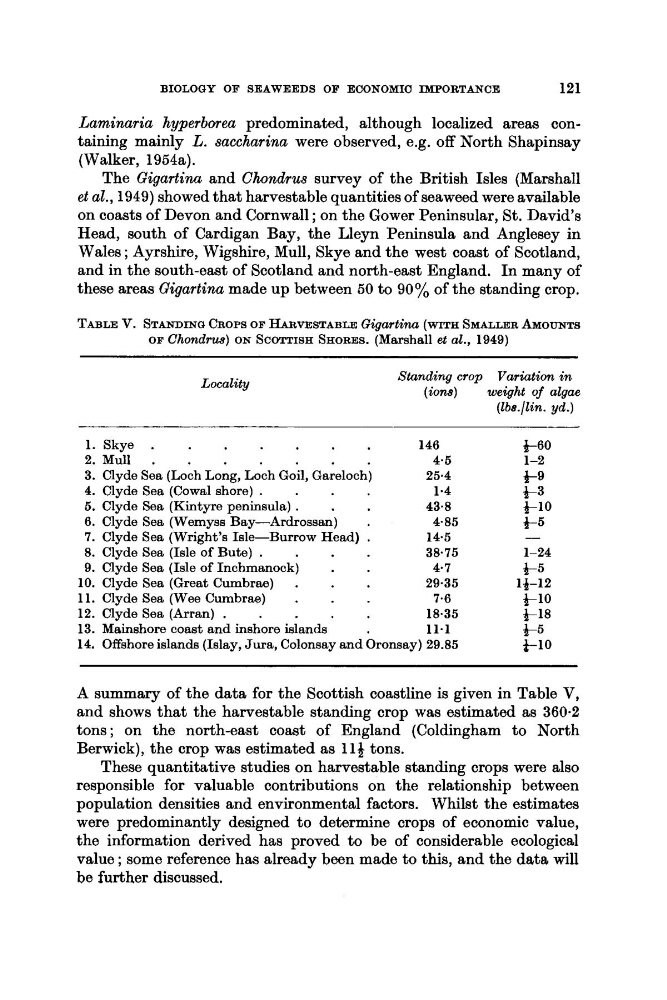
TABLE V. STANDING CROPS OF HARVESTABLE Gigartina (WITH SMALLER AMOTJNTS
OF Chondrua) ON SCOTTISH SHORES. (Marshall et al., 1949)
Locality
Standing crop Variation in
(1bs.llin. yd.)
(iom)
weight of algae
1. Skye .
146
2 . M u l l
.
4.5
3. Clyde Sea (Loch Long, Loch Goil, Gareloch)
25.4
4. Clyde Sea (Cowal shore) .
1.4
5. Clyde Sea (Kintyre peninsula) .
43.8
6. Clyde Sea (Wemyss Bay-Ardrossan)
.
4.85
7. Clyde Sea (Wright’s Isle-Burrow Head) .
14.5
8. Clyde Sea (Isle of Bute) .
38.75
10. Clyde Sea (Great Cumbrae) .
29.35
11. Clyde Sea (Wee Cumbrae)
.
7.6
12. Clyde Sea (Arran) .
18.35
13. Mainshore coast and inshore islands
11.1
14. Offshore islands (Islay, Jura, Colonsay and Oronsay) 29.85
9. Clyde Sea (Isle of Inchmanock)
.
4.7
4-60
4-9
+3
3-10
4-5
+5
14-12
+lo
4-18
4-5
4-10
1-2
-
1-24
A summary of the data for the Scottish coastline is given in Table V,
and shows that the harvestable standing crop was estimated as 360.2
tons; on the north-east coast of England (Coldingham to North
Berwick), the crop was estimated as 114 tons.
These quantitative studies on harvestable standing crops were also
responsible for valuable contributions on the relationship between
population densities and environmental factors. Whilst the estimates
were predominantly designed to determine crops of economic value,
the information derived has proved to be of considerable ecological
value ; some reference has already been made to this, and the data w i l l
be further discussed.
121
Laminaria hyperborea predominated, although localized areas containing mainly L. saccharina were observed, e.g. off North Shapinsay
(Walker, 1954a).
The Gigartina and Chondrus survey of the British Isles (Marshall
et al., 1949) showed that harvestable quantities of seaweed were available
on coasts of Devon and Cornwall ; on the Gower Peninsular, St. David’s
Head, south of Cardigan Bay, the Lleyn Peninsula and Anglesey in
Wales ; Ayrshire, Wigshire, Mull, Skye and the west coast of Scotland,
and in the south-east of Scotland and north-east England. In many of
these areas Gigartina made up between 50 to 90% of the standing crop.
TABLE V. STANDING CROPS OF HARVESTABLE Gigartina (WITH SMALLER AMOTJNTS
OF Chondrua) ON SCOTTISH SHORES. (Marshall et al., 1949)
Locality
Standing crop Variation in
(1bs.llin. yd.)
(iom)
weight of algae
1. Skye .
146
2 . M u l l
.
4.5
3. Clyde Sea (Loch Long, Loch Goil, Gareloch)
25.4
4. Clyde Sea (Cowal shore) .
1.4
5. Clyde Sea (Kintyre peninsula) .
43.8
6. Clyde Sea (Wemyss Bay-Ardrossan)
.
4.85
7. Clyde Sea (Wright’s Isle-Burrow Head) .
14.5
8. Clyde Sea (Isle of Bute) .
38.75
10. Clyde Sea (Great Cumbrae) .
29.35
11. Clyde Sea (Wee Cumbrae)
.
7.6
12. Clyde Sea (Arran) .
18.35
13. Mainshore coast and inshore islands
11.1
14. Offshore islands (Islay, Jura, Colonsay and Oronsay) 29.85
9. Clyde Sea (Isle of Inchmanock)
.
4.7
4-60
4-9
+3
3-10
4-5
+5
14-12
+lo
4-18
4-5
4-10
1-2
-
1-24
A summary of the data for the Scottish coastline is given in Table V,
and shows that the harvestable standing crop was estimated as 360.2
tons; on the north-east coast of England (Coldingham to North
Berwick), the crop was estimated as 114 tons.
These quantitative studies on harvestable standing crops were also
responsible for valuable contributions on the relationship between
population densities and environmental factors. Whilst the estimates
were predominantly designed to determine crops of economic value,
the information derived has proved to be of considerable ecological
value ; some reference has already been made to this, and the data w i l l
be further discussed.