

POPULATION CYCLES IN SMALL MAMMALS
289
4. Phase of low numbers
Populations may fall to low numbers and remain there for one to
three years, but in some cycles this phase is absent and populations go
directly from the decline phase to the increase phase (e.g. Fig. 6). Very
little is known about the phase of low numbers in voles or lemmings.
Koshkina (1 966) suggested that populations of Clethrionmys rufocanus
on the Kola Peninsula did not have a phase of low numbers but
after declining began to increase gradually over two or three years.
Norwegian lemming populations on the Kola Peninsula, however, did go
through phases of scarcity for several years.
S O N D J F M A M J J A S
1957
1958
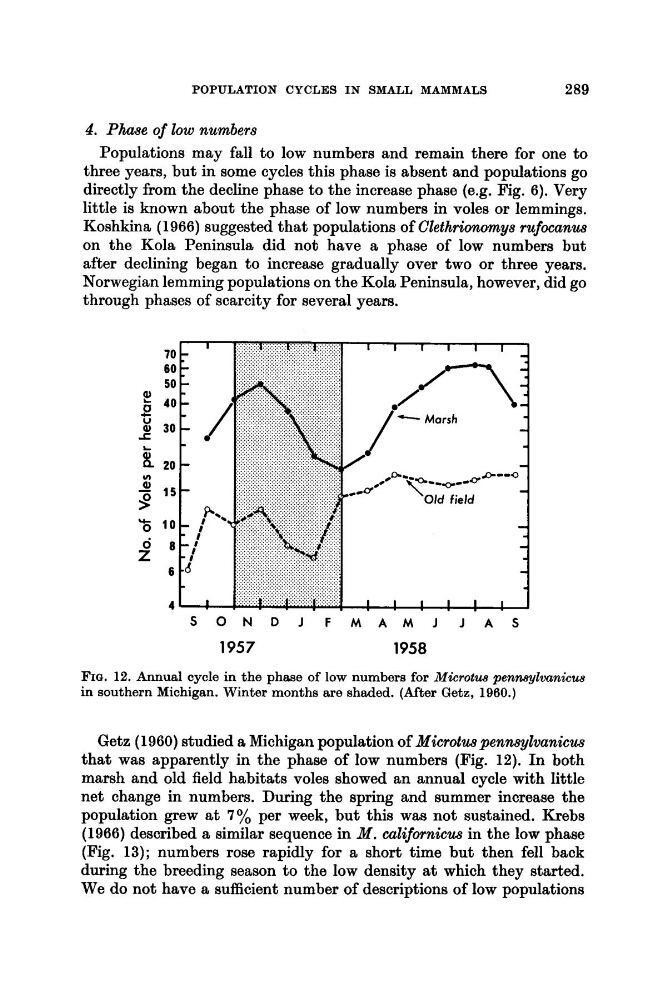
FIG 12. Annual cycle in the phase of low numbers for Microtwr (penmylvanicus
in southern Michigan. Winter months are shaded. (After Getz, 1960.)
Getz (1960) studied a Michigan population of Microtw pennsylvanicus
that was apparently in the phase of low numbers (Fig. 12). In both
marsh and old field habitats voles showed an annual cycle with little
net change in numbers. During the spring and summer increase the
population grew at 7% per week, but this was not sustained. Krebs
(1966) described a similar sequence in M. culifornicus in the low phase
(Fig. 13); numbers rose rapidly for a short time but then fell back
during the breeding season to the low density at which they started.
We do not have a sufficient number of descriptions of low populations
289
4. Phase of low numbers
Populations may fall to low numbers and remain there for one to
three years, but in some cycles this phase is absent and populations go
directly from the decline phase to the increase phase (e.g. Fig. 6). Very
little is known about the phase of low numbers in voles or lemmings.
Koshkina (1 966) suggested that populations of Clethrionmys rufocanus
on the Kola Peninsula did not have a phase of low numbers but
after declining began to increase gradually over two or three years.
Norwegian lemming populations on the Kola Peninsula, however, did go
through phases of scarcity for several years.
S O N D J F M A M J J A S
1957
1958
FIG 12. Annual cycle in the phase of low numbers for Microtwr (penmylvanicus
in southern Michigan. Winter months are shaded. (After Getz, 1960.)
Getz (1960) studied a Michigan population of Microtw pennsylvanicus
that was apparently in the phase of low numbers (Fig. 12). In both
marsh and old field habitats voles showed an annual cycle with little
net change in numbers. During the spring and summer increase the
population grew at 7% per week, but this was not sustained. Krebs
(1966) described a similar sequence in M. culifornicus in the low phase
(Fig. 13); numbers rose rapidly for a short time but then fell back
during the breeding season to the low density at which they started.
We do not have a sufficient number of descriptions of low populations