

ECOLOGICAL STUDIES AT LOUGH INE
287
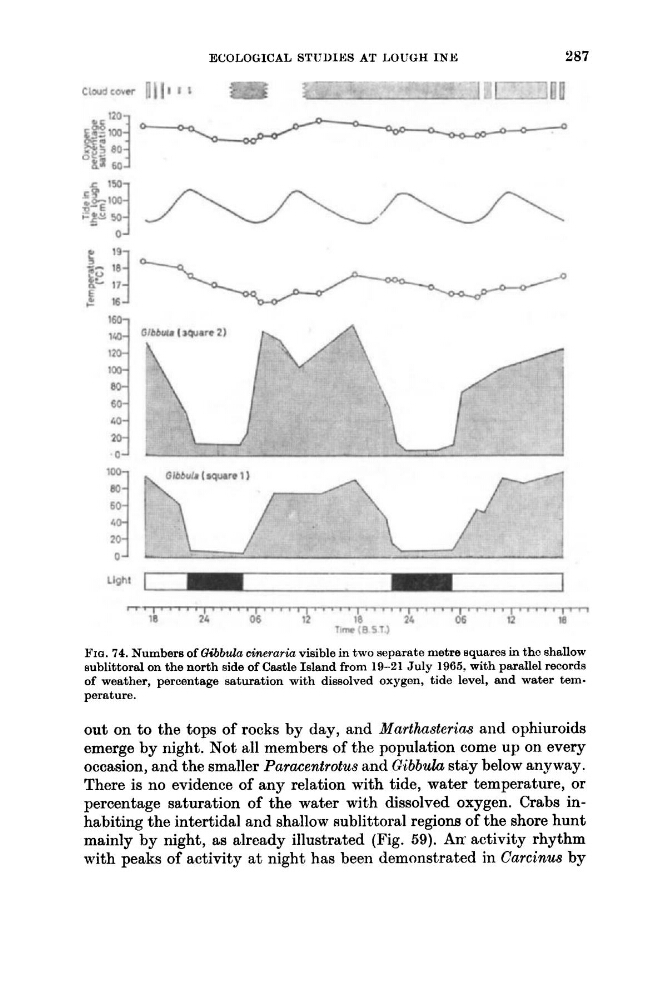
FIQ. 74. Numbers of Ctibbula cineraria visible in two separate metre squares in tho shallow
sublittoral on the north side of Castle Island from 19-21 July 1966, with parallel records
of weather, percentage saturation with dissolved oxygen, tide level, and water temperature.
out on to the tops of rocks by day, and Marthasterias and ophiuroids
emerge by night. Not all members of the population come up on every
occasion, and the smaller Paracentrotus and Gibbula stay below anyway.
There is no evidence of an9 relation with tide, water temperature, or
percentage saturation of the water with dissolved oxygen. Crabs inhabiting the intertidal and shallow Rublittoral regions of the shore hunt
mainly by night, as already illustrated (Fig. 59). An. activity rhythm
with peaks of activity at night has been demonstrated in Carcinus by
287
FIQ. 74. Numbers of Ctibbula cineraria visible in two separate metre squares in tho shallow
sublittoral on the north side of Castle Island from 19-21 July 1966, with parallel records
of weather, percentage saturation with dissolved oxygen, tide level, and water temperature.
out on to the tops of rocks by day, and Marthasterias and ophiuroids
emerge by night. Not all members of the population come up on every
occasion, and the smaller Paracentrotus and Gibbula stay below anyway.
There is no evidence of an9 relation with tide, water temperature, or
percentage saturation of the water with dissolved oxygen. Crabs inhabiting the intertidal and shallow Rublittoral regions of the shore hunt
mainly by night, as already illustrated (Fig. 59). An. activity rhythm
with peaks of activity at night has been demonstrated in Carcinus by