

T H E PRODUCTION O F MARINE PLANKTON
149
in higher latitudes early in the spring between the rate of primary production and temperature increase. Although! therefore, temperature
may have little or no direct effect on phytoplankton production, it
plays a most important part in stabilizing water layers.
Slight reduction in surface salinity may also play a part in stabilization, and some of the more marked production (of coastal shallow water
can be attributed to this increased stability (cf. Braarud and Klem,
1931; Gross et al., 1947; Marshall and Orr, 1948:. Under such conditions
phytoplankton production may be possible during the winter but it is
I
Depth
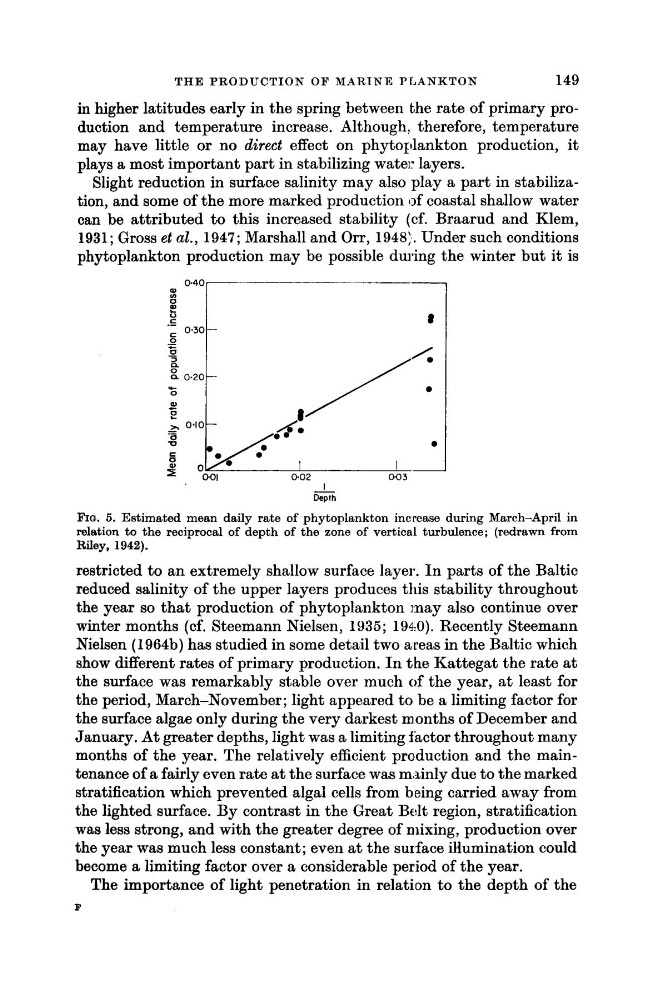
FIG. 5. Estimated mean daily rate of phytoplankton increase during March-April i n
relation to the reciprocal of depth of the zone of vertical turbulence; (redrawn from
Riley, 1942).
restricted to an extremely shallow surface layer. In parts of the Baltic
reduced salinity of the upper layers produces this stability throughout
the year so that production of phytoplankton may also continue over
winter months (cf. Steemann Nielsen, 1935; 190-0). Recently Steemann
Nielsen (1964b) has studied in some detail two areas in the Baltic which
show different rates of primary production. In the Kattegat the rate at
the surface was remarkably stable over much of the year, at least for
the period, March-November; light appeared to be a limiting factor for
the surface algae only during the very darkest months of December and
January. At greater depths, light was a limiting factor throughout many
months of the year. The relatively efficient praduction and the maintenance of a fairly even rate at the surface was m.ainly due to the marked
stratification which prevented algal cells from being carried away from
the lighted surface. By contrast in the Great Belt region, stratification
waa less strong, and with the greater degree of mixing, production over
the year was much less constant; even at the suIface illumination could
become a limiting factor over a considerable period of the year.
The importance of light penetration in relation to the depth of the
-
P
149
in higher latitudes early in the spring between the rate of primary production and temperature increase. Although! therefore, temperature
may have little or no direct effect on phytoplankton production, it
plays a most important part in stabilizing water layers.
Slight reduction in surface salinity may also play a part in stabilization, and some of the more marked production (of coastal shallow water
can be attributed to this increased stability (cf. Braarud and Klem,
1931; Gross et al., 1947; Marshall and Orr, 1948:. Under such conditions
phytoplankton production may be possible during the winter but it is
I
Depth
FIG. 5. Estimated mean daily rate of phytoplankton increase during March-April i n
relation to the reciprocal of depth of the zone of vertical turbulence; (redrawn from
Riley, 1942).
restricted to an extremely shallow surface layer. In parts of the Baltic
reduced salinity of the upper layers produces this stability throughout
the year so that production of phytoplankton may also continue over
winter months (cf. Steemann Nielsen, 1935; 190-0). Recently Steemann
Nielsen (1964b) has studied in some detail two areas in the Baltic which
show different rates of primary production. In the Kattegat the rate at
the surface was remarkably stable over much of the year, at least for
the period, March-November; light appeared to be a limiting factor for
the surface algae only during the very darkest months of December and
January. At greater depths, light was a limiting factor throughout many
months of the year. The relatively efficient praduction and the maintenance of a fairly even rate at the surface was m.ainly due to the marked
stratification which prevented algal cells from being carried away from
the lighted surface. By contrast in the Great Belt region, stratification
waa less strong, and with the greater degree of mixing, production over
the year was much less constant; even at the suIface illumination could
become a limiting factor over a considerable period of the year.
The importance of light penetration in relation to the depth of the
-
P