

Albomycin A
Actinomyces subtropicus
Antibiotic
Paecilomyces sp.
I. C.I. 13959
Aspartocin
S. gnseus var. spiralis,
Aspartocin
S. violaceus
Bottromycin
S. bottropensis
Brevin
B. brevis
Ferrimycin A
S. griseoflavus, S.
Ferrimycin A
galilaeus, S. lavendulae
Geomycin
S. xanthophaeus
Glumamycin
Streptomyces sp.
Gramicidin O
b
B. breiis
Grisein
S. gnseus
Matamycin
S. matensis
Micrococcin Ρ B. pumilus
Mycothricins
S. lavendulae,
A and Β
Streptomyces sp.
Pleocidin
S. lavendulae
Polypeptin
B. krzemieniewski
Racemomycin S. racemochromogenus
Roseomycin
S. ro&eochromogenes,
Streptomyces sp.
Roseothricin A S. roseochromogenes
Streptolins A
S. lavendulae, S. gnseus
and Β
f. farinosus
Streptothricin S. lavendulae, S. griseus
f. fannosus
Thiostrepton
Streptomyces sp.
Viomycin
S. flondae, S. puniceus,
S. linaceus, S. californicus, S. abikoensum,
S. olivoreticuli, S.
gnseus var. purpureus
Antibiotics Producing microorganisms j
° Symbols: + = degradation product present; — = not present; ? = possible occurrence. Wherever possible, the plus sign is replaced
by the letter D or/and L (indicating configuration) and a numeral (indicating the number of molecules of the amino acid in one of the
polypeptide). b
However, see K. Okuda, C. S. Lin, and T. Winnick, Nature 195, 1067-1069 (1962) for more recent information.
sensitive receptor, and as a possible clue for a rational approach in the
search for chemotherapeutic agents (135).
The formation of D-alanine from L-alanine, and of other D-amino
acids by transamination of suitable keto acids has been observed in
Bacillus licheniformis
(165f).
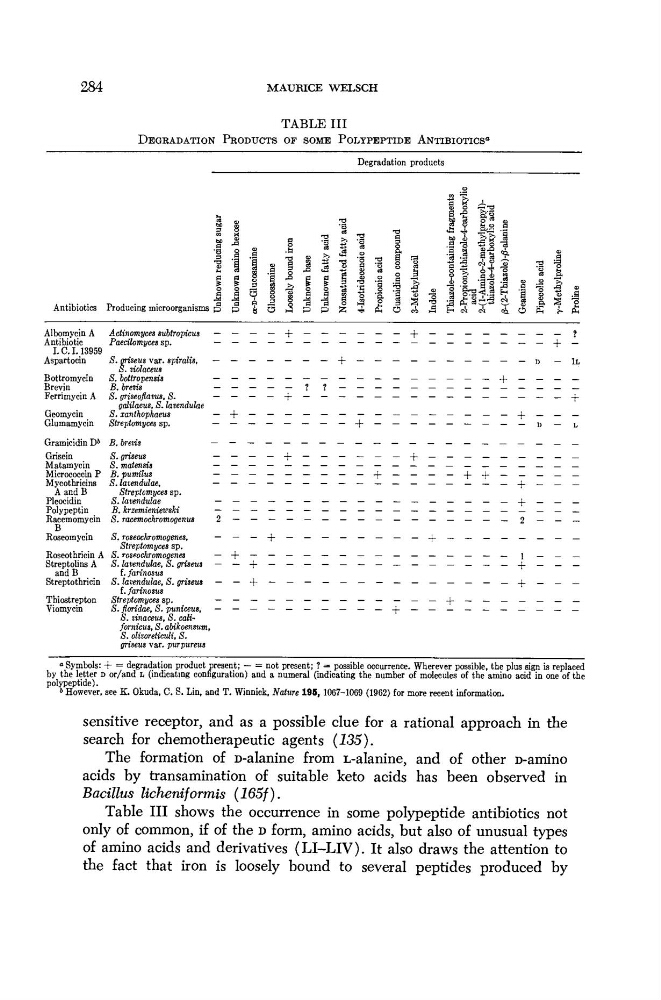
Table III shows the occurrence in some polypeptide antibiotics not
only of common, if of the D form, amino acids, but also of unusual types
of amino acids and derivatives (LI-LIV). It also draws the attention to
the fact that iron is loosely bound to several peptides produced by
Unknown reducing sugar
Unknown amino hexose
tt-D-Glucos amine
Glucosamine
Loosely bound iron
Unknown base
Unknown fatty acid
Nonsaturated fatty acid
4-Isotridecenoic acid
Propionic acid
Guanidino compound
3-Methyluracil
Indole
Thiazole-containing fragments
2-Propionylthiazole-4-carboxyli(
acid
2-( l-Amino-2-methylpropyl)thiazole-4-carboxylic acid
0-(2-Th^zole)-/3-alanine
Geamine
Pipecolic acid
γ-Methylproline
Proline
284
MAURICE WELSCH
TABLE III
DEGRADATION PRODUCTS OF SOME POLYPEPTIDE ANTIBIOTICS
0
Degradation products
Actinomyces subtropicus
Antibiotic
Paecilomyces sp.
I. C.I. 13959
Aspartocin
S. gnseus var. spiralis,
Aspartocin
S. violaceus
Bottromycin
S. bottropensis
Brevin
B. brevis
Ferrimycin A
S. griseoflavus, S.
Ferrimycin A
galilaeus, S. lavendulae
Geomycin
S. xanthophaeus
Glumamycin
Streptomyces sp.
Gramicidin O
b
B. breiis
Grisein
S. gnseus
Matamycin
S. matensis
Micrococcin Ρ B. pumilus
Mycothricins
S. lavendulae,
A and Β
Streptomyces sp.
Pleocidin
S. lavendulae
Polypeptin
B. krzemieniewski
Racemomycin S. racemochromogenus
Roseomycin
S. ro&eochromogenes,
Streptomyces sp.
Roseothricin A S. roseochromogenes
Streptolins A
S. lavendulae, S. gnseus
and Β
f. farinosus
Streptothricin S. lavendulae, S. griseus
f. fannosus
Thiostrepton
Streptomyces sp.
Viomycin
S. flondae, S. puniceus,
S. linaceus, S. californicus, S. abikoensum,
S. olivoreticuli, S.
gnseus var. purpureus
Antibiotics Producing microorganisms j
° Symbols: + = degradation product present; — = not present; ? = possible occurrence. Wherever possible, the plus sign is replaced
by the letter D or/and L (indicating configuration) and a numeral (indicating the number of molecules of the amino acid in one of the
polypeptide). b
However, see K. Okuda, C. S. Lin, and T. Winnick, Nature 195, 1067-1069 (1962) for more recent information.
sensitive receptor, and as a possible clue for a rational approach in the
search for chemotherapeutic agents (135).
The formation of D-alanine from L-alanine, and of other D-amino
acids by transamination of suitable keto acids has been observed in
Bacillus licheniformis
(165f).
Table III shows the occurrence in some polypeptide antibiotics not
only of common, if of the D form, amino acids, but also of unusual types
of amino acids and derivatives (LI-LIV). It also draws the attention to
the fact that iron is loosely bound to several peptides produced by
Unknown reducing sugar
Unknown amino hexose
tt-D-Glucos amine
Glucosamine
Loosely bound iron
Unknown base
Unknown fatty acid
Nonsaturated fatty acid
4-Isotridecenoic acid
Propionic acid
Guanidino compound
3-Methyluracil
Indole
Thiazole-containing fragments
2-Propionylthiazole-4-carboxyli(
acid
2-( l-Amino-2-methylpropyl)thiazole-4-carboxylic acid
0-(2-Th^zole)-/3-alanine
Geamine
Pipecolic acid
γ-Methylproline
Proline
284
MAURICE WELSCH
TABLE III
DEGRADATION PRODUCTS OF SOME POLYPEPTIDE ANTIBIOTICS
0
Degradation products