

3. CELLULAR ASPECTS OF ACTIVE TRANSPORT
175
This working hypothesis is easily accessible to experimental verifications and work along this line is now under progress in this laboratory.
To test this hypothesis, we have undertaken a study of the effect of
various cations on the rate of activity of the enzymes of the nitrogen
pool. In the following we shall deal essentially with some preliminary
results obtained using the L-glutamic acid dehydrogenase extracted from
the muscles of a euryhaline species, the crayfish Astacus fluviatilis F. and
from a stenohaline species, the lobster Homarus vulgaris L. (135a).
The L-glutamic acid dehydrogenase is studied by measuring at 340
τημ the rate of disappearance of DPNH (reduced diphosphopyridine
nucleotide) in the presence of ατ-ketoglutarate and NH 4 C1.
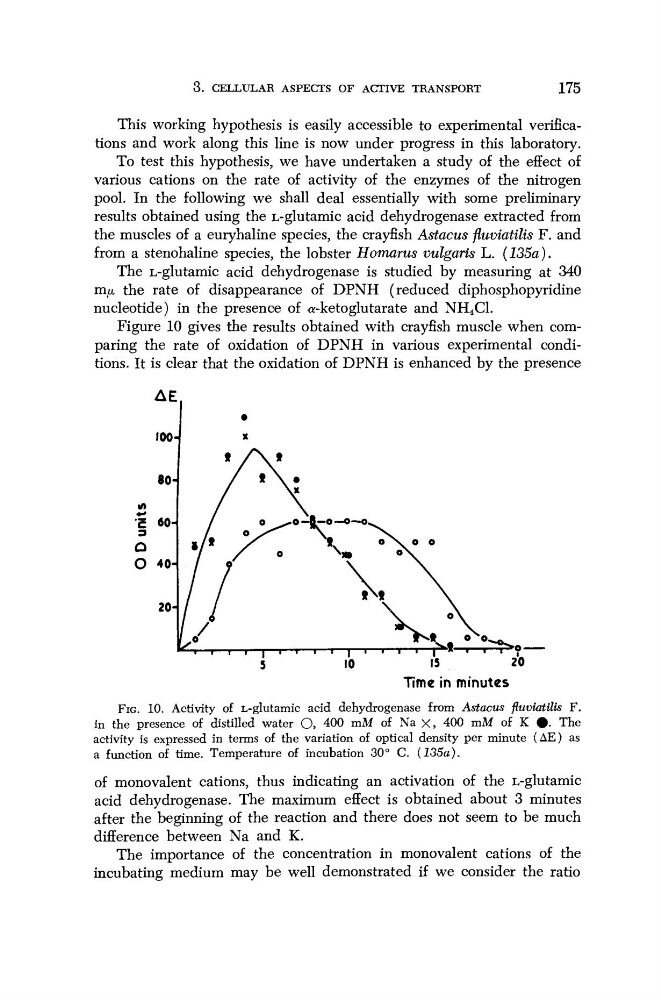
Figure 10 gives the results obtained with crayfish muscle when comparing the rate of oxidation of DPNH in various experimental conditions. It is clear that the oxidation of DPNH is enhanced by the presence
ΔΕ,
Time in minutes
FIG. 10. Activity of L-glutamic acid dehydrogenase from Astacus fluviatilis F.
in the presence of distilled water O, 400 mM of Na X, 400 mM of Κ φ. The
activity is expressed in terms of the variation of optical density per minute (ΔΕ) as
a function of time. Temperature of incubation 30° C. (135a).
of monovalent cations, thus indicating an activation of the L-glutamic
acid dehydrogenase. The maximum effect is obtained about 3 minutes
after the beginning of the reaction and there does not seem to be much
difference between Na and K.
The importance of the concentration in monovalent cations of the
incubating medium may be well demonstrated if we consider the ratio
175
This working hypothesis is easily accessible to experimental verifications and work along this line is now under progress in this laboratory.
To test this hypothesis, we have undertaken a study of the effect of
various cations on the rate of activity of the enzymes of the nitrogen
pool. In the following we shall deal essentially with some preliminary
results obtained using the L-glutamic acid dehydrogenase extracted from
the muscles of a euryhaline species, the crayfish Astacus fluviatilis F. and
from a stenohaline species, the lobster Homarus vulgaris L. (135a).
The L-glutamic acid dehydrogenase is studied by measuring at 340
τημ the rate of disappearance of DPNH (reduced diphosphopyridine
nucleotide) in the presence of ατ-ketoglutarate and NH 4 C1.
Figure 10 gives the results obtained with crayfish muscle when comparing the rate of oxidation of DPNH in various experimental conditions. It is clear that the oxidation of DPNH is enhanced by the presence
ΔΕ,
Time in minutes
FIG. 10. Activity of L-glutamic acid dehydrogenase from Astacus fluviatilis F.
in the presence of distilled water O, 400 mM of Na X, 400 mM of Κ φ. The
activity is expressed in terms of the variation of optical density per minute (ΔΕ) as
a function of time. Temperature of incubation 30° C. (135a).
of monovalent cations, thus indicating an activation of the L-glutamic
acid dehydrogenase. The maximum effect is obtained about 3 minutes
after the beginning of the reaction and there does not seem to be much
difference between Na and K.
The importance of the concentration in monovalent cations of the
incubating medium may be well demonstrated if we consider the ratio