

3. CELLULAR ASPECTS OF ACTIVE TRANSPORT
145
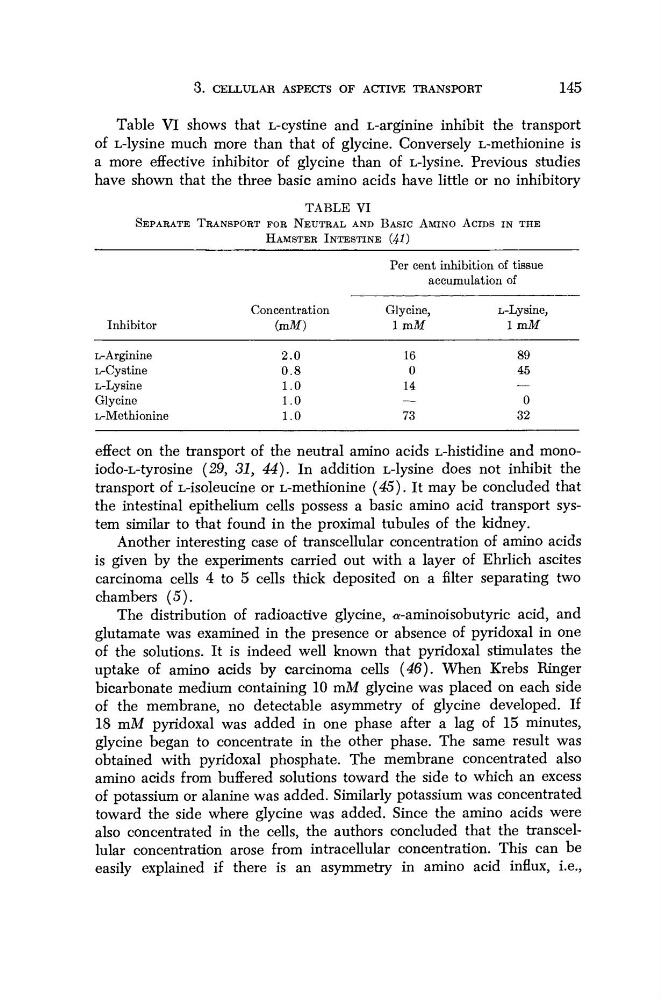
Table VI shows that L-cystine and L-arginine inhibit the transport
of L-lysine much more than that of glycine. Conversely L-methionine is
a more effective inhibitor of glycine than of L-lysine. Previous studies
have shown that the three basic amino acids have little or no inhibitory
TABLE VI
SEPARATE TRANSPORT FOR NEUTRAL AND BASIC AMINO ACIDS IN THE
HAMSTER INTESTINE (41)
Per cent inhibition of tissue
accumulation of
Concentration
Glycine,
L-Lysine,
Inhibitor
(ml)
1 ml
1 ml
L-Arginine
2.0
16
89
L-Cystine
0.8
0
45
L-Lysine
1.0
14
—
Glycine
1.0
—
0
L-Methionine
1.0
73
32
effect on the transport of the neutral amino acids L-histidine and monoiodo-L-tyrosine (29, 31, 44). In addition L-lysine does not inhibit the
transport of L-isoleucine or L-methionine (45). It may be concluded that
the intestinal epithelium cells possess a basic amino acid transport system similar to that found in the proximal tubules of the kidney.
Another interesting case of transcellular concentration of amino acids
is given by the experiments carried out with a layer of Ehrlich ascites
carcinoma cells 4 to 5 cells thick deposited on a filter separating two
chambers (5).
The distribution of radioactive glycine, «-aminoisobutyric acid, and
glutamate was examined in the presence or absence of pyridoxal in one
of the solutions. It is indeed well known that pyridoxal stimulates the
uptake of amino acids by carcinoma cells (46). When Krebs Ringer
bicarbonate medium containing 10 mM glycine was placed on each side
of the membrane, no detectable asymmetry of glycine developed. If
18 mM pyridoxal was added in one phase after a lag of 15 minutes,
glycine began to concentrate in the other phase. The same result was
obtained with pyridoxal phosphate. The membrane concentrated also
amino acids from buffered solutions toward the side to which an excess
of potassium or alanine was added. Similarly potassium was concentrated
toward the side where glycine was added. Since the amino acids were
also concentrated in the cells, the authors concluded that the transcellular concentration arose from intracellular concentration. This can be
easily explained if there is an asymmetry in amino acid influx, i.e.,
145
Table VI shows that L-cystine and L-arginine inhibit the transport
of L-lysine much more than that of glycine. Conversely L-methionine is
a more effective inhibitor of glycine than of L-lysine. Previous studies
have shown that the three basic amino acids have little or no inhibitory
TABLE VI
SEPARATE TRANSPORT FOR NEUTRAL AND BASIC AMINO ACIDS IN THE
HAMSTER INTESTINE (41)
Per cent inhibition of tissue
accumulation of
Concentration
Glycine,
L-Lysine,
Inhibitor
(ml)
1 ml
1 ml
L-Arginine
2.0
16
89
L-Cystine
0.8
0
45
L-Lysine
1.0
14
—
Glycine
1.0
—
0
L-Methionine
1.0
73
32
effect on the transport of the neutral amino acids L-histidine and monoiodo-L-tyrosine (29, 31, 44). In addition L-lysine does not inhibit the
transport of L-isoleucine or L-methionine (45). It may be concluded that
the intestinal epithelium cells possess a basic amino acid transport system similar to that found in the proximal tubules of the kidney.
Another interesting case of transcellular concentration of amino acids
is given by the experiments carried out with a layer of Ehrlich ascites
carcinoma cells 4 to 5 cells thick deposited on a filter separating two
chambers (5).
The distribution of radioactive glycine, «-aminoisobutyric acid, and
glutamate was examined in the presence or absence of pyridoxal in one
of the solutions. It is indeed well known that pyridoxal stimulates the
uptake of amino acids by carcinoma cells (46). When Krebs Ringer
bicarbonate medium containing 10 mM glycine was placed on each side
of the membrane, no detectable asymmetry of glycine developed. If
18 mM pyridoxal was added in one phase after a lag of 15 minutes,
glycine began to concentrate in the other phase. The same result was
obtained with pyridoxal phosphate. The membrane concentrated also
amino acids from buffered solutions toward the side to which an excess
of potassium or alanine was added. Similarly potassium was concentrated
toward the side where glycine was added. Since the amino acids were
also concentrated in the cells, the authors concluded that the transcellular concentration arose from intracellular concentration. This can be
easily explained if there is an asymmetry in amino acid influx, i.e.,