

334
GEORGE WALD
(56) reports measurements on one extract of five sexually mature Pacific
coast lampreys, Entosphenus tridentatus, which appeared to contain
rhodopsin. In this, Entosphenus may resemble the bullfrog, which goes
over to rhodopsin at the first metamorphosis and retains it thereafter,
whereas P. marinus like the newt changes visual systems in its second
metamorphosis.
0.6
0.5
c
0.4
I 0.3
UJ 02.
0.1
0
400
500
600
700
Wavelength (mp)
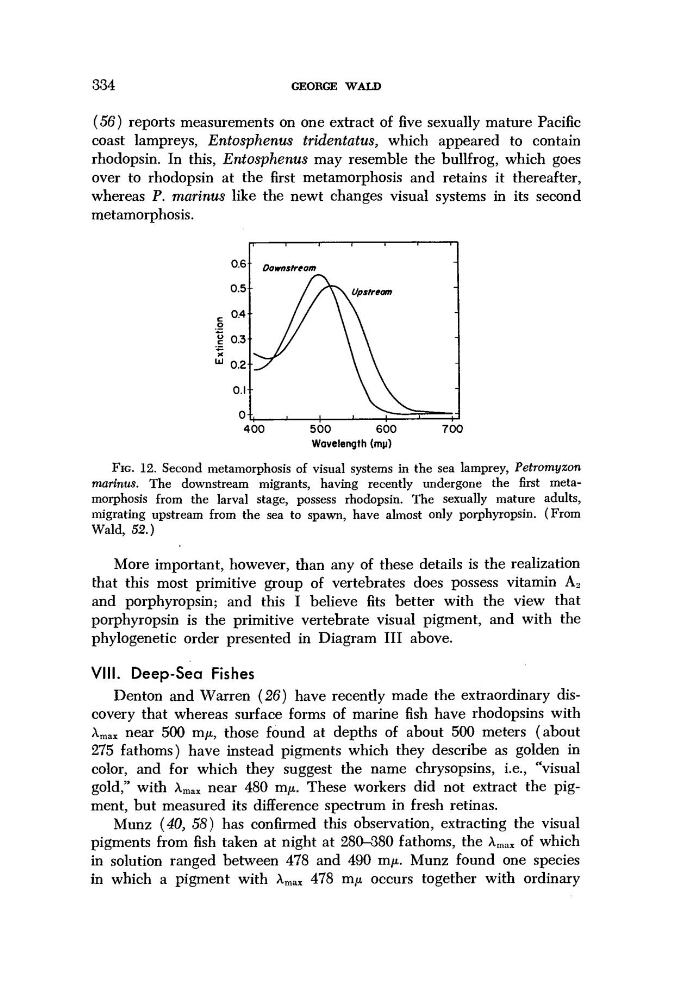
FIG. 12. Second metamorphosis of visual systems in the sea lamprey, Petromyzon
marinus. The downstream migrants, having recently undergone the first metamorphosis from the larval stage, possess rhodopsin. The sexually mature adults,
migrating upstream from the sea to spawn, have almost only porphyropsin. (From
Wald, 52.)
More important, however, than any of these details is the realization
that this most primitive group of vertebrates does possess vitamin A 2
and porphyropsin; and this I believe fits better with the view that
porphyropsin is the primitive vertebrate visual pigment, and with the
phylogenetic order presented in Diagram III above.
VIII. Deep-Sea Fishes
Denton and Warren (26) have recently made the extraordinary discovery that whereas surface forms of marine fish have rhodopsins with
Amax near 500 m/x, those found at depths of about 500 meters (about
275 fathoms) have instead pigments which they describe as golden in
color, and for which they suggest the name chrysopsins, i.e., "visual
gold," with A max near 480 τημ. These workers did not extract the pigment, but measured its difference spectrum in fresh retinas.
Munz (40, 58) has confirmed this observation, extracting the visual
pigments from fish taken at night at 280-380 fathoms, the A max of which
in solution ranged between 478 and 490 ηΐμ. Munz found one species
in which a pigment with A max 478 τημ occurs together with ordinary
GEORGE WALD
(56) reports measurements on one extract of five sexually mature Pacific
coast lampreys, Entosphenus tridentatus, which appeared to contain
rhodopsin. In this, Entosphenus may resemble the bullfrog, which goes
over to rhodopsin at the first metamorphosis and retains it thereafter,
whereas P. marinus like the newt changes visual systems in its second
metamorphosis.
0.6
0.5
c
0.4
I 0.3
UJ 02.
0.1
0
400
500
600
700
Wavelength (mp)
FIG. 12. Second metamorphosis of visual systems in the sea lamprey, Petromyzon
marinus. The downstream migrants, having recently undergone the first metamorphosis from the larval stage, possess rhodopsin. The sexually mature adults,
migrating upstream from the sea to spawn, have almost only porphyropsin. (From
Wald, 52.)
More important, however, than any of these details is the realization
that this most primitive group of vertebrates does possess vitamin A 2
and porphyropsin; and this I believe fits better with the view that
porphyropsin is the primitive vertebrate visual pigment, and with the
phylogenetic order presented in Diagram III above.
VIII. Deep-Sea Fishes
Denton and Warren (26) have recently made the extraordinary discovery that whereas surface forms of marine fish have rhodopsins with
Amax near 500 m/x, those found at depths of about 500 meters (about
275 fathoms) have instead pigments which they describe as golden in
color, and for which they suggest the name chrysopsins, i.e., "visual
gold," with A max near 480 τημ. These workers did not extract the pigment, but measured its difference spectrum in fresh retinas.
Munz (40, 58) has confirmed this observation, extracting the visual
pigments from fish taken at night at 280-380 fathoms, the A max of which
in solution ranged between 478 and 490 ηΐμ. Munz found one species
in which a pigment with A max 478 τημ occurs together with ordinary