

7. THE DISTRIBUTION AND EVOLUTION OF VISUAL SYSTEMS
329
adults of the European frogs, Rana temporaria and R. esculenta; here
such a metamorphosis of visual systems apparently does not occur.*
o
700
600
500
400
Wavelength (ητιμ)
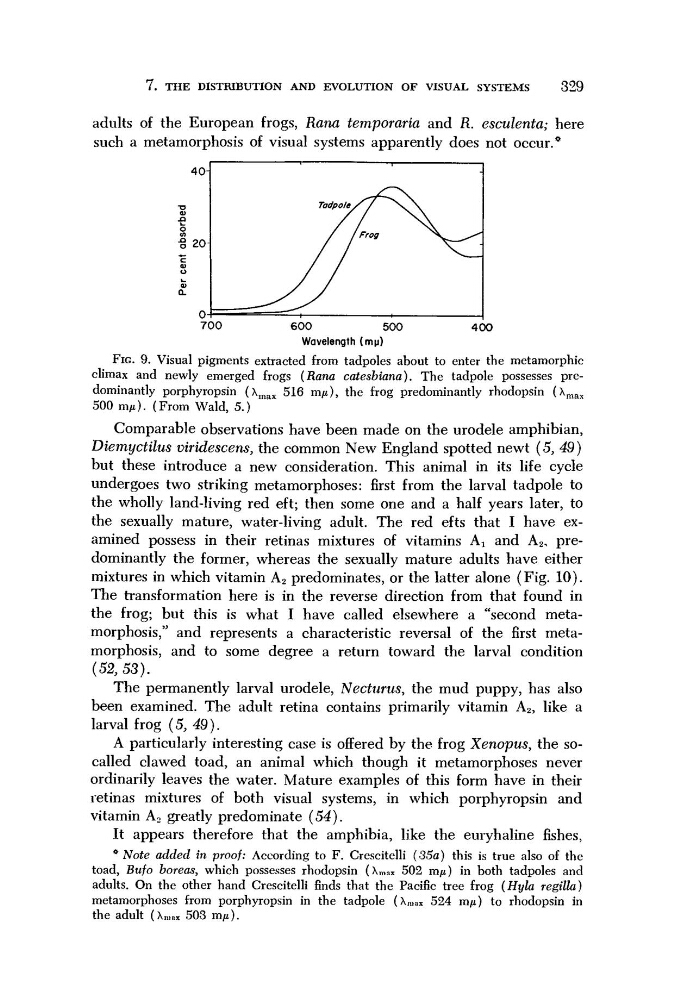
FIG. 9. Visual pigments extracted from tadpoles about to enter the metamorphic
climax and newly emerged frogs (Rana catesbiana).
The tadpole possesses predominantly porphyropsin (X max 516 πΐμ), the frog predominantly rhodopsin (X max
500 m/0. (From Wald, 5.)
Comparable observations have been made on the urodele amphibian,
Diemyctilus viridescens, the common New England spotted newt (5,49)
but these introduce a new consideration. This animal in its life cycle
undergoes two striking metamorphoses: first from the larval tadpole to
the wholly land-living red eft; then some one and a half years later, to
the sexually mature, water-living adult. The red efts that I have examined possess in their retinas mixtures of vitamins A x and A 2 , predominantly the former, whereas the sexually mature adults have either
mixtures in which vitamin A 2 predominates, or the latter alone (Fig. 10).
The transformation here is in the reverse direction from that found in
the frog; but this is what I have called elsewhere a "second metamorphosis,'' and represents a characteristic reversal of the first metamorphosis, and to some degree a return toward the larval condition
{52,53).
The permanently larval urodele, Necturas, the mud puppy, has also
been examined. The adult retina contains primarily vitamin A 2 , like a
larval frog (5, 49).
A particularly interesting case is offered by the frog Xenopus, the socalled clawed toad, an animal which though it metamorphoses never
ordinarily leaves the water. Mature examples of this form have in their
retinas mixtures of both visual systems, in which porphyropsin and
vitamin A 2 greatly predominate (54).
It appears therefore that the amphibia, like the euryhaline fishes,
* Note added in proof: According to F. Crescitelli (35a) this is true also of the
toad, Bufo boreas, which possesses rhodopsin (X max 502 π\μ) in both tadpoles and
adults. On the other hand Crescitelli finds that the Pacific tree frog (Hyh
regilla)
metamorphoses from porphyropsin in the tadpole (Xmax 524 τημ) to rhodopsin in
the adult (Xmax 503 ιημ).
329
adults of the European frogs, Rana temporaria and R. esculenta; here
such a metamorphosis of visual systems apparently does not occur.*
o
700
600
500
400
Wavelength (ητιμ)
FIG. 9. Visual pigments extracted from tadpoles about to enter the metamorphic
climax and newly emerged frogs (Rana catesbiana).
The tadpole possesses predominantly porphyropsin (X max 516 πΐμ), the frog predominantly rhodopsin (X max
500 m/0. (From Wald, 5.)
Comparable observations have been made on the urodele amphibian,
Diemyctilus viridescens, the common New England spotted newt (5,49)
but these introduce a new consideration. This animal in its life cycle
undergoes two striking metamorphoses: first from the larval tadpole to
the wholly land-living red eft; then some one and a half years later, to
the sexually mature, water-living adult. The red efts that I have examined possess in their retinas mixtures of vitamins A x and A 2 , predominantly the former, whereas the sexually mature adults have either
mixtures in which vitamin A 2 predominates, or the latter alone (Fig. 10).
The transformation here is in the reverse direction from that found in
the frog; but this is what I have called elsewhere a "second metamorphosis,'' and represents a characteristic reversal of the first metamorphosis, and to some degree a return toward the larval condition
{52,53).
The permanently larval urodele, Necturas, the mud puppy, has also
been examined. The adult retina contains primarily vitamin A 2 , like a
larval frog (5, 49).
A particularly interesting case is offered by the frog Xenopus, the socalled clawed toad, an animal which though it metamorphoses never
ordinarily leaves the water. Mature examples of this form have in their
retinas mixtures of both visual systems, in which porphyropsin and
vitamin A 2 greatly predominate (54).
It appears therefore that the amphibia, like the euryhaline fishes,
* Note added in proof: According to F. Crescitelli (35a) this is true also of the
toad, Bufo boreas, which possesses rhodopsin (X max 502 π\μ) in both tadpoles and
adults. On the other hand Crescitelli finds that the Pacific tree frog (Hyh
regilla)
metamorphoses from porphyropsin in the tadpole (Xmax 524 τημ) to rhodopsin in
the adult (Xmax 503 ιημ).