

328
GEORGE WALD
pond have been found to contain in their retinas a predominance of
vitamin A x and rhodopsin; and so on.
It is this realization that makes one look more to phylogeny than to
physiology for a possible ordering and rationalization of the distribution
of visual systems. Perhaps better said: there is an order here that goes
with the ecology, but with the genetically determined rather than the
casual ecology. The euryhaline fishes are intermediate not alone in their
ecological relations and in their retinal patterns of vitamin A, but in
both display a genetic primacy of the spawning environment. It is this
issue of the spawning environment that raises a further problem.
V. Amphibia: Metamorphosis of Visual Systems
If spawning in fresh water is a dominant consideration in deciding
the pattern of visual systems, then such an amphibian as the frog should
possess predominantly porphyropsin. Instead it has rhodopsin; indeed
rhodopsin was first discovered in the rods of frogs.
S 20o
0)
Q.
0
700
600
Wavelength (mp)
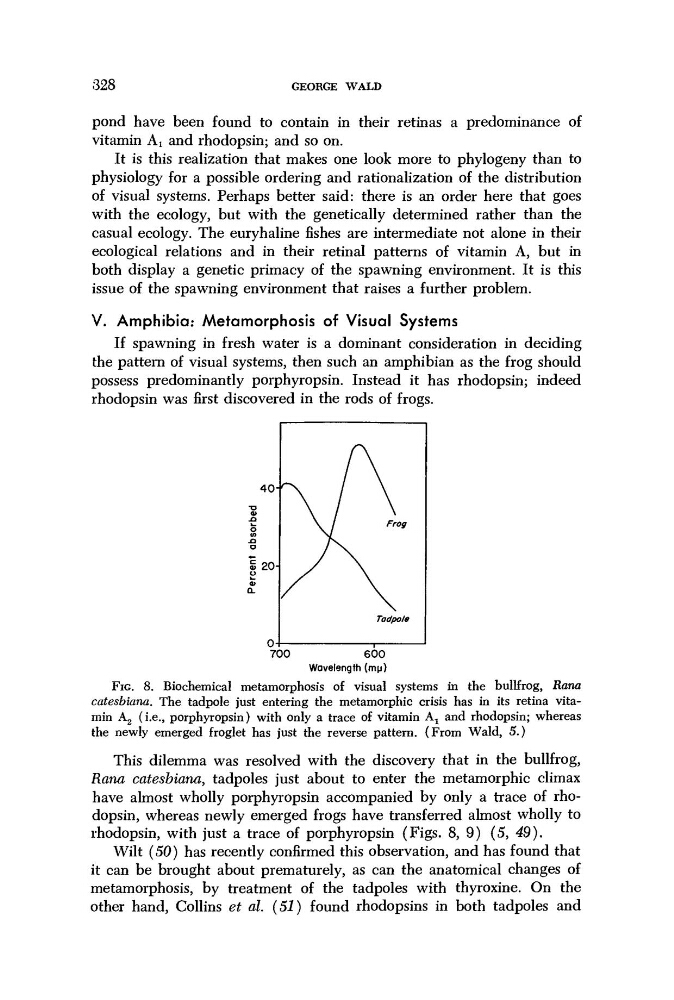
FIG. 8. Biochemical metamorphosis of visual systems in the bullfrog, Rana
catesbiana. The tadpole just entering the metamorphic crisis has in its retina vitamin A 2 (i.e., porphyropsin) with only a trace of vitamin A x and rhodopsin; whereas
the newly emerged froglet has just the reverse pattern. (From Wald, 5.)
This dilemma was resolved with the discovery that in the bullfrog,
Rana catesbiana, tadpoles just about to enter the metamorphic climax
have almost wholly porphyropsin accompanied by only a trace of rhodopsin, whereas newly emerged frogs have transferred almost wholly to
rhodopsin, with just a trace of porphyropsin (Figs. 8, 9) (5, 49).
Wilt (50) has recently confirmed this observation, and has found that
it can be brought about prematurely, as can the anatomical changes of
metamorphosis, by treatment of the tadpoles with thyroxine. On the
other hand, Collins et al. (51) found rhodopsins in both tadpoles and
GEORGE WALD
pond have been found to contain in their retinas a predominance of
vitamin A x and rhodopsin; and so on.
It is this realization that makes one look more to phylogeny than to
physiology for a possible ordering and rationalization of the distribution
of visual systems. Perhaps better said: there is an order here that goes
with the ecology, but with the genetically determined rather than the
casual ecology. The euryhaline fishes are intermediate not alone in their
ecological relations and in their retinal patterns of vitamin A, but in
both display a genetic primacy of the spawning environment. It is this
issue of the spawning environment that raises a further problem.
V. Amphibia: Metamorphosis of Visual Systems
If spawning in fresh water is a dominant consideration in deciding
the pattern of visual systems, then such an amphibian as the frog should
possess predominantly porphyropsin. Instead it has rhodopsin; indeed
rhodopsin was first discovered in the rods of frogs.
S 20o
0)
Q.
0
700
600
Wavelength (mp)
FIG. 8. Biochemical metamorphosis of visual systems in the bullfrog, Rana
catesbiana. The tadpole just entering the metamorphic crisis has in its retina vitamin A 2 (i.e., porphyropsin) with only a trace of vitamin A x and rhodopsin; whereas
the newly emerged froglet has just the reverse pattern. (From Wald, 5.)
This dilemma was resolved with the discovery that in the bullfrog,
Rana catesbiana, tadpoles just about to enter the metamorphic climax
have almost wholly porphyropsin accompanied by only a trace of rhodopsin, whereas newly emerged frogs have transferred almost wholly to
rhodopsin, with just a trace of porphyropsin (Figs. 8, 9) (5, 49).
Wilt (50) has recently confirmed this observation, and has found that
it can be brought about prematurely, as can the anatomical changes of
metamorphosis, by treatment of the tadpoles with thyroxine. On the
other hand, Collins et al. (51) found rhodopsins in both tadpoles and