

126
F. M. HUENNEKENS AND H. R. WHITELEY
to the reversal of ATP hydrolysis has led to speculation that ATPase
may play a functional role in oxidative phosphorylation (90, 91a).
An interesting facet of oxidative phosphorylation is the observation
that 2,4-dinitrophenol and a large variety of other substances (83) can
"uncouple" the process, i.e., abolish the synthesis of ATP without impairing the oxidation. Like oxidative phosphorylation itself, the mechanism of the uncoupling process has not yet been elucidated (see, however, references 91b and 91c for discussions of this problem).
reduced
flavin
flavin
DPNH
^—^
*DPN
DPNH-P
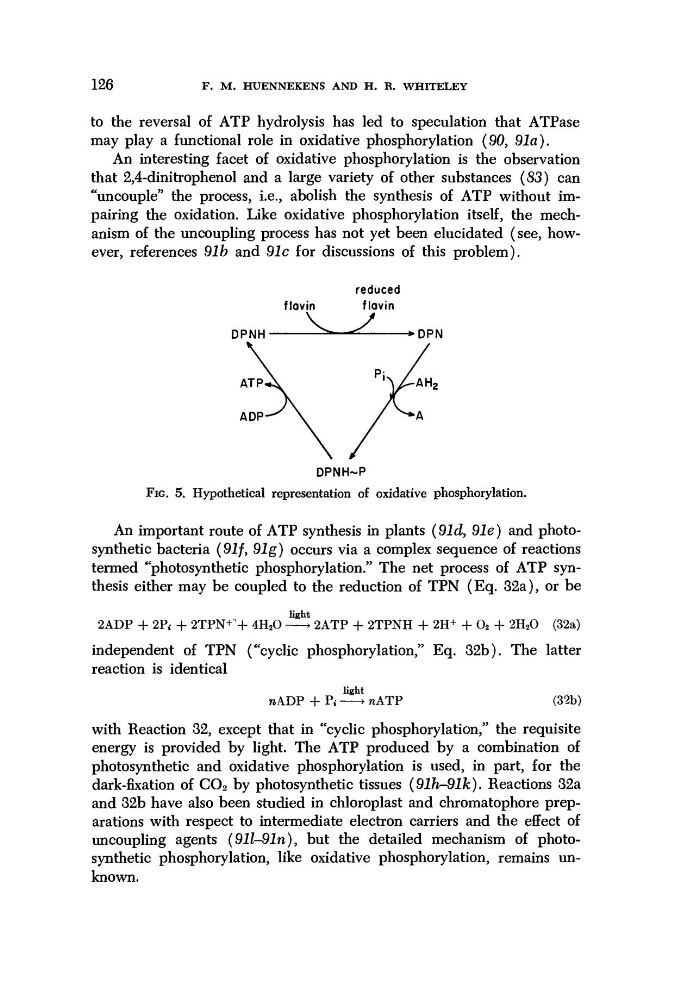
FIG. 5. Hypothetical representation of oxidative phosphorylation.
An important route of ATP synthesis in plants (91d, 91e) and photosynthetic bacteria (91/, 91g) occurs via a complex sequence of reactions
termed "photosynthetic phosphorylation." The net process of ATP synthesis either may be coupled to the reduction of TPN (Eq. 32a), or be
light
2ADP + 2P t · + 2TPN++ 4H 2 0
> 2ATP + 2TPNH + 2H
+ + 0 2 + 2H 2 0 (32a)
independent of TPN ("cyclic phosphorylation," Eq. 32b). The latter
reaction is identical
light
nAJDP + P,·
> nATP
(32b)
with Reaction 32, except that in "cyclic phosphorylation," the requisite
energy is provided by light. The ATP produced by a combination of
photosynthetic and oxidative phosphorylation is used, in part, for the
dark-fixation of C0 2 by photosynthetic tissues (91hr-91k). Reactions 32a
and 32b have also been studied in chloroplast and chromatophore preparations with respect to intermediate electron carriers and the effect of
uncoupling agents (91l-91n), but the detailed mechanism of photosynthetic phosphorylation, like oxidative phosphorylation, remains unknown.
F. M. HUENNEKENS AND H. R. WHITELEY
to the reversal of ATP hydrolysis has led to speculation that ATPase
may play a functional role in oxidative phosphorylation (90, 91a).
An interesting facet of oxidative phosphorylation is the observation
that 2,4-dinitrophenol and a large variety of other substances (83) can
"uncouple" the process, i.e., abolish the synthesis of ATP without impairing the oxidation. Like oxidative phosphorylation itself, the mechanism of the uncoupling process has not yet been elucidated (see, however, references 91b and 91c for discussions of this problem).
reduced
flavin
flavin
DPNH
^—^
*DPN
DPNH-P
FIG. 5. Hypothetical representation of oxidative phosphorylation.
An important route of ATP synthesis in plants (91d, 91e) and photosynthetic bacteria (91/, 91g) occurs via a complex sequence of reactions
termed "photosynthetic phosphorylation." The net process of ATP synthesis either may be coupled to the reduction of TPN (Eq. 32a), or be
light
2ADP + 2P t · + 2TPN++ 4H 2 0
> 2ATP + 2TPNH + 2H
+ + 0 2 + 2H 2 0 (32a)
independent of TPN ("cyclic phosphorylation," Eq. 32b). The latter
reaction is identical
light
nAJDP + P,·
> nATP
(32b)
with Reaction 32, except that in "cyclic phosphorylation," the requisite
energy is provided by light. The ATP produced by a combination of
photosynthetic and oxidative phosphorylation is used, in part, for the
dark-fixation of C0 2 by photosynthetic tissues (91hr-91k). Reactions 32a
and 32b have also been studied in chloroplast and chromatophore preparations with respect to intermediate electron carriers and the effect of
uncoupling agents (91l-91n), but the detailed mechanism of photosynthetic phosphorylation, like oxidative phosphorylation, remains unknown.