

3. MECHANISMS FOR FATTY ACID OXIDATION
89
cts-Crotonyl-CoA
±H 2 (
Λ
D(-)-/3-Hydroxy
ATP + CoA
H 2 0
D( —)-/3-Hydroxy
butyric acid
DPN
+
butyryl-CoA "*~
or racemase
-*- Jrems-Crotonyl-CoA
//±Ü20
—»L(+)-fl-Hydroxy
butyryl-CoA
DPN+
Acetoacetyl-CoA
Succinic
acid
Succinyl-CoA D
H 2 0
ATP + CoA
L( + )-/3-Hydroxy
butyric acid
2 Acetyl-CoA
^ Acetoacetic acid
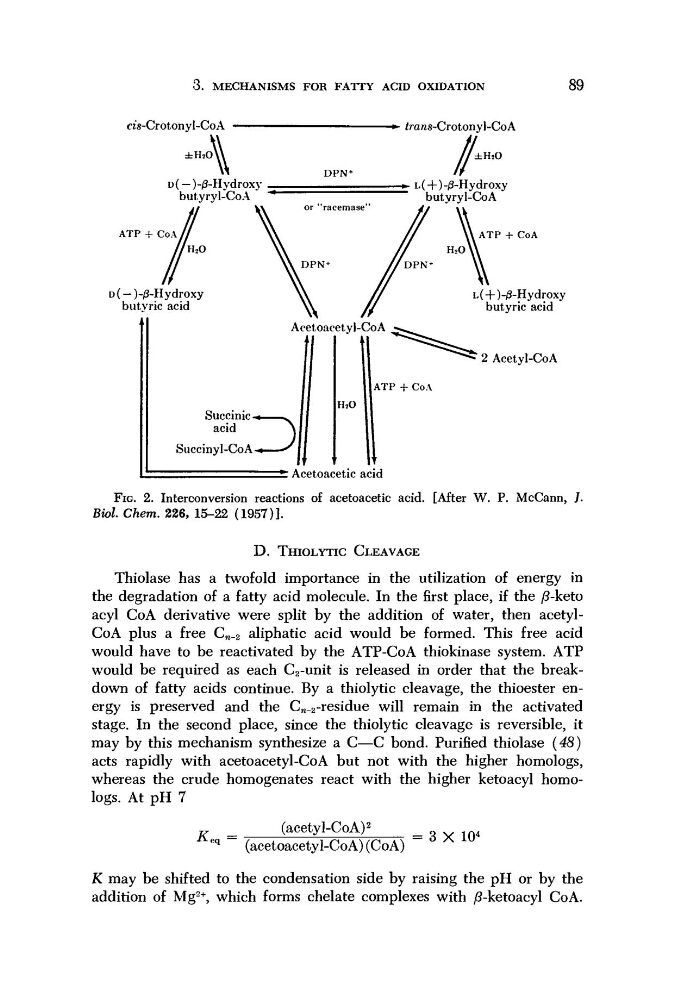
FIG. 2. Interconversion reactions of acetoacetic acid. [After W. P. McCann, /.
Biol Chem. 226, 15-22 (1957)].
D. THIOLYTIC CLEAVAGE
Thiolase has a twofold importance in the utilization of energy in
the degradation of a fatty acid molecule. In the first place, if the ß-keto
acyl CoA derivative were split by the addition of water, then acetylCoA plus a free C w _ 2 aliphatic acid would be formed. This free acid
would have to be reactivated by the ATP-CoA thiokinase system. ATP
would be required as each C 2 -unit is released in order that the breakdown of fatty acids continue. By a thiolytic cleavage, the thioester energy is preserved and the C w _ 2 -residue will remain in the activated
stage. In the second place, since the thiolytic cleavage is reversible, it
may by this mechanism synthesize a C—C bond. Purified thiolase (48)
acts rapidly with acetoacetyl-CoA but not with the higher homologs,
whereas the crude homogenates react with the higher ketoacyl homologs. At pH 7
_
(acetyl-CoA)
2
eq ~ (acetoacetyl-CoA)(CoA)
= 3 X 10
4
K may be shifted to the condensation side by raising the pH or by the
addition of Mg
2+ , which forms chelate complexes with ß-ketoacyl CoA.
89
cts-Crotonyl-CoA
±H 2 (
Λ
D(-)-/3-Hydroxy
ATP + CoA
H 2 0
D( —)-/3-Hydroxy
butyric acid
DPN
+
butyryl-CoA "*~
or racemase
-*- Jrems-Crotonyl-CoA
//±Ü20
—»L(+)-fl-Hydroxy
butyryl-CoA
DPN+
Acetoacetyl-CoA
Succinic
acid
Succinyl-CoA D
H 2 0
ATP + CoA
L( + )-/3-Hydroxy
butyric acid
2 Acetyl-CoA
^ Acetoacetic acid
FIG. 2. Interconversion reactions of acetoacetic acid. [After W. P. McCann, /.
Biol Chem. 226, 15-22 (1957)].
D. THIOLYTIC CLEAVAGE
Thiolase has a twofold importance in the utilization of energy in
the degradation of a fatty acid molecule. In the first place, if the ß-keto
acyl CoA derivative were split by the addition of water, then acetylCoA plus a free C w _ 2 aliphatic acid would be formed. This free acid
would have to be reactivated by the ATP-CoA thiokinase system. ATP
would be required as each C 2 -unit is released in order that the breakdown of fatty acids continue. By a thiolytic cleavage, the thioester energy is preserved and the C w _ 2 -residue will remain in the activated
stage. In the second place, since the thiolytic cleavage is reversible, it
may by this mechanism synthesize a C—C bond. Purified thiolase (48)
acts rapidly with acetoacetyl-CoA but not with the higher homologs,
whereas the crude homogenates react with the higher ketoacyl homologs. At pH 7
_
(acetyl-CoA)
2
eq ~ (acetoacetyl-CoA)(CoA)
= 3 X 10
4
K may be shifted to the condensation side by raising the pH or by the
addition of Mg
2+ , which forms chelate complexes with ß-ketoacyl CoA.