

L O C A L I Z A T I O N I N T H E D E V E L O P I N G F U C U S E G G
299
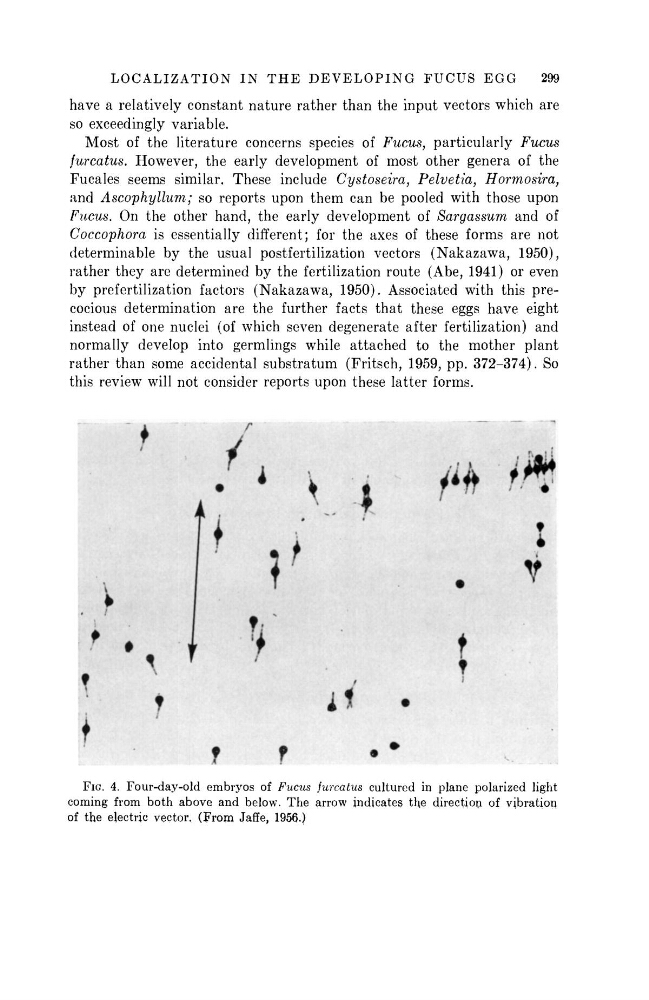
FIG. 4. Four-day-old embryos of Fucus furcatus cultured in plane polarized light
coming from both above and below. The arrow indicates the direction of vibration
of the electric vector. (From Jaffe, 1956.)
have a relatively constant nature rather than the input vectors which are
so exceedingly variable.
M o s t of the literature concerns species of Fucus, particularly Fucus
furcatus. However, the early development of most other genera of the
Fucales seems similar. These include Cystoseira, Pelvetia,
Hormosira,
and Ascophyllum;
so reports upon them can be pooled with those upon
Fucus. On the other hand, the early development of Sargassum and of
Coccophora
is essentially different; for the axes of these forms are not
determinable b y the usual post-fertilization vectors (Nakazawa, 1950),
rather they are determined by the fertilization route ( A b e , 1941) or even
by prefertilization factors (Nakazawa, 1950). Associated with this precocious determination are the further facts that these eggs have eight
instead of one nuclei (of which seven degenerate after fertilization) and
normally develop into germlings while attached to the mother plant
rather than some accidental substratum (Fritsch, 1959, pp. 3 7 2 - 3 7 4 ) . So
this review will not consider reports upon these latter forms.
299
FIG. 4. Four-day-old embryos of Fucus furcatus cultured in plane polarized light
coming from both above and below. The arrow indicates the direction of vibration
of the electric vector. (From Jaffe, 1956.)
have a relatively constant nature rather than the input vectors which are
so exceedingly variable.
M o s t of the literature concerns species of Fucus, particularly Fucus
furcatus. However, the early development of most other genera of the
Fucales seems similar. These include Cystoseira, Pelvetia,
Hormosira,
and Ascophyllum;
so reports upon them can be pooled with those upon
Fucus. On the other hand, the early development of Sargassum and of
Coccophora
is essentially different; for the axes of these forms are not
determinable b y the usual post-fertilization vectors (Nakazawa, 1950),
rather they are determined by the fertilization route ( A b e , 1941) or even
by prefertilization factors (Nakazawa, 1950). Associated with this precocious determination are the further facts that these eggs have eight
instead of one nuclei (of which seven degenerate after fertilization) and
normally develop into germlings while attached to the mother plant
rather than some accidental substratum (Fritsch, 1959, pp. 3 7 2 - 3 7 4 ) . So
this review will not consider reports upon these latter forms.