

L O C A L I Z A T I O N I N T H E D E V E L O P I N G F U C U S E G G
297
First of all, the only known visible basis for such an axis is the point
of sperm entry. Y e t parthenogenetically activated eggs can develop normally (Overton, 1913). M o r e conclusive is the response to plane polarized
light: The symmetry of this peculiar agent is such that each and every
egg is stimulated to form a rhizoid at two opposite points to an exactly
equal degree. As a result, up to half of the eggs initiate rhizoids at two
opposite points (Fig. 4 ) . Since the hypothetical invisible axis could not
have rotated in both directions at once, it can be concluded that even if
it exists it is not a fixed structure rotated b y environmental vectors;
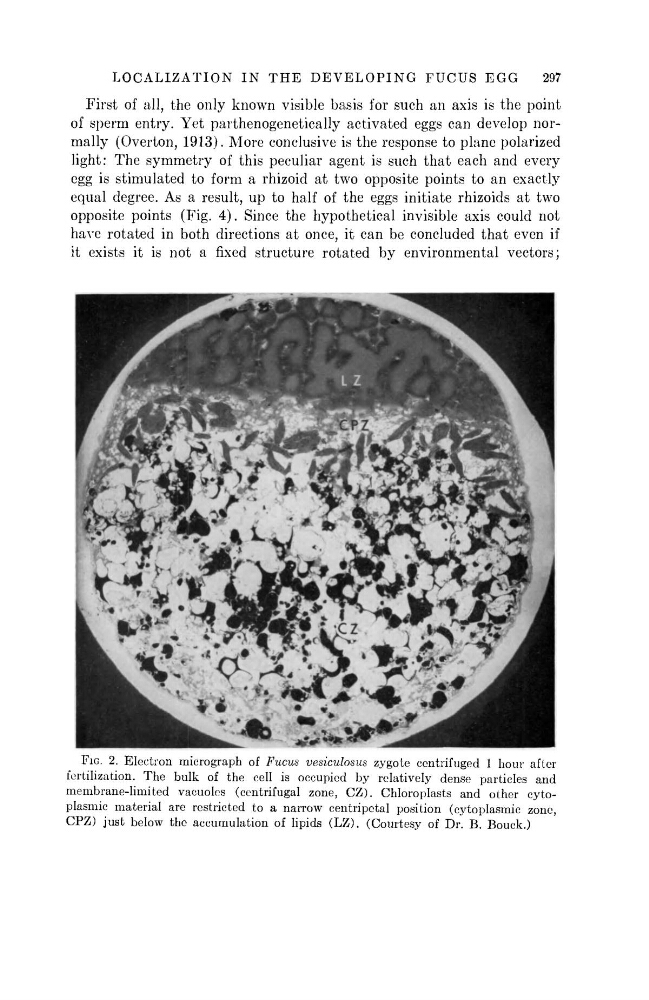
FIG. 2. Electron micrograph of Fucus vesiculosus zygote centrifuged 1 hour after
fertilization. The bulk of the cell is occupied by relatively dense particles and
membrane-limited vacuoles (centrifugal zone, C Z ) . Chloroplasts and other cytoplasmic material are restricted to a narrow centripetal position (cytoplasmic zone,
C P Z ) just below the accumulation of lipids ( L Z ) . (Courtesy of Dr. B. Bouck.)
297
First of all, the only known visible basis for such an axis is the point
of sperm entry. Y e t parthenogenetically activated eggs can develop normally (Overton, 1913). M o r e conclusive is the response to plane polarized
light: The symmetry of this peculiar agent is such that each and every
egg is stimulated to form a rhizoid at two opposite points to an exactly
equal degree. As a result, up to half of the eggs initiate rhizoids at two
opposite points (Fig. 4 ) . Since the hypothetical invisible axis could not
have rotated in both directions at once, it can be concluded that even if
it exists it is not a fixed structure rotated b y environmental vectors;
FIG. 2. Electron micrograph of Fucus vesiculosus zygote centrifuged 1 hour after
fertilization. The bulk of the cell is occupied by relatively dense particles and
membrane-limited vacuoles (centrifugal zone, C Z ) . Chloroplasts and other cytoplasmic material are restricted to a narrow centripetal position (cytoplasmic zone,
C P Z ) just below the accumulation of lipids ( L Z ) . (Courtesy of Dr. B. Bouck.)